Sie sind bereits eingeloggt. Klicken Sie auf 2. tolino select Abo, um fortzufahren.
Bitte loggen Sie sich zunächst in Ihr Kundenkonto ein oder registrieren Sie sich bei bücher.de, um das eBook-Abo tolino select nutzen zu können.
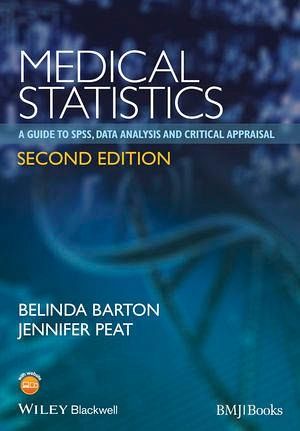
Medical Statistics provides the necessary statistical tools to enable researchers to undertake and understand evidence-based clinical research. It is a practical guide to conducting statistical research and interpreting statistics in the context of how the participants were recruited, how the study was designed, what types of variables were used, what effect size was found, and what the P values mean. It guides researchers through the process of selecting the correct statistics and show how to best report results for presentation and publication. Clear and concise explanations, combined with…mehr
Medical Statistics provides the necessary statistical tools to enable researchers to undertake and understand evidence-based clinical research. It is a practical guide to conducting statistical research and interpreting statistics in the context of how the participants were recruited, how the study was designed, what types of variables were used, what effect size was found, and what the P values mean. It guides researchers through the process of selecting the correct statistics and show how to best report results for presentation and publication. Clear and concise explanations, combined with plenty of examples and tabulated explanations are based on the authors' popular medical statistics courses. The table of contents is divided into sections according to whether data are continuous or categorical in nature as this distinction is fundamental to selecting the correct statistics. Each chapter provides a clear step-by-step guide to each statistical test with practical instructions on how to generate and interpret the numbers, and present the results as scientific tables or graphs. The chapters conclude with critical appraisal guidelines to help researchers review the reporting of results from each type of statistical test. This new edition includes a new chapter on repeated measures and mixed models and a helpful glossary of terms provides an easy reference that applies to all chapters.
Dieser Download kann aus rechtlichen Gründen nur mit Rechnungsadresse in D ausgeliefert werden.
Die Herstellerinformationen sind derzeit nicht verfügbar.
Autorenporträt
Belinda Barton, Head and Psychologist, Children's Hospital Education Research Institute (CHERI), Conjoint Senior Lecturer, Sydney Medical School, University of Sydney, NSW Australia.
Jennifer Peat, Associate Professor, Department of Paediatrics and Child Health and Senior Hospital Statistician, Clinical Epidemiology Unit, Children's Hospital, Westmead, NSW Australia.
Inhaltsangabe
Introduction ix Acknowledgements xiii About the companion website xv Chapter 1 Creating an SPSS data file and preparing to analyse the data 1 1.1 Creating an SPSS data file 1 1.2 Opening data from Excel in SPSS 6 1.3 Categorical and continuous variables 7 1.4 Classifying variables for analyses 7 1.5 Hypothesis testing and P values 8 1.6 Choosing the correct statistical test 9 1.7 Sample size requirements 10 1.8 Study handbook and data analysis plan 12 1.9 Documentation 13 1.10 Checking the data 13 1.11 Avoiding and replacing missing values 14 1.12 SPSS data management capabilities 16 1.13 Managing SPSS output 20 1.14 SPSS help commands 21 1.15 Golden rules for reporting numbers 21 1.16 Notes for critical appraisal 21 References 23 Chapter 2 Descriptive statistics 24 2.1 Parametric and non-parametric statistics 25 2.2 Normal distribution 25 2.3 Skewed distributions 26 2.4 Checking for normality 29 2.5 Transforming skewed variables 43 2.6 Data analysis pathway 49 2.7 Reporting descriptive statistics 49 2.8 Checking for normality in published results 50 2.9 Notes for critical appraisal 51 References 51 Chapter 3 Comparing two independent samples 52 3.1 Comparing the means of two independent samples 52 3.2 One- and two-sided tests of significance 54 3.3 Effect sizes 55 3.4 Study design 57 3.5 Influence of sample size 58 3.6 Two-sample t-test 71 3.7 Confidence intervals 73 3.8 Reporting the results from two-sample t-tests 75 3.9 Rank-based non-parametric tests 80 3.10 Notes for critical appraisal 88 References 89 Chapter 4 Paired and one-sample t-tests 90 4.1 Paired t-tests 90 4.2 Non-parametric test for paired data 97 4.3 Standardizing for differences in baseline measurements 99 4.4 Single-sample t-test 102 4.5 Testing for a between-group difference 106 4.6 Notes for critical appraisal 110 References 111 Chapter 5 Analysis of variance 112 5.1 Building ANOVA and ANCOVA models 113 5.2 ANOVA models 113 5.3 One-way analysis of variance 117 5.4 Effect size for ANOVA 127 5.5 Post-hoc tests for ANOVA 128 5.6 Testing for a trend 133 5.7 Reporting the results of a one-way ANOVA 134 5.8 Factorial ANOVA models 135 5.9 An example of a three-way ANOVA 140 5.10 Analysis of covariance (ANCOVA) 145 5.11 Testing the model assumptions of ANOVA/ANCOVA 149 5.12 Reporting the results of an ANCOVA 158 5.13 Notes for critical appraisal 158 References 160 Chapter 6 Analyses of longitudinal data 161 6.1 Study design 161 6.2 Sample size and power 162 6.3 Covariates 163 6.4 Assumptions of repeated measures ANOVA and mixed models 163 6.5 Repeated measures analysis of variance 164 6.6 Linear mixed models 182 6.7 Notes for critical appraisal 195 References 196 Chapter 7 Correlation and regression 197 7.1 Correlation coefficients 197 7.2 Regression models 205 7.3 Multiple linear regression 213 7.4 Interactions 230 7.5 Residuals 235 7.6 Outliers and remote points 237 7.7 Validating the model 240 7.8 Reporting a multiple linear regression 241 7.9 Non-linear regression 242 7.10 Centering 244 7.11 Notes for critical appraisal 247 References 247 Chapter 8 Rates and proportions 249 8.1 Summarizing categorical variables 249 8.2 Describing baseline characteristics 251 8.3 Incidence and prevalence 252 8.4 Chi-square tests 253 8.5 2 × 3 Chi-square tables 260 8.6 Cells with small numbers 262 8.7 Exact chi square test 263 8.8 Number of cells that can be tested 264 8.9 Reporting chi-square tests and proportions 266 8.10 Large contingency tables 267 8.11 Categorizing continuous variables 271 8.12 Chi-square trend test for ordered variables 273 8.13 Number needed to treat (NNT) 277 8.14 Paired categorical variables: McNemar's chi-square test 281 8.15 Notes for critical appraisal 285 References 286 Chapter 9 Risk statistics 287 9.1 Risk statistics 287 9.2 Study design 288 9.3 Odds ratio 288 9.4 Protective odds ratios 296 9.5 Adjusted odds ratios 298 9.6 Relative risk 308 9.7 Number needed to be exposed for one additional person to be harmed (NNEH) 312 9.8 Notes for critical appraisal 312 References 313 Chapter 10 Tests of reliability and agreement 314 10.1 Reliability and agreement 314 10.2 Kappa statistic 317 10.3 Reliability of continuous measurements 321 10.4 Intra-class correlation 322 10.5 Measures of agreement 325 10.6 Notes for critical appraisal 329 References 329 Chapter 11 Diagnostic statistics 331 11.1 Coding for diagnostic statistics 331 11.2 Positive and negative predictive values 332 11.3 Sensitivity and specificity 335 11.4 Likelihood ratio 338 11.5 Receiver Operating Characteristic (ROC) Curves 339 11.6 Notes for critical appraisal 348 References 349 Chapter 12 Survival analyses 350 12.1 Study design 351 12.2 Censored observations 351 12.3 Kaplan-Meier survival method 351 12.4 Cox regression 360 12.5 Questions for critical appraisal 368 References 368 Glossary 370 Useful websites 381 Index 385