Sie sind bereits eingeloggt. Klicken Sie auf 2. tolino select Abo, um fortzufahren.
Bitte loggen Sie sich zunächst in Ihr Kundenkonto ein oder registrieren Sie sich bei bücher.de, um das eBook-Abo tolino select nutzen zu können.
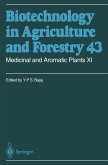
This volume deals with the propagation of various medicinal and aromatic plants through biotechnological methods as well as with the production of pharmaceutically important substances by plant tissue cultures. Among the covered plants are mulberry, evening primrose, rosemary, sesame, and yew.
This volume deals with the propagation of various medicinal and aromatic plants through biotechnological methods as well as with the production of pharmaceutically important substances by plant tissue cultures. Among the covered plants are mulberry, evening primrose, rosemary, sesame, and yew.
Dieser Download kann aus rechtlichen Gründen nur mit Rechnungsadresse in A, B, BG, CY, CZ, D, DK, EW, E, FIN, F, GR, HR, H, IRL, I, LT, L, LR, M, NL, PL, P, R, S, SLO, SK ausgeliefert werden.
Die Herstellerinformationen sind derzeit nicht verfügbar.
Inhaltsangabe
I Actinidia polygama (Japanese name Matatabi): In Vitro Culture, Micropropagation, and the Production of Monoterpenes and Triterpenoids.- II Alkanna tinctoria T. (Alkanets): In Vitro Culture and the Production of Alkannin and Other Secondary Metabolites.- III Arnebia euchroma: In Vitro Culture and the Production of Shikonin and Other Secondary Metabolites.- IV Campanula (Bellflower) Species: In Vitro Culture, Micropropagation, and the Production of Anthocyanins, Polyacetylenes, and Other Secondary Metabolites.- V Catharanthus roseus (Periwinkle): In Vitro Culture, and High-Level Production of Arbutin by Biotransformation.- VI Centella asiatica (L.) Urban. (Pennywort): Cell Culture, Production of Terpenoïds, and Biotransformation Capacity.- VII Chenopodium album L. (Fat Hen): In Vitro Cell Culture, and Production of Secondary Metabolites (Phytosterols and Ecdysteroids).- VIII Cornus kousa (Dogwood): In Vitro Culture, and the Production of Tannins and Other Phenolic Compounds.- IX Cynara cardunculus subsp. flavescens (Cardoon): In Vitro Culture, and the Production of Cyprosins - Milk Clotting Enzymes.- X Ephedra Species: In Vitro Culture, Micropropagation and the Production of Ephedrine and Other Alkaloids.- XI Euglena gracilis Z: Biotransformation of Terpenoids and Related Compounds.- XII Haplophyllum patavinum (L.) G. Don fil. (Paduan rue): In Vitro Regeneration, and the Production of Coumarin Compounds.- XIII Morus Species (Mulberry): In Vitro Culture, Micropropagation, and the Formation of Mulberrofuran, Kuwanol, and Other Secondary Metabolites.- XIV Oenothera Species (Evening Primrose): In Vitro Regeneration, Production of Flavonoids, Fatty Acids, and Other Secondary Metabolites.- XV Otacanthus Species: In Vitro Culture, Plant Propagation, and the Production ofEssential Oil.- XVI Oxalis Species: In Vitro Culture, Micropropagation, and the Formation of Anthocyanins.- XVII Polypodium vulgare L. (Wood Fern): In Vitro Cultures and the Production of Phytoecdysteroids.- XVIII Rosmarinus officinalis L. (Rosemary): In Vitro Culture, Regeneration of Plants, and the Level of Essential Oil and Monoterpenoid Constituents.- XIX Sesamum indicum L. (Sesame): In Vitro Culture, and the Production of Naphthoquinone and Other Secondary Metabolites.- XX Solanum mammosum L. (Terong Susu): In Vitro Culture and the Production of Steroidal Alkaloids and Other Secondary Metabolites.- XXI Taxus Species (Yew): In Vitro Culture, and the Production of Taxol and Other Secondary Metabolites.- XXII Tephrosia vogelii Hook f.: In Vitro Culture, and the Production of Rotenoids and Other Secondary Metabolites.
I Actinidia polygama (Japanese name Matatabi): In Vitro Culture, Micropropagation, and the Production of Monoterpenes and Triterpenoids.- II Alkanna tinctoria T. (Alkanets): In Vitro Culture and the Production of Alkannin and Other Secondary Metabolites.- III Arnebia euchroma: In Vitro Culture and the Production of Shikonin and Other Secondary Metabolites.- IV Campanula (Bellflower) Species: In Vitro Culture, Micropropagation, and the Production of Anthocyanins, Polyacetylenes, and Other Secondary Metabolites.- V Catharanthus roseus (Periwinkle): In Vitro Culture, and High-Level Production of Arbutin by Biotransformation.- VI Centella asiatica (L.) Urban. (Pennywort): Cell Culture, Production of Terpenoïds, and Biotransformation Capacity.- VII Chenopodium album L. (Fat Hen): In Vitro Cell Culture, and Production of Secondary Metabolites (Phytosterols and Ecdysteroids).- VIII Cornus kousa (Dogwood): In Vitro Culture, and the Production of Tannins and Other Phenolic Compounds.- IX Cynara cardunculus subsp. flavescens (Cardoon): In Vitro Culture, and the Production of Cyprosins - Milk Clotting Enzymes.- X Ephedra Species: In Vitro Culture, Micropropagation and the Production of Ephedrine and Other Alkaloids.- XI Euglena gracilis Z: Biotransformation of Terpenoids and Related Compounds.- XII Haplophyllum patavinum (L.) G. Don fil. (Paduan rue): In Vitro Regeneration, and the Production of Coumarin Compounds.- XIII Morus Species (Mulberry): In Vitro Culture, Micropropagation, and the Formation of Mulberrofuran, Kuwanol, and Other Secondary Metabolites.- XIV Oenothera Species (Evening Primrose): In Vitro Regeneration, Production of Flavonoids, Fatty Acids, and Other Secondary Metabolites.- XV Otacanthus Species: In Vitro Culture, Plant Propagation, and the Production ofEssential Oil.- XVI Oxalis Species: In Vitro Culture, Micropropagation, and the Formation of Anthocyanins.- XVII Polypodium vulgare L. (Wood Fern): In Vitro Cultures and the Production of Phytoecdysteroids.- XVIII Rosmarinus officinalis L. (Rosemary): In Vitro Culture, Regeneration of Plants, and the Level of Essential Oil and Monoterpenoid Constituents.- XIX Sesamum indicum L. (Sesame): In Vitro Culture, and the Production of Naphthoquinone and Other Secondary Metabolites.- XX Solanum mammosum L. (Terong Susu): In Vitro Culture and the Production of Steroidal Alkaloids and Other Secondary Metabolites.- XXI Taxus Species (Yew): In Vitro Culture, and the Production of Taxol and Other Secondary Metabolites.- XXII Tephrosia vogelii Hook f.: In Vitro Culture, and the Production of Rotenoids and Other Secondary Metabolites.
Es gelten unsere Allgemeinen Geschäftsbedingungen: www.buecher.de/agb
Impressum
www.buecher.de ist ein Internetauftritt der buecher.de internetstores GmbH
Geschäftsführung: Monica Sawhney | Roland Kölbl | Günter Hilger
Sitz der Gesellschaft: Batheyer Straße 115 - 117, 58099 Hagen
Postanschrift: Bürgermeister-Wegele-Str. 12, 86167 Augsburg
Amtsgericht Hagen HRB 13257
Steuernummer: 321/5800/1497
USt-IdNr: DE450055826