Sie sind bereits eingeloggt. Klicken Sie auf 2. tolino select Abo, um fortzufahren.
Bitte loggen Sie sich zunächst in Ihr Kundenkonto ein oder registrieren Sie sich bei bücher.de, um das eBook-Abo tolino select nutzen zu können.
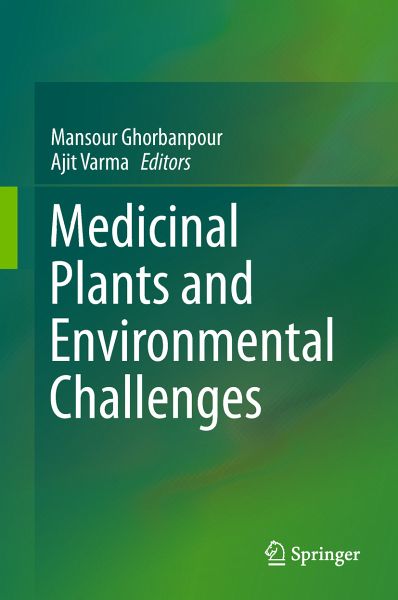
Presents a broad analysis of the impact of various stress factors on medicinal and aromatic plants Explores the phenomenon "Horizontal Natural Product Transfer" in +20 chapters highlighting the latest research results Places special emphasis on secondary metabolites
Presents a broad analysis of the impact of various stress factors on medicinal and aromatic plants
Explores the phenomenon "Horizontal Natural Product Transfer" in +20 chapters highlighting the latest research results
Places special emphasis on secondary metabolites
Dieser Download kann aus rechtlichen Gründen nur mit Rechnungsadresse in A, B, BG, CY, CZ, D, DK, EW, E, FIN, F, GR, HR, H, IRL, I, LT, L, LR, M, NL, PL, P, R, S, SLO, SK ausgeliefert werden.
Die Herstellerinformationen sind derzeit nicht verfügbar.
Autorenporträt
Mansour Ghorbanpour, Ph.D. Mansour Ghorbanpour is an Associate Professor at the Department of Medicinal Plants, Faculty of Agriculture and Natural Resources, Arak University, Arak, Iran. He holds a B.Sc. (1997), an M.Sc. (2003) and a Ph.D. (2011) from the University of Tehran, Karaj, Iran. Dr. Ghorbanpour has been a visiting scholar to the Nutrient Uptake and Toxicity Stress (NUTS) group at the University of Western Australia, Australia. His research interests include environmental stresses and plant responses, phytonanotechnology, bioavailability of emerging contaminants, and plant metabolism. He also has previous experience in beneficial soil microorganisms and biosynthesis pathways for secondary metabolites. To date, Dr. Ghorbanpour has published over 80 journal articles and 6 books. In addition, he serves as an editor for a number of international journals, including the Journal of Diseases and Medicinal Plants and the International Journal of Traditional and Herbal Medicine. Lastly, he has served as a reviewer for other scientific journals such as Natural Product Research, Carbon, Journal of Medicinal Plants, Journal of Hazardous Materials, Journal of Essential Oil Bearing Plant, and Canadian Journal of Microbiology. Ajit Varma, Ph.D. Ajit Varma completed his PhD at Allahabad University and is a former Professor, School of Life Sciences, Jawaharlal Nehru University, India. Presently, he is the Distinguished Scientist and Professor of Eminence at the Amity Institute of Microbial Technology; Pro-Vice Chancellor, Ritnand Balved Education Foundation; and Vice Chairman of Amity Science, Technology and Innovation Foundation at Amity University in Uttar Pradesh, India. He has published more than 374 papers and 87 books. Dr. Varma is Fellow of the Alexander-von-Humboldt Society, Germany, elected Fellow of the National Academy of Agricultural Sciences and Fellow of the Microbiology Society of India. Ajit Varma is also a series editor of the Springer series "Soil Biology" http://www.springer.com/series/5138.
Inhaltsangabe
Importance of Medicinal and Aromatic Plants in the Life of Human and Environmental Ecosystems.- Introduction to Environmental Challenges all over the World.- Rarity of Endemic Medicinal Plants and Role of Herbaria for their Conservation against Environmental Challenges.- Metabolic Responses of Medicinal Plants to Global Warming, Temperature and Heat Stress.- Toxic Gases, Ozone, Carbon Dioxide, and Waste Effects on the Production of Secondary Plant Metabolites.- Plant Secondary Metabolites and Some Plant Growth Regulators Elicited by UV Irradiation, Light and/or Shade.- Effect of Climate Change on Algae: A valuable Source of Medicinal Natural Compounds.- Metabolic and Hormonal Responses of Plants to Cold Stress.- The Impact of Drought Stress on the Quality of Spice and Medicinal Plants.- Effects of Salinity Stress on Growth and Physiology of Medicinal Plants.- Heavy Metals Contaminated Soils Effects on Secondary Metabolites Production, Oxidative Status and Phytoextraction Potentials ofMedicinal Plants.- Horizontal Natural Product Transfer: A so far Unconsidered Source of Contamination of Medicinal Plants.- Strategies for Enhancing Artemisinin Production in Artemisia annuaunder Changing Environment.- Response of Medicinal and Aromatic Plants to Natural and Manufactured Nanosacel Materials.- Influences of Agrochemicals, Seasonality and Good Agricultural Practices on some Phytochemical of Medicinal Plants.- Introduction to Infectious Medicinal Plants Diseases: Identification and Management.- Weed and Weeding Effects on Medicinal Plants.- The Insect Pests of Medicinal and Aromatic Plants.- Biotechnological Production of Essential oils against Aedesaegypti L..- Adaptation Strategies and Defense Mechanisms of Plants to Environmental Stresses.- Metabolic Adaptation of Tea (Camellia sinensis) to Environmental Perturbations.- Genomic Approaches towards Development of Climate Resilient Medicinal Plants.
Importance of Medicinal and Aromatic Plants in the Life of Human and Environmental Ecosystems.- Introduction to Environmental Challenges all over the World.- Rarity of Endemic Medicinal Plants and Role of Herbaria for their Conservation against Environmental Challenges.- Metabolic Responses of Medicinal Plants to Global Warming, Temperature and Heat Stress.- Toxic Gases, Ozone, Carbon Dioxide, and Waste Effects on the Production of Secondary Plant Metabolites.- Plant Secondary Metabolites and Some Plant Growth Regulators Elicited by UV Irradiation, Light and/or Shade.- Effect of Climate Change on Algae: A valuable Source of Medicinal Natural Compounds.- Metabolic and Hormonal Responses of Plants to Cold Stress.- The Impact of Drought Stress on the Quality of Spice and Medicinal Plants.- Effects of Salinity Stress on Growth and Physiology of Medicinal Plants.- Heavy Metals Contaminated Soils Effects on Secondary Metabolites Production, Oxidative Status and Phytoextraction Potentials ofMedicinal Plants.- Horizontal Natural Product Transfer: A so far Unconsidered Source of Contamination of Medicinal Plants.- Strategies for Enhancing Artemisinin Production in Artemisia annuaunder Changing Environment.- Response of Medicinal and Aromatic Plants to Natural and Manufactured Nanosacel Materials.- Influences of Agrochemicals, Seasonality and Good Agricultural Practices on some Phytochemical of Medicinal Plants.- Introduction to Infectious Medicinal Plants Diseases: Identification and Management.- Weed and Weeding Effects on Medicinal Plants.- The Insect Pests of Medicinal and Aromatic Plants.- Biotechnological Production of Essential oils against Aedesaegypti L..- Adaptation Strategies and Defense Mechanisms of Plants to Environmental Stresses.- Metabolic Adaptation of Tea (Camellia sinensis) to Environmental Perturbations.- Genomic Approaches towards Development of Climate Resilient Medicinal Plants.
Es gelten unsere Allgemeinen Geschäftsbedingungen: www.buecher.de/agb
Impressum
www.buecher.de ist ein Internetauftritt der buecher.de internetstores GmbH
Geschäftsführung: Monica Sawhney | Roland Kölbl | Günter Hilger
Sitz der Gesellschaft: Batheyer Straße 115 - 117, 58099 Hagen
Postanschrift: Bürgermeister-Wegele-Str. 12, 86167 Augsburg
Amtsgericht Hagen HRB 13257
Steuernummer: 321/5800/1497
USt-IdNr: DE450055826