4,99 €
inkl. MwSt.
Sofort per Download lieferbar
0 °P sammeln

Andere Kunden interessierten sich auch für
") The Life and Legacy of Arthur Wellesley, Duke of Wellington (eBook, ePUB)2,99 €
The Life and Legacy of Arthur Wellesley, Duke of Wellington (eBook, ePUB)2,99 €") Napoleon (eBook, ePUB)2,99 €
Napoleon (eBook, ePUB)2,99 €") Defeating Napoleon (eBook, ePUB)4,99 €
Defeating Napoleon (eBook, ePUB)4,99 €") British Legends (eBook, ePUB)2,99 €
British Legends (eBook, ePUB)2,99 €") Clausewitz und Jomini (eBook, ePUB)4,99 €
Clausewitz und Jomini (eBook, ePUB)4,99 €") The Life and Legacy of Winston Churchill (eBook, ePUB)3,99 €
The Life and Legacy of Winston Churchill (eBook, ePUB)3,99 €") Establishing the Elizabethan Age (eBook, ePUB)4,99 €
Establishing the Elizabethan Age (eBook, ePUB)4,99 €

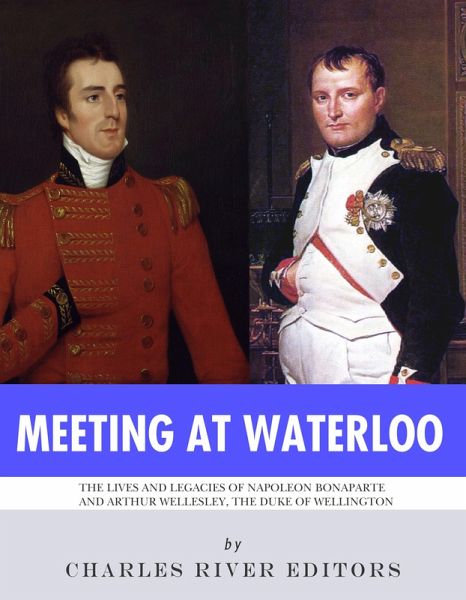
When historians are asked to list the most influential people of the last 200 years, a handful of names might vary, but there is no question that the list will include Napoleon Bonaparte (1769-1821), the most successful French leader since Charlemagne and widely acknowledged one of the greatest generals ever. Indeed, Napoleon was likely the most influential man of the 19th century, leaving an indelible mark on everything from the strategy and tactics of warfare to the Napoleonic Code that drafted laws across the continent. To defeat Napoleon, the Europeans had to form large coalitions multiple times, which helped bring about the entangling alliances that sparked World War I after Europe was rebuilt following Waterloo and the Congress of Vienna. Napoleon's influence on the United States was also palpable. To finance his endeavors, he struck a deal with President Thomas Jefferson that became the Louisiana Purchase, and it was Napoleonic warfare that was used throughout the Civil War, leading to massive casualties because the weaponry of the 1860s was now more advanced than the tactics of 1815.
When Napoleon died at St. Helena, he still engendered fear and distaste among the Europeans, but the man and his legacy continued to be held in awe across the world. In Napoleon's time, emperors and leaders still hoped to become the next Julius Caesar. After the Napoleonic Era, emperors and generals hoped to become the next Napoleon. For the next century, military leaders and even civilians struck Napoleonic poses when having their pictures taken, and phrases like "Napoleonic complex" and "meeting one's Waterloo" are now common phrases in the English lexicon. It would be truly impossible to envision or understand geopolitics in the West over the last two centuries without Napoleon.
With the passage of time, Napoleon's legacy has had time to crystallize, but the legends, myths, and controversies about the man and his empire continue to swirl. Was he really short? Did his men shoot the nose off the Sphinx? Was he a good chess player? Was he poisoned by the British? In the rush to analyze his stunningly successful military record or question whether he was very short or a great chess player, people often overlook his political reign and personality.
In September 1852, a steam train carried the body of Arthur Wellesley, First Duke of Wellington, from Kent to London, where he was to be interred at St. Paul's Cathedral after a huge state funeral. A million would flock to pay their final respects, and young Queen Victoria wept openly, lamenting that "his loss will be quite irreparable".
By the time of his death, Wellington had been prime minister twice, a shrewd personal advisor to four British monarchs and one of the nation's most prominent politicians for three decades. But despite his nearly four decades of peacetime service in and out of politics, Wellington has remained one of the titans of the 19th century because of one June day in 1815. Then, as now, the Duke of Wellington is best remembered for defeating Napoleon in the most famous battle of modern history at Waterloo.
Even then, the fact Wellington is remembered for Waterloo belies his extraordinary military career, which saw him come up through fighting in the Netherlands and India before opposing Napoleon's forces on the Iberian Peninsula for several years. By the time Wellington took command of allied forces during the Hundred Days Campaign and decisively finished the Napoleonic Era at Waterloo, he had participated in about 60 battles and was one of Britain's greatest war heroes.
Historical memory of Wellington often stops there, but he spent half his lifetime in politics after Waterloo, serving as a prime minister in the 1820s and an influential Tory in the House of Lords in the 1830s and 1840s, serving all the while as Commander-in-Chief of Britain's military.
When Napoleon died at St. Helena, he still engendered fear and distaste among the Europeans, but the man and his legacy continued to be held in awe across the world. In Napoleon's time, emperors and leaders still hoped to become the next Julius Caesar. After the Napoleonic Era, emperors and generals hoped to become the next Napoleon. For the next century, military leaders and even civilians struck Napoleonic poses when having their pictures taken, and phrases like "Napoleonic complex" and "meeting one's Waterloo" are now common phrases in the English lexicon. It would be truly impossible to envision or understand geopolitics in the West over the last two centuries without Napoleon.
With the passage of time, Napoleon's legacy has had time to crystallize, but the legends, myths, and controversies about the man and his empire continue to swirl. Was he really short? Did his men shoot the nose off the Sphinx? Was he a good chess player? Was he poisoned by the British? In the rush to analyze his stunningly successful military record or question whether he was very short or a great chess player, people often overlook his political reign and personality.
In September 1852, a steam train carried the body of Arthur Wellesley, First Duke of Wellington, from Kent to London, where he was to be interred at St. Paul's Cathedral after a huge state funeral. A million would flock to pay their final respects, and young Queen Victoria wept openly, lamenting that "his loss will be quite irreparable".
By the time of his death, Wellington had been prime minister twice, a shrewd personal advisor to four British monarchs and one of the nation's most prominent politicians for three decades. But despite his nearly four decades of peacetime service in and out of politics, Wellington has remained one of the titans of the 19th century because of one June day in 1815. Then, as now, the Duke of Wellington is best remembered for defeating Napoleon in the most famous battle of modern history at Waterloo.
Even then, the fact Wellington is remembered for Waterloo belies his extraordinary military career, which saw him come up through fighting in the Netherlands and India before opposing Napoleon's forces on the Iberian Peninsula for several years. By the time Wellington took command of allied forces during the Hundred Days Campaign and decisively finished the Napoleonic Era at Waterloo, he had participated in about 60 battles and was one of Britain's greatest war heroes.
Historical memory of Wellington often stops there, but he spent half his lifetime in politics after Waterloo, serving as a prime minister in the 1820s and an influential Tory in the House of Lords in the 1830s and 1840s, serving all the while as Commander-in-Chief of Britain's military.
Dieser Download kann aus rechtlichen Gründen nur mit Rechnungsadresse in A, B, BG, CY, CZ, D, DK, EW, E, FIN, F, GR, H, IRL, I, LT, L, LR, M, NL, PL, P, R, S, SLO, SK ausgeliefert werden.