0,00 €
0,00 €
inkl. MwSt.
Sofort per Download lieferbar

0 °P sammeln
0,00 €
Als Download kaufen
0,00 €
inkl. MwSt.
Sofort per Download lieferbar
0 °P sammeln
Jetzt verschenken
Alle Infos zum eBook verschenken
0,00 €
inkl. MwSt.
Sofort per Download lieferbar
Alle Infos zum eBook verschenken
0 °P sammeln

Andere Kunden interessierten sich auch für
") Mapping Southern Routes of Migrant Women (eBook, ePUB)39,95 €
Mapping Southern Routes of Migrant Women (eBook, ePUB)39,95 €") Megaprojects in Central America (eBook, PDF)0,00 €
Megaprojects in Central America (eBook, PDF)0,00 €") Collective Empowerment in Latin America (eBook, ePUB)42,95 €
Collective Empowerment in Latin America (eBook, ePUB)42,95 €") Neoextractivism and Territorial Disputes in Latin America (eBook, ePUB)39,95 €
Neoextractivism and Territorial Disputes in Latin America (eBook, ePUB)39,95 €") Underdevelopment in Peru (eBook, ePUB)39,95 €
Underdevelopment in Peru (eBook, ePUB)39,95 €") Bolivia and the Making of the Global Indigenous Movement (eBook, ePUB)42,95 €
Bolivia and the Making of the Global Indigenous Movement (eBook, ePUB)42,95 €") Agrarian Extractivism in Latin America (eBook, ePUB)37,95 €
Agrarian Extractivism in Latin America (eBook, ePUB)37,95 €
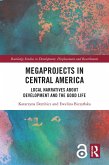


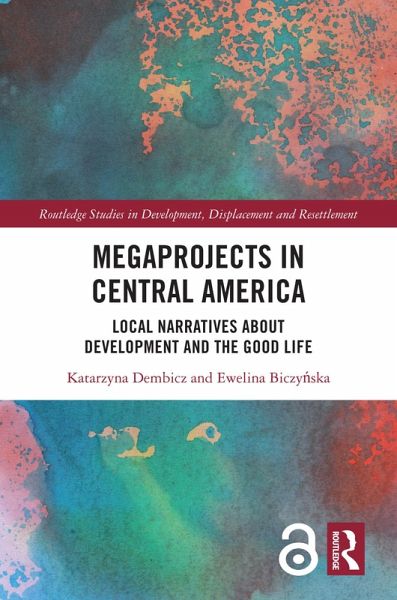
Embedded in Southern voices and epistemologies, this book explores how local communities in Central America understand development and the good life in the context of large-scale infrastructure projects.
The analysis focuses on six case studies: the Reventazón hydropower plant and the Guanacaste tourism projects in Costa Rica, the Barro Blanco hydropower plant in Panama, the Bahía de Tela tourism area in Honduras, and the La India and La Libertad gold mines in Nicaragua. The book draws on extensive in-depth interviews, participatory workshops and surveys to demonstrate how different social groups interpret the impacts of megaprojects. It critically examines the tensions between externally-driven investment initiatives - and the values they promote - and locally-rooted worldviews, wellbeing and ways of life. The volume concludes with a practical workshop proposal to help communities strengthen their resilience and formulate alternative development pathways based on their own cultural and social frameworks.
This book will be of particular interest to scholars in the fields of development and Latin American studies, as well as policy makers and practitioners working in the region.
The analysis focuses on six case studies: the Reventazón hydropower plant and the Guanacaste tourism projects in Costa Rica, the Barro Blanco hydropower plant in Panama, the Bahía de Tela tourism area in Honduras, and the La India and La Libertad gold mines in Nicaragua. The book draws on extensive in-depth interviews, participatory workshops and surveys to demonstrate how different social groups interpret the impacts of megaprojects. It critically examines the tensions between externally-driven investment initiatives - and the values they promote - and locally-rooted worldviews, wellbeing and ways of life. The volume concludes with a practical workshop proposal to help communities strengthen their resilience and formulate alternative development pathways based on their own cultural and social frameworks.
This book will be of particular interest to scholars in the fields of development and Latin American studies, as well as policy makers and practitioners working in the region.
Dieser Download kann aus rechtlichen Gründen nur mit Rechnungsadresse in A, B, BG, CY, CZ, D, DK, EW, E, FIN, F, GR, HR, H, IRL, I, LT, L, LR, M, NL, PL, P, R, S, SLO, SK ausgeliefert werden.