18,18 €
18,18 €
inkl. MwSt.
Sofort per Download lieferbar

0 °P sammeln
18,18 €
Als Download kaufen
18,18 €
inkl. MwSt.
Sofort per Download lieferbar
0 °P sammeln
Jetzt verschenken
Alle Infos zum eBook verschenken
18,18 €
inkl. MwSt.
Sofort per Download lieferbar
Alle Infos zum eBook verschenken
0 °P sammeln

Andere Kunden interessierten sich auch für
") Selected Topics in the History of Biochemistry (eBook, ePUB)131,95 €
Selected Topics in the History of Biochemistry (eBook, ePUB)131,95 €") An Introduction to Biological Membranes (eBook, ePUB)63,95 €
An Introduction to Biological Membranes (eBook, ePUB)63,95 €") Biochemistry of Lipids, Lipoproteins and Membranes (eBook, ePUB)68,95 €
Biochemistry of Lipids, Lipoproteins and Membranes (eBook, ePUB)68,95 €") Molecular Assembly in Natural and Engineered Systems (eBook, ePUB)108,95 €
Molecular Assembly in Natural and Engineered Systems (eBook, ePUB)108,95 €") Progress in Nucleic Acid Research and Molecular Biology (eBook, ePUB)117,95 €
Progress in Nucleic Acid Research and Molecular Biology (eBook, ePUB)117,95 €") The Structure of Biological Membranes (eBook, ePUB)216,95 €
The Structure of Biological Membranes (eBook, ePUB)216,95 €") Advanced Methods in Molecular Biology and Biotechnology (eBook, ePUB)82,95 €
Advanced Methods in Molecular Biology and Biotechnology (eBook, ePUB)82,95 €




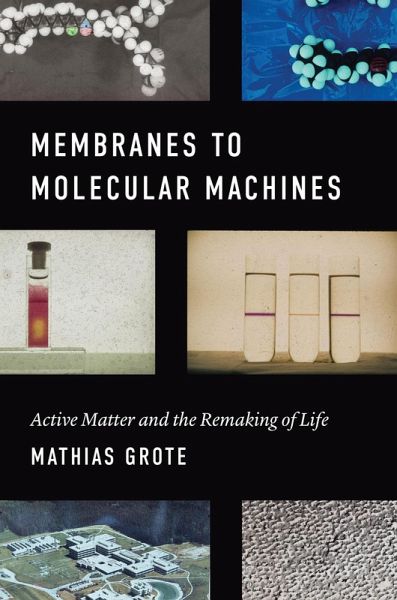
Today's science tells us that our bodies are filled with molecular machinery that orchestrates all sorts of life processes. When we think, microscopic "channels"open and close in our brain cell membranes; when we run, tiny "motors"spin in our muscle cell membranes; and when we see, light operates "molecular switches"in our eyes and nerves. A molecular-mechanical vision of life has become commonplace in both the halls of philosophy and the offices of drug companies, where researchers are developing "proton pump inhibitors" or medicines similar to Prozac. Membranes to Molecular Machines explores just how late twentieth-century science came to think of our cells and bodies this way. This story is told through the lens of membrane research, an unwritten history at the crossroads of molecular biology, biochemistry, physiology, and the neurosciences, that directly feeds into today's synthetic biology as well as nano- and biotechnology. Mathias Grote shows how these sciences not only have made us think differently about life, they have, by reworking what membranes and proteins represent in laboratories, allowed us to manipulate life as "active matter"in new ways. Covering the science of biological membranes in the United States and Europe from the mid-1960s to the 1990s, this book connects that history to contemporary work with optogenetics, a method for stimulating individual neurons using light, and will enlighten and provoke anyone interested in the intersection of chemical research and the life sciences-from practitioner to historian to philosopher. The research described in the book and its central actor, Dieter Oesterhelt, were honored with the 2021 Albert Lasker Basic Medical Research Awardfor his contribution to the development of optogenetics.