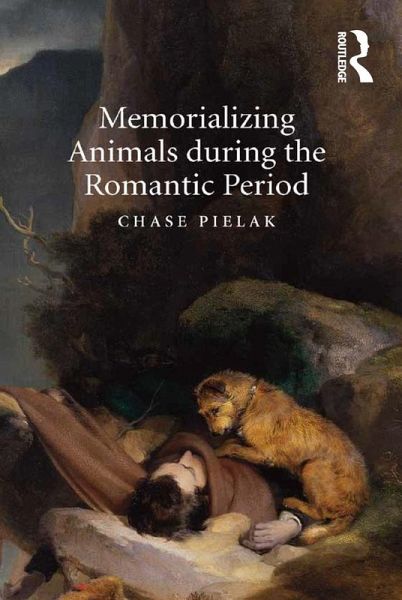
42,95 €
42,95 €
inkl. MwSt.
Sofort per Download lieferbar

21 °P sammeln
42,95 €
Als Download kaufen
42,95 €
inkl. MwSt.
Sofort per Download lieferbar
21 °P sammeln
Jetzt verschenken
Alle Infos zum eBook verschenken
42,95 €
inkl. MwSt.
Sofort per Download lieferbar
Alle Infos zum eBook verschenken
21 °P sammeln

Andere Kunden interessierten sich auch für
") Kindred Brutes: Animals in Romantic-Period Writing (eBook, ePUB)48,95 €
Kindred Brutes: Animals in Romantic-Period Writing (eBook, ePUB)48,95 €") The Ashgate Research Companion to Monsters and the Monstrous (eBook, ePUB)64,95 €
The Ashgate Research Companion to Monsters and the Monstrous (eBook, ePUB)64,95 €") Memorializing Animals during the Romantic Period (eBook, PDF)42,95 €
Memorializing Animals during the Romantic Period (eBook, PDF)42,95 €") Poetry of the Romantic Period (eBook, ePUB)37,95 €
Poetry of the Romantic Period (eBook, ePUB)37,95 €") Grief and Genre in American Literature, 1790-1870 (eBook, ePUB)52,95 €
Grief and Genre in American Literature, 1790-1870 (eBook, ePUB)52,95 €") Humans and Other Animals in Eighteenth-Century British Culture (eBook, ePUB)39,95 €
Humans and Other Animals in Eighteenth-Century British Culture (eBook, ePUB)39,95 €") Jane Austen and Animals (eBook, ePUB)38,95 €
Jane Austen and Animals (eBook, ePUB)38,95 €
Early nineteenth-century British literature is overpopulated with images of dead and deadly animals, as Chase Pielak observes in his study of animal encounters in the works of Charles and Mary Lamb, John Clare, Samuel Taylor Coleridge, Lord Byron, and William Wordsworth. These encounters, Pielak suggests, coincide with anxieties over living alongside both animals and cemeteries in the late eighteenth and early nineteenth-centuries. Pielak traces the linguistic, physical, and psychological interruptions occasioned by animal encounters from the heart of communal life, the table, to the countryside, and finally into and beyond the wild cemetery. He argues that Romantic period writers use language that ultimately betrays itself in beastly disruptions exposing anxiety over what it means to be human, what happens at death, the consequences of living together, and the significance of being remembered. Extending his discussion past an emphasis on animal rights to an examination of animals in their social context, Pielak shows that these animal representations are both inherently important and a foreshadowing of the ways we continue to need images of dead and deadly Romantic beasts.
Dieser Download kann aus rechtlichen Gründen nur mit Rechnungsadresse in A, B, BG, CY, CZ, D, DK, EW, E, FIN, F, GR, HR, H, IRL, I, LT, L, LR, M, NL, PL, P, R, S, SLO, SK ausgeliefert werden.
'[Pielak] provides us with a single sentence that effectively sums up his study: 'Inasmuch as Lamb created a space of animal friendship, Clare invited animals to share in communion and to mourn alongside humans, Coleridge sought the deadly beast to stave off corpse contagion, Byron could not maintain human life in light of animal bodies, and Wordsworth, haunted by animal voices, made a home for himself against the surfaces of animal bodies, so must we' (pp. 153-4). This directive is one we now need to appreciate and work to follow.' Review of English Studies