0,99 €
inkl. MwSt.
Sofort per Download lieferbar
0 °P sammeln

Andere Kunden interessierten sich auch für
") Mesmerism in India (eBook, ePUB)0,99 €
Mesmerism in India (eBook, ePUB)0,99 €") The Power of Mesmerism (eBook, ePUB)2,13 €
The Power of Mesmerism (eBook, ePUB)2,13 €") The Lair of the White Worm (eBook, ePUB)5,49 €
The Lair of the White Worm (eBook, ePUB)5,49 €") The Power of Mesmerism A Highly Erotic Narrative of Voluptuous Facts and Fancies (eBook, ePUB)1,99 €
The Power of Mesmerism A Highly Erotic Narrative of Voluptuous Facts and Fancies (eBook, ePUB)1,99 €") The Facts in the Case of M. Valdemar (eBook, ePUB)4,99 €
The Facts in the Case of M. Valdemar (eBook, ePUB)4,99 €") The Plymouth Express Affair (eBook, ePUB)0,99 €
The Plymouth Express Affair (eBook, ePUB)0,99 €") The Master of the World (eBook, ePUB)0,99 €
The Master of the World (eBook, ePUB)0,99 €




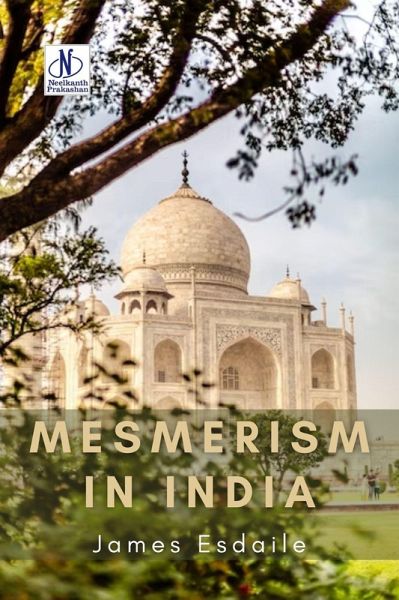
"Mesmerism in India" is a book written by James Esdaile, first published in 1846. James Esdaile was a Scottish surgeon who practiced medicine in India during the 19th century. In his book, Esdaile documented his experiments and experiences using mesmerism (also known as hypnosis) as a form of anesthesia during surgical procedures in India. Here's an overview: Background: Mesmerism, named after the Austrian physician Franz Mesmer, is a practice that involves inducing a trance-like state in a person in order to promote healing or alleviate pain. Mesmerism was popular in the 18th and 19th centuries as a form of alternative medicine. James Esdaile became interested in mesmerism while serving as a surgeon with the British East India Company in Calcutta (now Kolkata), India. He observed that mesmerism appeared to have a profound effect on pain perception and surgical outcomes. Experiments and Findings: In "Mesmerism in India," Esdaile described numerous cases where he successfully used mesmerism as a form of anesthesia for surgical procedures such as amputations, tumor removals, and other major surgeries. Esdaile claimed that mesmerism induced a state of insensibility or anesthesia in his patients, allowing him to perform surgeries without the need for conventional anesthesia or analgesics. He reported that his patients experienced little to no pain during the procedures and exhibited rapid recoveries afterward. Esdaile's experiments with mesmerism garnered attention and controversy within the medical community. While some hailed his work as groundbreaking, others were skeptical of his claims and questioned the reliability of mesmerism as a medical technique. Legacy: "Mesmerism in India" contributed to the ongoing debate about the efficacy of mesmerism and its potential applications in medicine. Esdaile's experiences paved the way for further research into hypnosis and its use in surgical anesthesia. While mesmerism eventually fell out of favor as modern anesthesia techniques were developed, Esdaile's work remains significant in the history of medicine for its exploration of alternative approaches to pain management and anesthesia. Overall, "Mesmerism in India" offers a fascinating glimpse into the medical practices of the 19th century and the pioneering efforts of James Esdaile to explore the potential of mesmerism as a form of anesthesia in surgical procedures.
Dieser Download kann aus rechtlichen Gründen nur mit Rechnungsadresse in A, D ausgeliefert werden.