48,95 €
48,95 €
inkl. MwSt.
Sofort per Download lieferbar

24 °P sammeln
48,95 €
Als Download kaufen
48,95 €
inkl. MwSt.
Sofort per Download lieferbar
24 °P sammeln
Jetzt verschenken
Alle Infos zum eBook verschenken
48,95 €
inkl. MwSt.
Sofort per Download lieferbar
Alle Infos zum eBook verschenken
24 °P sammeln

Andere Kunden interessierten sich auch für
") Moral Epistemology (eBook, ePUB)42,95 €
Moral Epistemology (eBook, ePUB)42,95 €") Moral Responsibility (eBook, ePUB)45,95 €
Moral Responsibility (eBook, ePUB)45,95 €") Moral Obligations (eBook, ePUB)46,95 €
Moral Obligations (eBook, ePUB)46,95 €") Moral and Intellectual Virtues in Western and Chinese Philosophy (eBook, ePUB)42,95 €
Moral and Intellectual Virtues in Western and Chinese Philosophy (eBook, ePUB)42,95 €") Rationality and Moral Theory (eBook, ePUB)47,95 €
Rationality and Moral Theory (eBook, ePUB)47,95 € (eBook, ePUB)") Revival: Ethics: An Investigation of the Facts and Laws of the Moral Life (1917) (eBook, ePUB)39,95 €
Revival: Ethics: An Investigation of the Facts and Laws of the Moral Life (1917) (eBook, ePUB)39,95 € (eBook, ePUB)") Revival: Ethics: An Investigation of the Facts and Laws of the Moral Life (1908) (eBook, ePUB)61,95 €
Revival: Ethics: An Investigation of the Facts and Laws of the Moral Life (1908) (eBook, ePUB)61,95 €






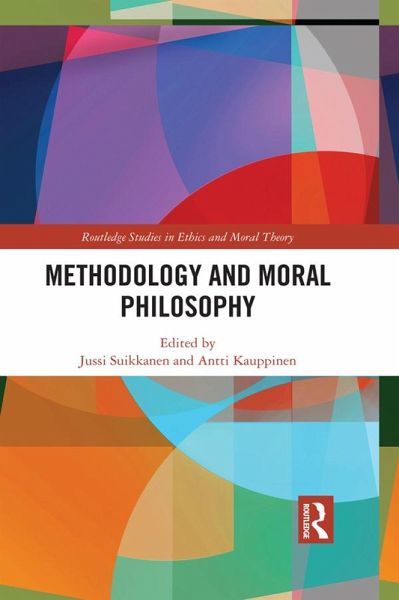
Many ethicists either accept the reflective equilibrium method or think that anything goes in ethical theorizing as long as the results are plausible. The aim of this book is to advance methodological thinking in ethics beyond these common attitudes and to raise new methodological questions about how moral philosophy should be done.
What are we entitled to assume as the starting-point of our ethical inquiry? What is the role of empirical sciences in ethics? Is there just one general method for doing moral philosophy or should different questions in moral philosophy be answered in different ways? Are there argumentative structures and strategies that we should be encouraged to use or typical argumentative patterns that we should avoid?
This volume brings together leading moral philosophers to consider these questions. The chapters investigate the prospects of empirical ethics, outline new methods of ethics, evaluate recent methodological advances, and explore whether different areas of moral philosophy are methodologically continuous or independent of one another. The aim of Methodology and Moral Philosophy is to make moral philosophers more self-aware and reflective of the way in which they do moral philosophy and also to encourage them to take part in methodological debates.
What are we entitled to assume as the starting-point of our ethical inquiry? What is the role of empirical sciences in ethics? Is there just one general method for doing moral philosophy or should different questions in moral philosophy be answered in different ways? Are there argumentative structures and strategies that we should be encouraged to use or typical argumentative patterns that we should avoid?
This volume brings together leading moral philosophers to consider these questions. The chapters investigate the prospects of empirical ethics, outline new methods of ethics, evaluate recent methodological advances, and explore whether different areas of moral philosophy are methodologically continuous or independent of one another. The aim of Methodology and Moral Philosophy is to make moral philosophers more self-aware and reflective of the way in which they do moral philosophy and also to encourage them to take part in methodological debates.
Dieser Download kann aus rechtlichen Gründen nur mit Rechnungsadresse in A, B, BG, CY, CZ, D, DK, EW, E, FIN, F, GR, HR, H, IRL, I, LT, L, LR, M, NL, PL, P, R, S, SLO, SK ausgeliefert werden.