40,95 €
inkl. MwSt.
Sofort per Download lieferbar
20 °P sammeln

Andere Kunden interessierten sich auch für
") Fatness, Obesity, and Disadvantage in the Australian Suburbs (eBook, PDF)40,95 €
Fatness, Obesity, and Disadvantage in the Australian Suburbs (eBook, PDF)40,95 €") The Managed Body (eBook, PDF)56,95 €
The Managed Body (eBook, PDF)56,95 €") The Palgrave Handbook of Ageing and Physical Activity Promotion (eBook, PDF)128,95 €
The Palgrave Handbook of Ageing and Physical Activity Promotion (eBook, PDF)128,95 €") Violent Reverberations (eBook, PDF)80,95 €
Violent Reverberations (eBook, PDF)80,95 €") Redeploying Urban Infrastructure (eBook, PDF)68,95 €
Redeploying Urban Infrastructure (eBook, PDF)68,95 €") The Making of the Banlieue (eBook, PDF)48,95 €
The Making of the Banlieue (eBook, PDF)48,95 €") Urban Centres in Asia and Latin America (eBook, PDF)72,95 €
Urban Centres in Asia and Latin America (eBook, PDF)72,95 €

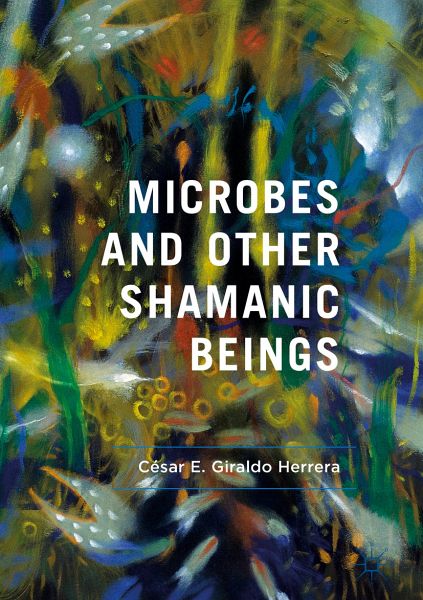
Innovatively brings together microbiology and Amerindian shamanic practice, with a view to interrogating both as equals
Intertwines biocultural and ethnohistorical approaches
Providing a fresh comparative exploration sure to be of interest to anthropologists, historians and social scientists of medicine, science, and biology
Dieser Download kann aus rechtlichen Gründen nur mit Rechnungsadresse in A, B, BG, CY, CZ, D, DK, EW, E, FIN, F, GR, HR, H, IRL, I, LT, L, LR, M, NL, PL, P, R, S, SLO, SK ausgeliefert werden.
"In this book, and related publications, he makes excellent use of a sweep of literature about Caribbean and Lowland South American Amerindians as well as about medicine, epidemiology, and biology." (Graham Harvey, Body and Religion, Vol. 3 (1), 2019)
"The book impresses by the breadth of its scope, the diverse literature it builds on, and the innovative bridges it establishes with research areas that have often been off-putting to social anthropologists. The hypothesis it explores is bold and imaginative, and it most certainly adds a new voice to microbial anthropology." (Germain Meuelemans, Anthropological Notebooks, Vol. 25 (1), 2019)
"The book impresses by the breadth of its scope, the diverse literature it builds on, and the innovative bridges it establishes with research areas that have often been off-putting to social anthropologists. The hypothesis it explores is bold and imaginative, and it most certainly adds a new voice to microbial anthropology." (Germain Meuelemans, Anthropological Notebooks, Vol. 25 (1), 2019)