0,49 €
inkl. MwSt.
Sofort per Download lieferbar
0 °P sammeln

Andere Kunden interessierten sich auch für
") Nerve Cells and Animal Behaviour (eBook, ePUB)28,95 €
Nerve Cells and Animal Behaviour (eBook, ePUB)28,95 €") 10% Human (eBook, ePUB)19,25 €
10% Human (eBook, ePUB)19,25 €") Evolution (eBook, ePUB)19,25 €
Evolution (eBook, ePUB)19,25 €") Proust Was a Neuroscientist (eBook, ePUB)18,18 €
Proust Was a Neuroscientist (eBook, ePUB)18,18 €") Darwinism stated by Darwin himself (eBook, ePUB)1,99 €
Darwinism stated by Darwin himself (eBook, ePUB)1,99 €") Human Origins (eBook, ePUB)1,99 €
Human Origins (eBook, ePUB)1,99 €") Everything You Know About the Human Body is Wrong (eBook, ePUB)8,39 €
Everything You Know About the Human Body is Wrong (eBook, ePUB)8,39 €
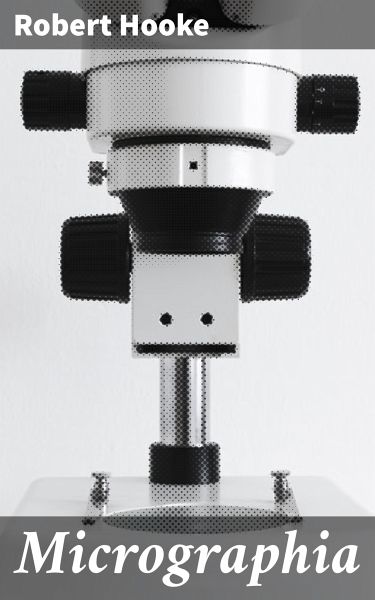
Robert Hooke's "Micrographia," published in 1665, is a groundbreaking exploration of the microscopic world that transformed the field of natural philosophy. Through meticulous observations and intricate illustrations, Hooke unveils the previously unseen complexities of the natural world, employing a rhetorical style that blends scientific inquiry with vivid description. It is often recognized as one of the first works to illustrate the wonders of microscopy, effectively laying the groundwork for future scientific studies and challenging the prevailing Aristotelian notions of matter and structure. Hooke, a polymath and one of the founding members of the Royal Society, was driven by his insatiable curiosity and a commitment to empiricism. His extensive background in physics, architecture, and biology, coupled with the burgeoning scientific revolution of the 17th century, uniquely positioned him to undertake such ambitious observational research. The profound impact of the bubonic plague, which led to broader acceptance of scientific methods, also influenced his work, as it prompted a renewed emphasis on empirical observation and experimentation. Readers are encouraged to delve into "Micrographia" not only for its scientific revelations but also for its historical significance and literary richness. This seminal work invites one to reflect on the intricate and often hidden mechanisms of life, offering an unparalleled glimpse into the world that exists beyond the unaided eye. Hooke's commitment to observation and detail makes this a timeless resource for anyone captivated by nature and the intricacies of life. In this enriched edition, we have carefully created added value for your reading experience: - A succinct Introduction situates the work's timeless appeal and themes. - The Synopsis outlines the central plot, highlighting key developments without spoiling critical twists. - A detailed Historical Context immerses you in the era's events and influences that shaped the writing. - An Author Biography reveals milestones in the author's life, illuminating the personal insights behind the text. - A thorough Analysis dissects symbols, motifs, and character arcs to unearth underlying meanings. - Reflection questions prompt you to engage personally with the work's messages, connecting them to modern life. - Hand-picked Memorable Quotes shine a spotlight on moments of literary brilliance. - Interactive footnotes clarify unusual references, historical allusions, and archaic phrases for an effortless, more informed read.
Dieser Download kann aus rechtlichen Gründen nur mit Rechnungsadresse in A, B, BG, CY, CZ, D, DK, EW, E, FIN, F, GR, H, IRL, I, LT, L, LR, M, NL, PL, P, R, S, SLO, SK ausgeliefert werden.