88,95 €
inkl. MwSt.
Sofort per Download lieferbar
44 °P sammeln

Andere Kunden interessierten sich auch für
") Staging Restoration Comedy (eBook, PDF)36,95 €
Staging Restoration Comedy (eBook, PDF)36,95 €") Shakespeare and Antiblack World-Making (eBook, PDF)88,95 €
Shakespeare and Antiblack World-Making (eBook, PDF)88,95 €") Romantic Actors, Romantic Dramas (eBook, PDF)96,95 €
Romantic Actors, Romantic Dramas (eBook, PDF)96,95 €") The Theatres of Eighteenth-Century Weather (eBook, PDF)96,95 €
The Theatres of Eighteenth-Century Weather (eBook, PDF)96,95 €") The Early Modern Theatre of Cruelty and its Doubles (eBook, PDF)48,95 €
The Early Modern Theatre of Cruelty and its Doubles (eBook, PDF)48,95 €") Theaters of Error (eBook, PDF)96,95 €
Theaters of Error (eBook, PDF)96,95 €") National Myth and Imperial Fantasy (eBook, PDF)40,95 €
National Myth and Imperial Fantasy (eBook, PDF)40,95 €







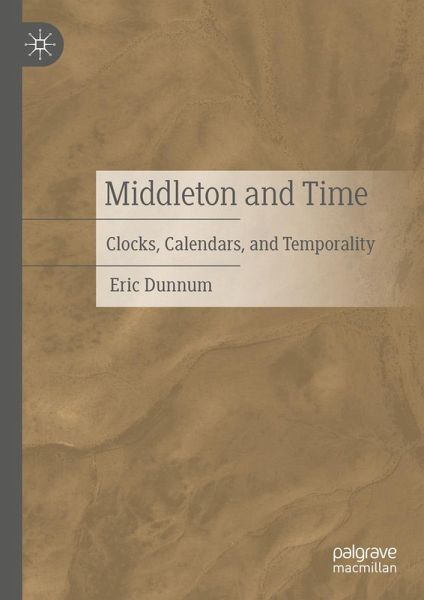
A great deal has been written about early modern temporality, both by scholars of Renaissance drama and historians of chronometry. Much of the former has focused, unsurprisingly, on Shakespeare. This book seeks to broaden the discussion of temporality and the early modern stage by focusing on "our other Shakespeare" - Thomas Middleton, a writer preoccupied with issues of time, chronometry, and temporality. In this first book length study of Middleton's portrayal of time, his representations of clocks and calendars are explored as a way of understanding early modern time consciousness. Middleton, more than any other playwright of his era, was aware of the alienating qualities of these chronometric devices and showed how the subject's experience of time was influenced by them, while also demonstrating how choices in chronometry were influenced by gender, class and religious identity. As a result, his texts explore the complex intersections between sexuality, economic systems, and temporality in the early modern world.
Dieser Download kann aus rechtlichen Gründen nur mit Rechnungsadresse in A, B, BG, CY, CZ, D, DK, EW, E, FIN, F, GR, HR, H, IRL, I, LT, L, LR, M, NL, PL, P, R, S, SLO, SK ausgeliefert werden.