73,95 €
inkl. MwSt.
Sofort per Download lieferbar
37 °P sammeln

Andere Kunden interessierten sich auch für
") Advanced GIScience in Hydro-Geological Hazards (eBook, PDF)152,95 €
Advanced GIScience in Hydro-Geological Hazards (eBook, PDF)152,95 €") American Colonial Spaces in the Philippines (eBook, PDF)0,00 €
American Colonial Spaces in the Philippines (eBook, PDF)0,00 €") The Philippine Archipelago (eBook, PDF)136,95 €
The Philippine Archipelago (eBook, PDF)136,95 €") Domestic Food Production and Food Security in the Caribbean (eBook, PDF)72,95 €
Domestic Food Production and Food Security in the Caribbean (eBook, PDF)72,95 €") Household Vulnerability and Resilience to Economic Shocks (eBook, PDF)57,95 €
Household Vulnerability and Resilience to Economic Shocks (eBook, PDF)57,95 €") Urban Inclusivity in Southern Africa (eBook, PDF)68,95 €
Urban Inclusivity in Southern Africa (eBook, PDF)68,95 €") Spatial Analysis and Modeling in Geographical Transformation Process (eBook, PDF)112,95 €
Spatial Analysis and Modeling in Geographical Transformation Process (eBook, PDF)112,95 €

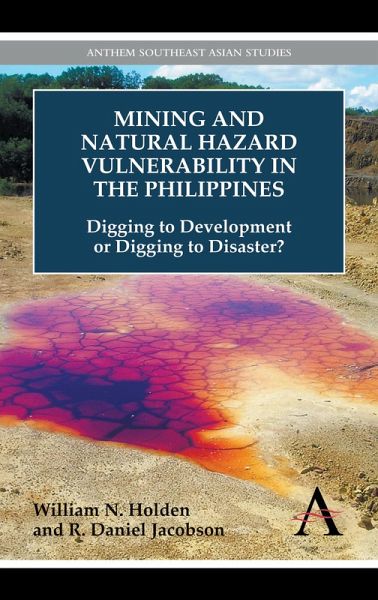
The archipelago of the Philippines is well endowed in nonferrous mineral resources such as copper, gold, lead, silver, nickel, and zinc. In recent years, the government of the Philippines, acting under the influence of the dominant and seemingly ubiquitous neoliberal development paradigm, has liberalized its mining laws to encourage the extraction of minerals by foreign corporations in order to accelerate the development of the economy. The Philippines is also a nation highly prone to a variety of natural hazards such as earthquakes, volcanoes, tsunamis, typhoons, and El Niñoinduced droughts.
Nonferrous metals mining is an activity with a substantial potential for environmental degradation, and these various natural hazards have a high potential to adversely interact with mining's potential for environmental degradation. Earthquakes can destabilize tailings storage facilities, typhoons can flood tailings ponds, and mine-pit dewatering can enhance the competition for groundwater resources during droughts. This study show how natural hazards can amplify the environmental harm prevalent in mining and pose a substantial threat to the livelihoods of archipelago's poor, who are dependent upon subsistence agriculture and subsistence aquaculture.
Nonferrous metals mining is an activity with a substantial potential for environmental degradation, and these various natural hazards have a high potential to adversely interact with mining's potential for environmental degradation. Earthquakes can destabilize tailings storage facilities, typhoons can flood tailings ponds, and mine-pit dewatering can enhance the competition for groundwater resources during droughts. This study show how natural hazards can amplify the environmental harm prevalent in mining and pose a substantial threat to the livelihoods of archipelago's poor, who are dependent upon subsistence agriculture and subsistence aquaculture.
Dieser Download kann aus rechtlichen Gründen nur mit Rechnungsadresse in A, D ausgeliefert werden.