66,95 €
66,95 €
inkl. MwSt.
Sofort per Download lieferbar

33 °P sammeln
66,95 €
Als Download kaufen
66,95 €
inkl. MwSt.
Sofort per Download lieferbar
33 °P sammeln
Jetzt verschenken
Alle Infos zum eBook verschenken
66,95 €
inkl. MwSt.
Sofort per Download lieferbar
Alle Infos zum eBook verschenken
33 °P sammeln

Andere Kunden interessierten sich auch für
") Archaeology across Frontiers and Borderlands (eBook, PDF)87,20 €
Archaeology across Frontiers and Borderlands (eBook, PDF)87,20 €") Bioarchaeology of Frontiers and Borderlands (eBook, PDF)85,95 €
Bioarchaeology of Frontiers and Borderlands (eBook, PDF)85,95 €") Being Scioto Hopewell: Ritual Drama and Personhood in Cross-Cultural Perspective (eBook, PDF)175,95 €
Being Scioto Hopewell: Ritual Drama and Personhood in Cross-Cultural Perspective (eBook, PDF)175,95 €") Modeling Entradas (eBook, PDF)70,95 €
Modeling Entradas (eBook, PDF)70,95 €") Leadership Strategies, Economic Activity, and Interregional Interaction (eBook, PDF)72,95 €
Leadership Strategies, Economic Activity, and Interregional Interaction (eBook, PDF)72,95 €") Effective Civil-Military Interaction in Peace Operations (eBook, PDF)80,95 €
Effective Civil-Military Interaction in Peace Operations (eBook, PDF)80,95 €") The Evolution of Complex Hunter-Gatherers (eBook, PDF)112,95 €
The Evolution of Complex Hunter-Gatherers (eBook, PDF)112,95 €


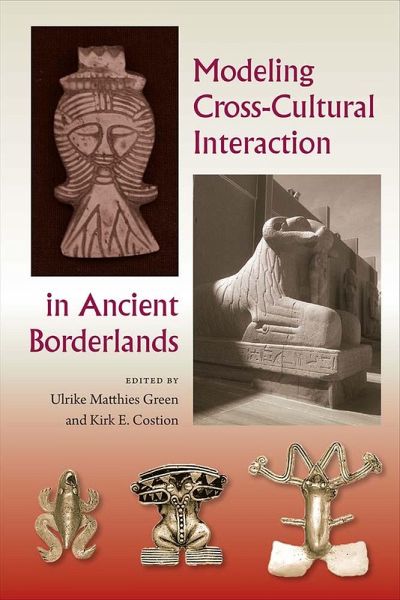
This volume introduces the Cross-Cultural Interaction Model (CCIM), a visual tool for studying the exchanges that take place between different cultures in borderland areas or across long distances. The model helps researchers untangle complex webs of connections among people, landscapes, and artifacts, and can be used to support multiple theoretical viewpoints.
Through case studies, contributors apply the CCIM to various regions and time periods, including Roman Europe, the Greek province of Thessaly in the Late Bronze Age, the ancient Egyptian-Nubian frontier, colonial Greenland in the eighteenth and nineteenth centuries, the Mississippian realm of Cahokia, ancient Costa Rica and Panama, and the Moquegua Valley of Peru in the early Middle Horizon period. They adapt the model to best represent their data, successfully plotting connections in many different dimensions, including geography, material culture, religion and spirituality, and ideology. The model enables them to expose what motivates people to participate in cultural exchange, as well as the influences that people reject in these interactions.
These results demonstrate the versatility and analytical power of the CCIM. Bridging the gap between theory and data, this tool can prompt users to rethink previous interpretations of their research, leading to new ideas, new theories, and new directions for future study.
Contributors: Meghan E. Buchanan Michele R. Buzon Kirk Costion Bryan Feuer Ulrike Matthies Green Scott Palumbo Stuart Tyson Smith Peter Andreas Toft Peter S. Wells
Through case studies, contributors apply the CCIM to various regions and time periods, including Roman Europe, the Greek province of Thessaly in the Late Bronze Age, the ancient Egyptian-Nubian frontier, colonial Greenland in the eighteenth and nineteenth centuries, the Mississippian realm of Cahokia, ancient Costa Rica and Panama, and the Moquegua Valley of Peru in the early Middle Horizon period. They adapt the model to best represent their data, successfully plotting connections in many different dimensions, including geography, material culture, religion and spirituality, and ideology. The model enables them to expose what motivates people to participate in cultural exchange, as well as the influences that people reject in these interactions.
These results demonstrate the versatility and analytical power of the CCIM. Bridging the gap between theory and data, this tool can prompt users to rethink previous interpretations of their research, leading to new ideas, new theories, and new directions for future study.
Contributors: Meghan E. Buchanan Michele R. Buzon Kirk Costion Bryan Feuer Ulrike Matthies Green Scott Palumbo Stuart Tyson Smith Peter Andreas Toft Peter S. Wells
Dieser Download kann aus rechtlichen Gründen nur mit Rechnungsadresse in A, D ausgeliefert werden.