28,95 €
inkl. MwSt.
Sofort per Download lieferbar
14 °P sammeln

Andere Kunden interessierten sich auch für
") Dwelling Urbanism (eBook, PDF)21,95 €
Dwelling Urbanism (eBook, PDF)21,95 €") Tod und Leben großer amerikanischer Städte (eBook, PDF)31,95 €
Tod und Leben großer amerikanischer Städte (eBook, PDF)31,95 €") Urbanism and Dictatorship (eBook, PDF)21,95 €
Urbanism and Dictatorship (eBook, PDF)21,95 €") Manifesta 13 Marseille (eBook, PDF)29,99 €
Manifesta 13 Marseille (eBook, PDF)29,99 €") Emergent Architectural Territories in East Asian Cities (eBook, PDF)33,95 €
Emergent Architectural Territories in East Asian Cities (eBook, PDF)33,95 €") Kleinstadt, Steildach, Volksgemeinschaft (eBook, PDF)31,95 €
Kleinstadt, Steildach, Volksgemeinschaft (eBook, PDF)31,95 €") Der urbane Code Chinas (eBook, PDF)27,95 €
Der urbane Code Chinas (eBook, PDF)27,95 €







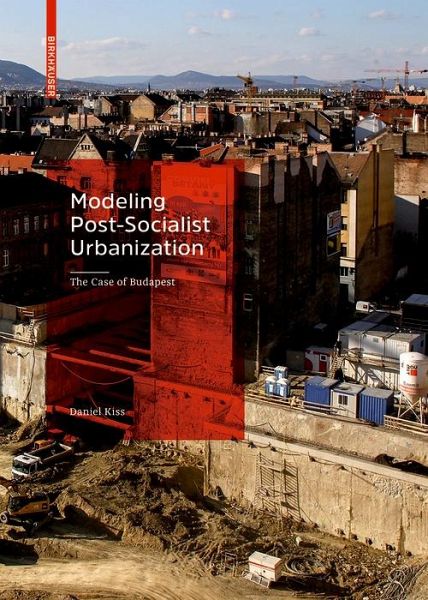
This book examines Budapest's urban development, planning, and governance between 1990 and 2010. In the face of socialist urbanization's structural legacies, the recent radical decentralization of government and resources and the impacts of a post-socialist war of ideologies, a trend is analyzed which leads to an urbanization mostly characterized by business-dominated development projects not integrated into any grand urban design.
The author claims this outcome to be typical of the development of post-socialist cities and presents it in an abstract model establishing links between particular historical background conditions and the phenomena of Budapest's recent urbanization.
With a conversation between Kees Christiaanse, Ákos Moravánszky, and the author.
The author claims this outcome to be typical of the development of post-socialist cities and presents it in an abstract model establishing links between particular historical background conditions and the phenomena of Budapest's recent urbanization.
With a conversation between Kees Christiaanse, Ákos Moravánszky, and the author.
Dieser Download kann aus rechtlichen Gründen nur mit Rechnungsadresse in A, B, BG, CY, CZ, D, DK, EW, E, FIN, F, GR, HR, H, IRL, I, LT, L, LR, M, NL, PL, P, R, S, SLO, SK ausgeliefert werden.