5,99 €
inkl. MwSt.
Sofort per Download lieferbar
3 °P sammeln

Andere Kunden interessierten sich auch für
") Auto-Erotism - A Psychiatric Study of Onanism and Neurosis (eBook, ePUB)7,99 €
Auto-Erotism - A Psychiatric Study of Onanism and Neurosis (eBook, ePUB)7,99 €") The Invasion of Compulsory Sex-Morality (eBook, ePUB)7,99 €
The Invasion of Compulsory Sex-Morality (eBook, ePUB)7,99 €") Sexual Orientation and Psychodynamic Psychotherapy (eBook, ePUB)25,95 €
Sexual Orientation and Psychodynamic Psychotherapy (eBook, ePUB)25,95 €") Porn: A Hard Look: There's More Than Meets the Eye (eBook, ePUB)6,49 €
Porn: A Hard Look: There's More Than Meets the Eye (eBook, ePUB)6,49 € (eBook, ePUB)") Moral Psychology: An Introduction To The Social Psychology, Biological Psychology and Applied Psychology Of Morality (An Introductory Series) (eBook, ePUB)6,49 €
Moral Psychology: An Introduction To The Social Psychology, Biological Psychology and Applied Psychology Of Morality (An Introductory Series) (eBook, ePUB)6,49 €") Psychoanalysis, Classic Social Psychology and Moral Living (eBook, ePUB)36,95 €
Psychoanalysis, Classic Social Psychology and Moral Living (eBook, ePUB)36,95 €") A Psychodynamic Approach to Female Domination in BDSM Relationships (eBook, ePUB)38,95 €
A Psychodynamic Approach to Female Domination in BDSM Relationships (eBook, ePUB)38,95 €



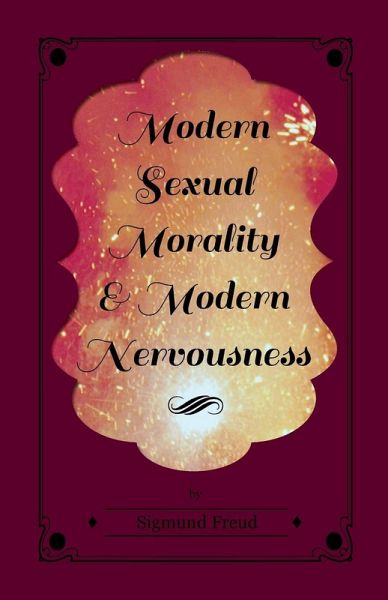
Whether one accepts Freud's teachings in toto or rejects a great part of them as unsubstantiated and untenable, one must admit that his influence on modern thought has been tremendous, incalculable-and on the whole beneficial. Many shams and hypocrisies have been uncovered and exploded by the ruthless analysis of modern psychology known as psychoanalysis, and in no field have the Freudian teachings borne better fruit than in the field of human sexology. That psychoanalysis has been exploited by charlatans and ignorant laymen for their own benefit and to the detriment of their victims is not to be laid at the door of its founder. Of all Freud's writings-and their number is enormous-the writer considers the present essay the most important-the most important barring none. In this essay Freud clearly states his position on the importance of the sex instinct in modern civilization, on the relationship between sexual abstinence and nervousness or neurosis, and boldly proclaims, what medieval theologians still persist in denying, that man's sexual instinct is not at all primarily meant to serve purposes f reproduction but is intended to furnish certain forms of gratification.
Dieser Download kann aus rechtlichen Gründen nur mit Rechnungsadresse in A, D ausgeliefert werden.
Sigmund Freud (1856-1939) was an Austrian neurologist and the founder of psychoanalysis-a theory of how the mind works and a school of psychotherapy. He published numerous enormously influential works on culture, art, politics, and humanity, in addition to his scientific writings.
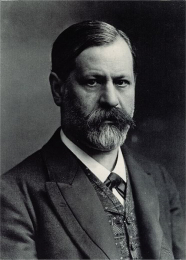
Wikipedia, urheberrechtliche Schutzfrist abgelaufen