Sie sind bereits eingeloggt. Klicken Sie auf 2. tolino select Abo, um fortzufahren.
Bitte loggen Sie sich zunächst in Ihr Kundenkonto ein oder registrieren Sie sich bei bücher.de, um das eBook-Abo tolino select nutzen zu können.
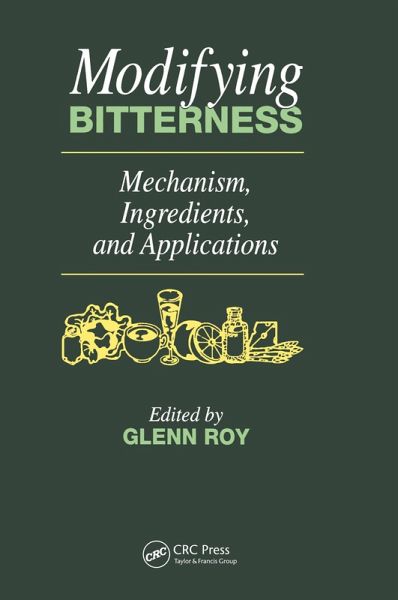
Only recently has bitterness control become of commercial importance to a food or pharmaceutical formulation chemist. Over the years, an increasing interest in more palatable food and beverage products with low fat and low sugar content has arisen, thus creating a market need for the control of bitterness perception. This is the first, comprehensive treatment of this subject in book form. Organized primarily by ingredients or processing approaches affecting the bitter taste reduction or inhibition, this thorough review includes an in-depth and thoroughly referenced review of mechanisms,…mehr
Only recently has bitterness control become of commercial importance to a food or pharmaceutical formulation chemist. Over the years, an increasing interest in more palatable food and beverage products with low fat and low sugar content has arisen, thus creating a market need for the control of bitterness perception. This is the first, comprehensive treatment of this subject in book form. Organized primarily by ingredients or processing approaches affecting the bitter taste reduction or inhibition, this thorough review includes an in-depth and thoroughly referenced review of mechanisms, ingredients and applications of bitter taste reduction or inhibition.
Dieser Download kann aus rechtlichen Gründen nur mit Rechnungsadresse in A, B, BG, CY, CZ, D, DK, EW, E, FIN, F, GR, HR, H, IRL, I, LT, L, LR, M, NL, PL, P, R, S, SLO, SK ausgeliefert werden.
Die Herstellerinformationen sind derzeit nicht verfügbar.
Autorenporträt
As the son of a German-bred, chemist-turned-perfumer for a time, Glenn Roy began training in the science of flavors and fragrances in1971 with Tombarel Freres in Grasse, France. As a field laborer from before sunrise to noon, he harvested botanic raw materials and processed them to produce essential oils and absolutes. Perfumery studies continued as part-time employment with Givaudan Corp. and Roure, Bertrand, Dupont,Inc., both in New Jersey. In 1975 he graduated with a BA in Chemistry from St. Michael's College in Winooski, Vermont. There, Mr. Roy researched and published, with the late Dr. Gilbert Grady, a new method for the purification of eucalyptol 1,8-cineole from its olfactorily undesirable 1,4-isomer. Subsequently, he graduated with MS (1977) and Ph.D. (1980) degrees in Organic Chemistry from study and research at The Ohio State University, Columbus, Ohio, under Dr. Philip D. Magnus, Royal Chemistry Society Fellow. A group discovery of new organosilicon reagent methodology was illustrated in the syntheses of Frontal in, a beetle pheromone and Latia Lucifem, a firefly lumine science principle. The organosilicon reagents are now commercially available from Petrarch Co. In 1980 Dr. Roy entered a career in the food industry. Six years of research were conducted in flavor generation and synthesis of high potency sweeteners and taste modifiers at (then) General Foods Corp. (Tarrytown, NY). In 1986 an opportunity arose to pursue research at The NutrasweetCo. (Mt. Prospect, IL) in the area of nonfermentable noncaloric sugars and fat macronutrient substitutes. Additional research in taste modification resulted in the discovery of bitterness inhibitors. The impending breakup of The NutraSweet Co. R&D with patent expiration prompted a move in 1990 to a managerial position in Food Processing Technical Services with Calgon Carbon Corp. in Pittsburgh, Pennsylvania. There, Dr. Roy authored a book on activated carbon processing and applications for the food and pharmaceutical industries which was published by Technomic Publishing Co., Inc. and was granted a U.S. patent for a continuous food-frying oil treatment to reduce color and polymer formation. The process is to be commercialized when regulations for oil contaminants emerge. In November 1994, the annual corporate downsizing of Calgon Carbon Corp. resulted in unemployment. In April 1995, Glenn Roy joined The Pepsi-Cola Company (Valhalla, NY) as a Principal Research Scientist in Product/Ingredient Technology of Nutritional and Botanical Beverages. Dr. Roy continues to maintain a position as Field Editor of Food Science & Technology with Technomic Publishing Co., Inc.
Inhaltsangabe
Preface Acknowledgement Introduction Section I: Mechanism, Ingredients, Applications 1. RECENT OVERVIEW OF THE MECH ANISM OF BITTER TASTE /GLENN ROY Transduction and Perception Rats and Mice Gerbils Bovine Rabbit Frog Primates and Humans References 2. GENER AL CORRELATION BETWEEN MODELS OF SWEETNESS AND BITTERNESS PERCEPTION /GLENN ROY Theoretical Studies Common Similarities, Experimental Data YI Sensory Measurements Case Studies References 3. THE EVOWTION OF IN VITRO TASTE SENSORS /GLENN ROY References 4. NEWER CHEMICAL IDENTIFICATION OF BITTER PRINCIPLES AND THEIR SOURCES /GLENN ROY Health Benefits Bitter as Deterrent Bitter Principles and Sources Miscellaneous Bitter Principles and Sources References 5. GENERAL INGREDIENT OR PROCESS APPROACHES TO BITTERNESS INHIBITION AND REDUCTION IN FOODS AND BEVERAGES /GLENN ROY Ingredient Approaches Process Approaches Inclusion Complexes, Chelating Agents, Polysaccharides and Ion Exchange Membranes Chemical Modifications of Bitter Substrates Specific Applications of Bitterness Inhibition and Reduction References Section II: A Symposium 6. INTERACTIONS BETWEEN SWEET AND BITTER TASTES /D. ERIC WALTERS Introduction Experimental Observations Mechanistic Implications Practical Implications Conclusion References 7. FACTORS AFFECTING THE PERCEPTION OF BITTERNESS: A REVIEW /J. H. THORNGATE Ill Introduction Bitter Taste Receptor Events Innervation and Coding Bitterness Measurement Scalar Studies Temporal Studies Factors Affecting Bitterness Perception: Compound Effects Taste Interactions Medium of Presentation Viscosity Temperature Oral Chemical Irritants Ethanol Mode of Presentation Taste Modifiers Prop Status Salivary Status Age Conclusions Acknowledgements References 8. BITTERNESS PERCEPTION ACROSS THE LIFE SPAN /CLAIRE MURPHY and JILL RAZANI Taste T hreshold Suprathreshold Intensity Weber Ratios Chemosensory Preference Conclusion Acknowledgement References 9. SUPPRESSION OF BITTERNESS BY SODIUM: IMPLICATIONS FOR FLAVOR ENHANCEMENT /P.A. S. BRESLIN and G. K. BEAUCHAMP Introduction General Methods Results Discussion Summary Acknowledgements References 10. DEVELOPMENT OF A LOW SODIUM SALT: A MODEL FOR BITTERNESS INHIBITION /ROBERT J. KURTZ and WILLIAM D. FULLER References 11. THE USE OF EXOPEPTIDASES IN BITTER TASTE MODIFICATION /GRAHAM BRUCE and DENISE PAWLETT Introduction The Nature of Bitterness Enzyme Selection Peptidases and Debittering Use of Peptidases to Debitter Protein Hydrolyzates Use of Peptidases to Prevent Bitterness in Cheese Summary References 12. SPECIFIC INHIBITOR FOR BITTER TASTE /YOSHIHISA KATSURAGI and KENZO KURIHARA Introduction Inhibition of Frog Taste Nerve Responses to Bitter Substances by the Lipoprotein High Adsorption A bility of Phosphatidic Acid Containing Lipoproteins to Frog Tongue Surface and Hydrophobic Model Membranes Selective Inhibition of Bitter Taste in Humans by Phosphatidic Acid Containing Lipoprotein Inhibition of Bitter Taste in Humans by Phosphatidic Acid Summary and Concluding Remarks References Section III: Applications in Oral Pharmaceuticals 13. GENERAL INGREDIENT OR PROCESS APPROACHES TO BITTERNESS INHIBITION AND REDUCTION IN ORAL PHARMACEUTICALS /GLENN ROY Introduction Sweeteners, Flavors and Amino Acids Lipids Lecithin Like Substances Surfactants Coatings and Complexes with Carbohydrates, Resins, Proteins and Zeolites Carbohydrates Proteins Inclusion Complexes Resins Zeolites Salt Preparation Functional Group Alteration References 14. CAUTIONS AND PROSPECTS IN TASTE MASKING FORMULATIONS /GLENN ROY Applications that Need Commercialization of New Technologies and Additives References Index Editor's Biography.
Preface Acknowledgement Introduction Section I: Mechanism, Ingredients, Applications 1. RECENT OVERVIEW OF THE MECH ANISM OF BITTER TASTE /GLENN ROY Transduction and Perception Rats and Mice Gerbils Bovine Rabbit Frog Primates and Humans References 2. GENER AL CORRELATION BETWEEN MODELS OF SWEETNESS AND BITTERNESS PERCEPTION /GLENN ROY Theoretical Studies Common Similarities, Experimental Data YI Sensory Measurements Case Studies References 3. THE EVOWTION OF IN VITRO TASTE SENSORS /GLENN ROY References 4. NEWER CHEMICAL IDENTIFICATION OF BITTER PRINCIPLES AND THEIR SOURCES /GLENN ROY Health Benefits Bitter as Deterrent Bitter Principles and Sources Miscellaneous Bitter Principles and Sources References 5. GENERAL INGREDIENT OR PROCESS APPROACHES TO BITTERNESS INHIBITION AND REDUCTION IN FOODS AND BEVERAGES /GLENN ROY Ingredient Approaches Process Approaches Inclusion Complexes, Chelating Agents, Polysaccharides and Ion Exchange Membranes Chemical Modifications of Bitter Substrates Specific Applications of Bitterness Inhibition and Reduction References Section II: A Symposium 6. INTERACTIONS BETWEEN SWEET AND BITTER TASTES /D. ERIC WALTERS Introduction Experimental Observations Mechanistic Implications Practical Implications Conclusion References 7. FACTORS AFFECTING THE PERCEPTION OF BITTERNESS: A REVIEW /J. H. THORNGATE Ill Introduction Bitter Taste Receptor Events Innervation and Coding Bitterness Measurement Scalar Studies Temporal Studies Factors Affecting Bitterness Perception: Compound Effects Taste Interactions Medium of Presentation Viscosity Temperature Oral Chemical Irritants Ethanol Mode of Presentation Taste Modifiers Prop Status Salivary Status Age Conclusions Acknowledgements References 8. BITTERNESS PERCEPTION ACROSS THE LIFE SPAN /CLAIRE MURPHY and JILL RAZANI Taste T hreshold Suprathreshold Intensity Weber Ratios Chemosensory Preference Conclusion Acknowledgement References 9. SUPPRESSION OF BITTERNESS BY SODIUM: IMPLICATIONS FOR FLAVOR ENHANCEMENT /P.A. S. BRESLIN and G. K. BEAUCHAMP Introduction General Methods Results Discussion Summary Acknowledgements References 10. DEVELOPMENT OF A LOW SODIUM SALT: A MODEL FOR BITTERNESS INHIBITION /ROBERT J. KURTZ and WILLIAM D. FULLER References 11. THE USE OF EXOPEPTIDASES IN BITTER TASTE MODIFICATION /GRAHAM BRUCE and DENISE PAWLETT Introduction The Nature of Bitterness Enzyme Selection Peptidases and Debittering Use of Peptidases to Debitter Protein Hydrolyzates Use of Peptidases to Prevent Bitterness in Cheese Summary References 12. SPECIFIC INHIBITOR FOR BITTER TASTE /YOSHIHISA KATSURAGI and KENZO KURIHARA Introduction Inhibition of Frog Taste Nerve Responses to Bitter Substances by the Lipoprotein High Adsorption A bility of Phosphatidic Acid Containing Lipoproteins to Frog Tongue Surface and Hydrophobic Model Membranes Selective Inhibition of Bitter Taste in Humans by Phosphatidic Acid Containing Lipoprotein Inhibition of Bitter Taste in Humans by Phosphatidic Acid Summary and Concluding Remarks References Section III: Applications in Oral Pharmaceuticals 13. GENERAL INGREDIENT OR PROCESS APPROACHES TO BITTERNESS INHIBITION AND REDUCTION IN ORAL PHARMACEUTICALS /GLENN ROY Introduction Sweeteners, Flavors and Amino Acids Lipids Lecithin Like Substances Surfactants Coatings and Complexes with Carbohydrates, Resins, Proteins and Zeolites Carbohydrates Proteins Inclusion Complexes Resins Zeolites Salt Preparation Functional Group Alteration References 14. CAUTIONS AND PROSPECTS IN TASTE MASKING FORMULATIONS /GLENN ROY Applications that Need Commercialization of New Technologies and Additives References Index Editor's Biography.
Es gelten unsere Allgemeinen Geschäftsbedingungen: www.buecher.de/agb
Impressum
www.buecher.de ist ein Internetauftritt der buecher.de internetstores GmbH
Geschäftsführung: Monica Sawhney | Roland Kölbl | Günter Hilger
Sitz der Gesellschaft: Batheyer Straße 115 - 117, 58099 Hagen
Postanschrift: Bürgermeister-Wegele-Str. 12, 86167 Augsburg
Amtsgericht Hagen HRB 13257
Steuernummer: 321/5800/1497
USt-IdNr: DE450055826