Sie sind bereits eingeloggt. Klicken Sie auf 2. tolino select Abo, um fortzufahren.
Bitte loggen Sie sich zunächst in Ihr Kundenkonto ein oder registrieren Sie sich bei bücher.de, um das eBook-Abo tolino select nutzen zu können.
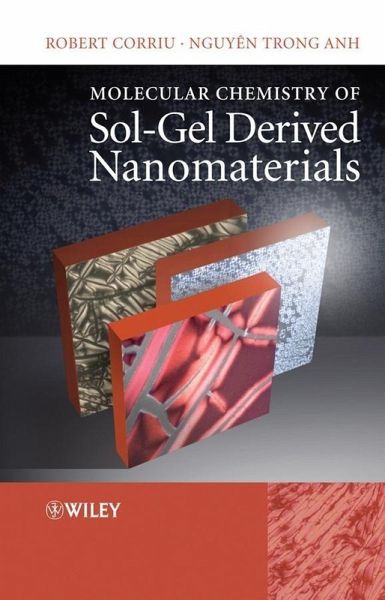
Presenting the wide range of synthetic possibilities opened by sol-gel processes in the field of organic-inorganic materials, Molecular Chemistry of Sol-Gel Derived Nanomaterials discusses the state of the art in the synthesis of the various nanomaterials. The text includes examples of applications, including photoluminescent nanocomposites, grafted nanomaterials for selective separations of ions or isotopes, for cascade syntheses, chelation of transition metals and lanthanides by lamellar structured nanomaterials, and immobilized enzymes on mesoporous nanomaterials. This indispensable text…mehr
Presenting the wide range of synthetic possibilities opened by sol-gel processes in the field of organic-inorganic materials, Molecular Chemistry of Sol-Gel Derived Nanomaterials discusses the state of the art in the synthesis of the various nanomaterials. The text includes examples of applications, including photoluminescent nanocomposites, grafted nanomaterials for selective separations of ions or isotopes, for cascade syntheses, chelation of transition metals and lanthanides by lamellar structured nanomaterials, and immobilized enzymes on mesoporous nanomaterials. This indispensable text for graduate students, engineers, and scientists concludes with a look toward future developments.
Dieser Download kann aus rechtlichen Gründen nur mit Rechnungsadresse in D ausgeliefert werden.
Die Herstellerinformationen sind derzeit nicht verfügbar.
Autorenporträt
Robert Corriu is Emeritus Professor at the Institut Charles Gerhardt at the Université Montpellier II (France). In 1957, Professor Corriu started his academic career and later, in 1991, he became the chair of Molecular Chemistry at the Institut Universitaire de France. The same year he was also elected to the Institut de France (National Sciences Academy) and, in 2001, to the National Academy of Technologies and to the Polish Academy of Sciences in 2002. He was awarded the SUE Award? by the French Chemical Society, the Lebel Award, an award from the Japan Society for Promotion of Science, the ACS Kipping Award, and received awards from the Humboldt Foundation and Max Planck Society and he obtained the Wacker prize and the Wittig Grignard Award. Professor Corriu has published over 700 papers including about 80 reviews or chapters of books. He also has a patent application for a method for preparing organic-inorganic hybrid materials with controlled porosity and functionality for separating gases and is the editor of two books.
Nguyen Trong Anh is a former professor at the Ecole Polytechnique and Directeur de Recherche au Centre National de la Recherche Scientifique (France). He is the author of four books including Frontier Orbitals published by John Wiley and Sons in 2007.
Inhaltsangabe
Preface. About the Authors. 1 Molecular Chemistry and Nanosciences. 1.1 Introduction. 1.2 Scope and Origin of Nanosciences: The 'Top-Down' and 'Bottom-Up' Approaches. 1.3 Chemical Mutation: From an Exploratory to a Creative Science. 1.4 Carbon and Ceramic Fibers: The Nanomaterial 'Ancestors'. 1.5 Conclusions. References. 2 Nano-Objects. 2.1 Introduction. 2.2 Presentation of Nano-Objects. 2.3 Synthesis of Nano-Objects. 2.4 The Nano-Object: Entry into Nanosciences. References. 3 Introduction to Material Chemistry. 3.1 General Remarks. 3.2 Inorganic Materials: Crystals and Glasses. 3.3 Thermodynamically Controlled Organic-Inorganic Hybrid Materials. 3.4 Ceramic Materials Obtained from Organometallic Polymers: Ceramics with Interpenetrating Networks. 3.5 Inorganic Polymer Materials (Sol-Gel Process). 3.6 Inorganic Polymerization and Molecular Chemistry. 3.7 Silica and Molecular Chemistry: A Dream Team. 4 From Nano-Object to Nanomaterial. 4.1 The Different Types of Nanomaterials. 4.2 Inorganic Polymerization: A Major Route to Nanomaterials. 4.3 Nanocomposite Materials. 4.4 Grafted Materials. 4.5 Selective Separation. 4.6 Materials Obtained by Polycondensation of Monosubstituted Trialkoxysilanes. 4.7 Multistage Syntheses - Cascade Reactions. References. 5 Nanostructured Materials. 5.1 General Remarks. 5.2 Synthesis of Hybrid Nanomaterials. 5.3 Nanostructured Hybrid Materials. 5.4 Kinetic Control of the Texture of Nanostructured Hybrid Materials. 5.5 Supramolecular Self-Organization Induced by Hydrogen Bonds. 5.6 Supramolecular Self-Organization Induced by Weak van der Waals Type Bonds. 5.7 Lamellar Materials. 5.8 Prospects. 5.9 Some Possible Developments. References. 6 Chemistry Leading to Interactive Nanomaterials. 6.1 Introduction. 6.2 Smart Materials. 6.3 The Route to Interactive Materials - Definitions. 6.4 Mesoporous Materials. 6.5 Functionalization of the Pores. 6.6 Functionalization of the Framework. 6.7 Importance of Functionalization and of Weight Analyses. 6.8 On the Way to Interactive Nanomaterials. 6.9 Preparation of New Matrices. 6.10 On the Way to Biological Applications. 6.11 Conclusions. References. 7 Prospects and Stakes. 7.1 General Remarks. 7.2 Predictable Developments. References. Index.
Preface. About the Authors. 1 Molecular Chemistry and Nanosciences. 1.1 Introduction. 1.2 Scope and Origin of Nanosciences: The 'Top-Down' and 'Bottom-Up' Approaches. 1.3 Chemical Mutation: From an Exploratory to a Creative Science. 1.4 Carbon and Ceramic Fibers: The Nanomaterial 'Ancestors'. 1.5 Conclusions. References. 2 Nano-Objects. 2.1 Introduction. 2.2 Presentation of Nano-Objects. 2.3 Synthesis of Nano-Objects. 2.4 The Nano-Object: Entry into Nanosciences. References. 3 Introduction to Material Chemistry. 3.1 General Remarks. 3.2 Inorganic Materials: Crystals and Glasses. 3.3 Thermodynamically Controlled Organic-Inorganic Hybrid Materials. 3.4 Ceramic Materials Obtained from Organometallic Polymers: Ceramics with Interpenetrating Networks. 3.5 Inorganic Polymer Materials (Sol-Gel Process). 3.6 Inorganic Polymerization and Molecular Chemistry. 3.7 Silica and Molecular Chemistry: A Dream Team. 4 From Nano-Object to Nanomaterial. 4.1 The Different Types of Nanomaterials. 4.2 Inorganic Polymerization: A Major Route to Nanomaterials. 4.3 Nanocomposite Materials. 4.4 Grafted Materials. 4.5 Selective Separation. 4.6 Materials Obtained by Polycondensation of Monosubstituted Trialkoxysilanes. 4.7 Multistage Syntheses - Cascade Reactions. References. 5 Nanostructured Materials. 5.1 General Remarks. 5.2 Synthesis of Hybrid Nanomaterials. 5.3 Nanostructured Hybrid Materials. 5.4 Kinetic Control of the Texture of Nanostructured Hybrid Materials. 5.5 Supramolecular Self-Organization Induced by Hydrogen Bonds. 5.6 Supramolecular Self-Organization Induced by Weak van der Waals Type Bonds. 5.7 Lamellar Materials. 5.8 Prospects. 5.9 Some Possible Developments. References. 6 Chemistry Leading to Interactive Nanomaterials. 6.1 Introduction. 6.2 Smart Materials. 6.3 The Route to Interactive Materials - Definitions. 6.4 Mesoporous Materials. 6.5 Functionalization of the Pores. 6.6 Functionalization of the Framework. 6.7 Importance of Functionalization and of Weight Analyses. 6.8 On the Way to Interactive Nanomaterials. 6.9 Preparation of New Matrices. 6.10 On the Way to Biological Applications. 6.11 Conclusions. References. 7 Prospects and Stakes. 7.1 General Remarks. 7.2 Predictable Developments. References. Index.
Es gelten unsere Allgemeinen Geschäftsbedingungen: www.buecher.de/agb
Impressum
www.buecher.de ist ein Internetauftritt der buecher.de internetstores GmbH
Geschäftsführung: Monica Sawhney | Roland Kölbl | Günter Hilger
Sitz der Gesellschaft: Batheyer Straße 115 - 117, 58099 Hagen
Postanschrift: Bürgermeister-Wegele-Str. 12, 86167 Augsburg
Amtsgericht Hagen HRB 13257
Steuernummer: 321/5800/1497
USt-IdNr: DE450055826