72,95 €
inkl. MwSt.
Sofort per Download lieferbar
36 °P sammeln

Andere Kunden interessierten sich auch für
") Molecular Food Microbiology (eBook, ePUB)72,95 €
Molecular Food Microbiology (eBook, ePUB)72,95 €") Enzymes of Psychrotrophs in Raw Food (eBook, PDF)568,95 €
Enzymes of Psychrotrophs in Raw Food (eBook, PDF)568,95 €") Plant-Based Bioactive Compounds and Food Ingredients (eBook, PDF)145,95 €
Plant-Based Bioactive Compounds and Food Ingredients (eBook, PDF)145,95 €") Advances in Flavonoids for Human Health and Prevention of Diseases (eBook, PDF)130,95 €
Advances in Flavonoids for Human Health and Prevention of Diseases (eBook, PDF)130,95 €") Eco-Friendly Biobased Products Used in Microbial Diseases (eBook, PDF)56,95 €
Eco-Friendly Biobased Products Used in Microbial Diseases (eBook, PDF)56,95 €") Antioxidant-Based Therapies for Disease Prevention and Management (eBook, PDF)130,95 €
Antioxidant-Based Therapies for Disease Prevention and Management (eBook, PDF)130,95 €") CRC Handbook of Medicinal Spices (eBook, PDF)67,95 €
CRC Handbook of Medicinal Spices (eBook, PDF)67,95 €
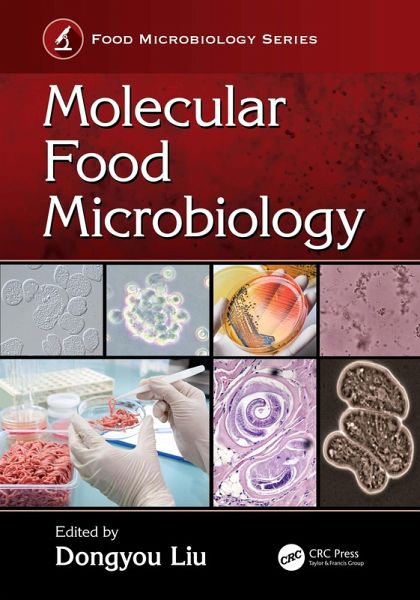
The elucidation of DNA double helix in 1953 and the publication of DNA cloning protocol in 1973 have put wings under the sail of molecular biology, which has since quietly revolutionized many fields of biological science, including food microbiology. Exploiting the power and versatility of molecular technologies, molecular food microbiology extends and greatly improves on phenotypically based food microbiology, leading to the development of better diagnostics for foodborne infections and intoxications, and contributing to the design of more effective therapeutics and prophylaxes against foodborne diseases.
Forming part of the Food Microbiology series, Molecular Food Microbiology provides a state of art coverage on molecular techniques applicable to food microbiology. While the introductory chapter contains an overview on the principles of current DNA, RNA and protein techniques and discusses their utility in helping solve practical problems that food microbiology is facing now and in the future, the remaining chapters present detailed moleuclar analyses of selective foodborne viruses, bacteria, fungi and parasites.
Key Features:
With contributions from international scientists involved in molecular food microbiology research, this book constitutes an informative textbook for undergraduates and postgraduates majoring in food, medical, and veterinary microbiology; represents an indispensable guide for food, medical, and veterinary scientists engaged in molecular food microbiology research and development; and offers a contemporary update for scholars and educators trying to keep in touch with the latest developments in molecular food microbiology.
Forming part of the Food Microbiology series, Molecular Food Microbiology provides a state of art coverage on molecular techniques applicable to food microbiology. While the introductory chapter contains an overview on the principles of current DNA, RNA and protein techniques and discusses their utility in helping solve practical problems that food microbiology is facing now and in the future, the remaining chapters present detailed moleuclar analyses of selective foodborne viruses, bacteria, fungi and parasites.
Key Features:
- Contains a state of art overview on moleuclar techniques applicable to food microbiology research and development
- Presents in-depth molecular analysis of selective foodborne viruses, bacteria, fungi and parasites
- Highlights the utility of molecular tecniques for accurate diagnosis and effective control of foodborne diseases
- Includes expert contributions from international scientists involved in molecular food microbiology research
- Represents a highly informative textbook for students majoring in food, medical, and veterinary microbiology
- Offers a contemporary reference for scholars and educators wishing to keep abreast with the latest developments in molecular food microbiology
With contributions from international scientists involved in molecular food microbiology research, this book constitutes an informative textbook for undergraduates and postgraduates majoring in food, medical, and veterinary microbiology; represents an indispensable guide for food, medical, and veterinary scientists engaged in molecular food microbiology research and development; and offers a contemporary update for scholars and educators trying to keep in touch with the latest developments in molecular food microbiology.
Dieser Download kann aus rechtlichen Gründen nur mit Rechnungsadresse in A, B, BG, CY, CZ, D, DK, EW, E, FIN, F, GR, HR, H, IRL, I, LT, L, LR, M, NL, PL, P, R, S, SLO, SK ausgeliefert werden.