Sie sind bereits eingeloggt. Klicken Sie auf 2. tolino select Abo, um fortzufahren.
Bitte loggen Sie sich zunächst in Ihr Kundenkonto ein oder registrieren Sie sich bei bücher.de, um das eBook-Abo tolino select nutzen zu können.
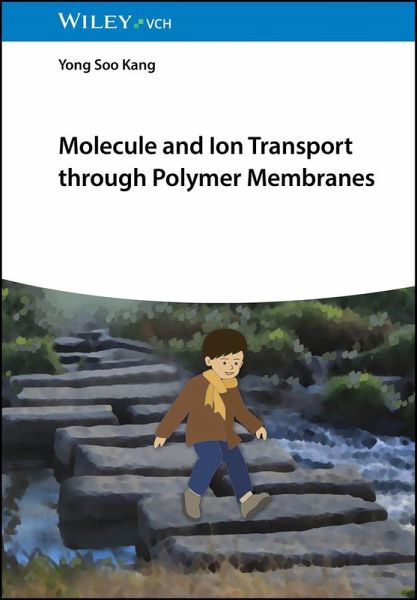
An accurate and up-to-date exploration of molecular and ionic transport phenomena through polymeric membranes In Molecule and Ion Transport through Polymer Membranes , distinguished researcher Yong Soo Kang delivers an authoritative and organized resource about polymeric membrane technology. The book introduces the fundamentals of the transport phenomena of neutral molecules and ions as well as the underlying common principles between the two. The author establishes a foundation for designing new polymeric materials using basic principles, like Fick's law, and to introduce a variety of…mehr
An accurate and up-to-date exploration of molecular and ionic transport phenomena through polymeric membranes
In Molecule and Ion Transport through Polymer Membranes, distinguished researcher Yong Soo Kang delivers an authoritative and organized resource about polymeric membrane technology. The book introduces the fundamentals of the transport phenomena of neutral molecules and ions as well as the underlying common principles between the two.
The author establishes a foundation for designing new polymeric materials using basic principles, like Fick's law, and to introduce a variety of fundamental theories and concepts about polymer structure and permeation properties. Readers will also find:
A thorough introduction to the underlying principles and experimental techniques necessary to study molecular and ionic transport processes
Comprehensive explorations of the separation and transportation of small molecules and ions by membranes
Practical discussions of the transport properties of neutral molecules and ions
Complete treatments of fundamental principles and theories relevant to mass transport through polymeric membranes
Perfect for polymer chemists, process engineers, electrochemists, membrane scientists, and materials scientists, Molecule and Ion Transport through Polymer Membranes will also benefit mechanical and chemical engineers.
Dieser Download kann aus rechtlichen Gründen nur mit Rechnungsadresse in D ausgeliefert werden.
Die Herstellerinformationen sind derzeit nicht verfügbar.
Autorenporträt
Yong Soo Kang is Professor Emeritus and former Distinguished Professor in the Department of Energy Engineering at Hanyang University, Seoul, Republic of Korea. His research is focused on the transport of neutral molecules and ions through polymer membranes and the relationship between the structure and transport properties of polymers.
Inhaltsangabe
Preface 1. Overview of Molecule and Ion Transport through Polymer Membranes 1.1. Molecule Transport 1.2. Ion Transport 1.3. Similarities and Differences between Molecule and Ion Transport 1.4. Overview of ?Molecule and Ion Transport through Polymer Membranes?
2. Introduction to Polymeric Materials 2.1. Interactions of Polymer with Solvent and Polymer Solution 2.2. Phase Diagram and Phase Separation 2.3. Rubbery and Glassy Polymers 2.4. Non-Equilibrium Features of Glassy Polymers 2.5. Free Volume Theory and Applications 2.6. Crystalline Polymers 2.7. Polymer Blends 2.8. Viscoelastic and Mechanical Properties
Part 1: Molecule Transport through Polymer Membranes
3. Molecule Transport through Polymer Membranes 3.1. Fick?s Law and Solution-Diffusion Mechanism 3.2. Sorption and Permeation Features in a Slab 3.3. Diffusion through Polymers 3.4. Statistical View of Diffusion Coefficient 3.5. Free Volume Theory for Diffusion 3.6. Sorption in Polymers 3.7. Permeation through Polymers 3.8. Mathematical Models for Transient Sorption and Permeation through Glassy Polymers and Composite Membranes 3.9. Transient Sorption of Organic Vapor in Polymers 3.10. Mass Transport Overview: Fickian vs non-Fickian Behavior
4. Facilitated Transport Phenomena in the Solid State 4.1. Facilitated Transport in the Liquid State and the Solid State 4.2. Mathematical Models for Facilitated Transport in the Solid State 4.3. Concentration Fluctuation Model vs Direct Hopping Models 4.4. Facilitated Oxygen Transport 4.5. Facilitated Olefin Transport 4.6. Facilitated CO2 Transport in Solid and Quasi-Solid States 4.7. Challenges and Prospects
5. Selective Transport Membranes 5.1. Definitions of Permeability and Selectivity 5.2. Overview for Separation Performance of Gas Mixtures 5.3. Theoretical Basis for Relationship between Permeability and Selectivity (Upper Bound Curve) 5.4. Polymeric Structure-Properties Relationship 5.5. Time-dependent Separation Performance: Physical Aging and Plasticization Effects in Glassy Polymers 5.6. Facilitated Transport Membranes in the Solid and Quasi-Solid States 5.7. Oxygen Separation with Facilitated Transport Membranes 5.8. Olefin Separation with Facilitated Transport Membranes 5.9. Carbon Dioxide Separation with Facilitated Transport Membranes
6. Measurement of Molecule Transport Properties 6.1. Definitions of Diffusion Coefficient, Solubility Coefficient and Permeability 6.2. Permeation and Sorption Features in a Slab Membrane 6.3. Permeation Method: Manometric and Time-Lag Methods 6.4. Sorption Method: Gravimetric Methods 6.5. Concentration-Dependent Diffusion Coefficient 6.6. Variable Surface Concentration 6.7. Diffusion in a Sphere 6.8. Pulsed-field Gradient (PFG) NMR for Diffusion Coefficient
7. Applications of Selective Transport Membranes 7.1. Structure and Transport through Composite Membranes 7.2. Mathematical Model for Composite Membranes: Resistance Model 7.3. Fabrication of Composite Membranes 7.4. Structures and Mass Transport in Modules 7.5. Applications of Gas Transport Membranes 7.6. Conclusions and Future Directions
Part 2: Ion Transport through Polymer Membranes
8. Basic Electrochemistry for Ion Transport 8.1. Electrochemical Devices and Key Terminologies 8.2. Electric Potential 8.3. Electrochemical Redox Reactions and Charge Transfer Kinetics 8.4. Interfacial Charge Transfer through Electric Double Layer 8.5. Transport of Charged Species and Electric Current
9. Polymer Electrolytes 9.1. Definitions of Ion Conductivity, Mobility and Transport Numbers 9.2. Formation of Polymer Electrolyte to Generate Charge Carriers 9.3. Polymeric Chain M
Preface 1. Overview of Molecule and Ion Transport through Polymer Membranes 1.1. Molecule Transport 1.2. Ion Transport 1.3. Similarities and Differences between Molecule and Ion Transport 1.4. Overview of ?Molecule and Ion Transport through Polymer Membranes?
2. Introduction to Polymeric Materials 2.1. Interactions of Polymer with Solvent and Polymer Solution 2.2. Phase Diagram and Phase Separation 2.3. Rubbery and Glassy Polymers 2.4. Non-Equilibrium Features of Glassy Polymers 2.5. Free Volume Theory and Applications 2.6. Crystalline Polymers 2.7. Polymer Blends 2.8. Viscoelastic and Mechanical Properties
Part 1: Molecule Transport through Polymer Membranes
3. Molecule Transport through Polymer Membranes 3.1. Fick?s Law and Solution-Diffusion Mechanism 3.2. Sorption and Permeation Features in a Slab 3.3. Diffusion through Polymers 3.4. Statistical View of Diffusion Coefficient 3.5. Free Volume Theory for Diffusion 3.6. Sorption in Polymers 3.7. Permeation through Polymers 3.8. Mathematical Models for Transient Sorption and Permeation through Glassy Polymers and Composite Membranes 3.9. Transient Sorption of Organic Vapor in Polymers 3.10. Mass Transport Overview: Fickian vs non-Fickian Behavior
4. Facilitated Transport Phenomena in the Solid State 4.1. Facilitated Transport in the Liquid State and the Solid State 4.2. Mathematical Models for Facilitated Transport in the Solid State 4.3. Concentration Fluctuation Model vs Direct Hopping Models 4.4. Facilitated Oxygen Transport 4.5. Facilitated Olefin Transport 4.6. Facilitated CO2 Transport in Solid and Quasi-Solid States 4.7. Challenges and Prospects
5. Selective Transport Membranes 5.1. Definitions of Permeability and Selectivity 5.2. Overview for Separation Performance of Gas Mixtures 5.3. Theoretical Basis for Relationship between Permeability and Selectivity (Upper Bound Curve) 5.4. Polymeric Structure-Properties Relationship 5.5. Time-dependent Separation Performance: Physical Aging and Plasticization Effects in Glassy Polymers 5.6. Facilitated Transport Membranes in the Solid and Quasi-Solid States 5.7. Oxygen Separation with Facilitated Transport Membranes 5.8. Olefin Separation with Facilitated Transport Membranes 5.9. Carbon Dioxide Separation with Facilitated Transport Membranes
6. Measurement of Molecule Transport Properties 6.1. Definitions of Diffusion Coefficient, Solubility Coefficient and Permeability 6.2. Permeation and Sorption Features in a Slab Membrane 6.3. Permeation Method: Manometric and Time-Lag Methods 6.4. Sorption Method: Gravimetric Methods 6.5. Concentration-Dependent Diffusion Coefficient 6.6. Variable Surface Concentration 6.7. Diffusion in a Sphere 6.8. Pulsed-field Gradient (PFG) NMR for Diffusion Coefficient
7. Applications of Selective Transport Membranes 7.1. Structure and Transport through Composite Membranes 7.2. Mathematical Model for Composite Membranes: Resistance Model 7.3. Fabrication of Composite Membranes 7.4. Structures and Mass Transport in Modules 7.5. Applications of Gas Transport Membranes 7.6. Conclusions and Future Directions
Part 2: Ion Transport through Polymer Membranes
8. Basic Electrochemistry for Ion Transport 8.1. Electrochemical Devices and Key Terminologies 8.2. Electric Potential 8.3. Electrochemical Redox Reactions and Charge Transfer Kinetics 8.4. Interfacial Charge Transfer through Electric Double Layer 8.5. Transport of Charged Species and Electric Current
9. Polymer Electrolytes 9.1. Definitions of Ion Conductivity, Mobility and Transport Numbers 9.2. Formation of Polymer Electrolyte to Generate Charge Carriers 9.3. Polymeric Chain M
Es gelten unsere Allgemeinen Geschäftsbedingungen: www.buecher.de/agb
Impressum
www.buecher.de ist ein Internetauftritt der buecher.de internetstores GmbH
Geschäftsführung: Monica Sawhney | Roland Kölbl | Günter Hilger
Sitz der Gesellschaft: Batheyer Straße 115 - 117, 58099 Hagen
Postanschrift: Bürgermeister-Wegele-Str. 12, 86167 Augsburg
Amtsgericht Hagen HRB 13257
Steuernummer: 321/5800/1497
USt-IdNr: DE450055826