1,99 €
inkl. MwSt.
Sofort per Download lieferbar
0 °P sammeln

Andere Kunden interessierten sich auch für
") Poems of the Past and the Present (eBook, ePUB)0,49 €
Poems of the Past and the Present (eBook, ePUB)0,49 €") Poetical Works (eBook, ePUB)0,49 €
Poetical Works (eBook, ePUB)0,49 €") Poems of the Past and the Present (eBook, ePUB)7,48 €
Poems of the Past and the Present (eBook, ePUB)7,48 €") Poems (eBook, ePUB)0,49 €
Poems (eBook, ePUB)0,49 €") The Habitant and Other French-Canadian Poems (eBook, ePUB)0,49 €
The Habitant and Other French-Canadian Poems (eBook, ePUB)0,49 €") Wessex Poems and Other Verses (eBook, ePUB)1,99 €
Wessex Poems and Other Verses (eBook, ePUB)1,99 €") Songs from Books (eBook, ePUB)0,49 €
Songs from Books (eBook, ePUB)0,49 €
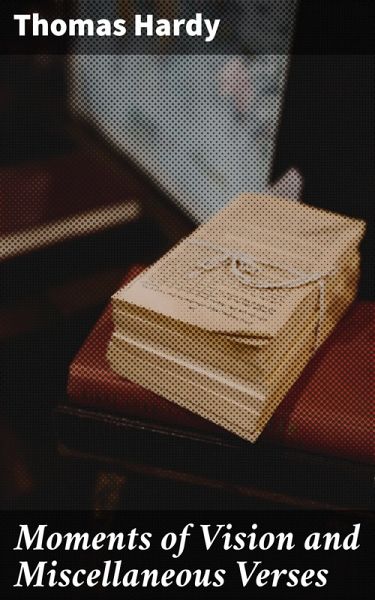
In "Moments of Vision and Miscellaneous Verses," Thomas Hardy explores the intricate tapestry of human experience through a collection of evocative poems that marry natural imagery with profound philosophical inquiry. Released in 1917, this volume showcases Hardy's mastery of lyrical verse and narrative forms, revealing the interplay between human emotions and the inexorable forces of nature. The poems reflect Hardy's characteristic pessimism and skepticism regarding societal norms, while simultaneously exhibiting a deep fascination with the subtleties of existence, mirroring the existential crises of the early 20th century. Thomas Hardy, a pivotal figure in English literature, was steeped in influences ranging from Romantic poets to the realities of the rural English landscape. His extensive background in architecture and his immersive experiences in the countryside imbued his work with rich descriptions of nature and a deep understanding of the human psyche. Hardy's own struggles with the changing social landscape of his time compelled him to articulate the dissonance between individual desire and societal constraints, themes that permeate this collection. "Moments of Vision and Miscellaneous Verses" is a compelling read for anyone seeking a nuanced exploration of the human condition. Hardy's eloquent language and profound insights make this collection not only a reflection of his literary genius but also a poignant commentary on the uncertainties of life. For those interested in the intersections of nature, philosophy, and emotion, this volume is an essential addition to any literary canon. In this enriched edition, we have carefully created added value for your reading experience: - A comprehensive Introduction outlines these selected works' unifying features, themes, or stylistic evolutions. - The Author Biography highlights personal milestones and literary influences that shape the entire body of writing. - A Historical Context section situates the works in their broader era-social currents, cultural trends, and key events that underpin their creation. - A concise Synopsis (Selection) offers an accessible overview of the included texts, helping readers navigate plotlines and main ideas without revealing critical twists. - A unified Analysis examines recurring motifs and stylistic hallmarks across the collection, tying the stories together while spotlighting the different work's strengths. - Reflection questions inspire deeper contemplation of the author's overarching message, inviting readers to draw connections among different texts and relate them to modern contexts. - Lastly, our hand-picked Memorable Quotes distill pivotal lines and turning points, serving as touchstones for the collection's central themes.
Dieser Download kann aus rechtlichen Gründen nur mit Rechnungsadresse in A, B, BG, CY, CZ, D, DK, EW, E, FIN, F, GR, H, IRL, I, LT, L, LR, M, NL, PL, P, R, S, SLO, SK ausgeliefert werden.