Sie sind bereits eingeloggt. Klicken Sie auf 2. tolino select Abo, um fortzufahren.
Bitte loggen Sie sich zunächst in Ihr Kundenkonto ein oder registrieren Sie sich bei bücher.de, um das eBook-Abo tolino select nutzen zu können.
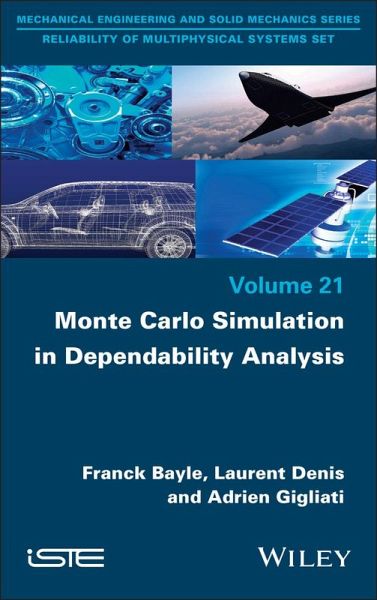
System dependability is a complex task to grasp and analyze since it encompasses reliability, maintainability, availability, failure mode analysis and feared events. For operational safety analyses, reliability is a quantitative basis for the other disciplines of maintainability, availability and safety. Reliability metrics such as failure rate or MTBF are often misused as they are only valid for low-maintenance applications, and wrongly for others, as MTBF is only relevant for availability. In addition, in operational safety, many equations do not have explicit solutions, and Monte Carlo…mehr
System dependability is a complex task to grasp and analyze since it encompasses reliability, maintainability, availability, failure mode analysis and feared events. For operational safety analyses, reliability is a quantitative basis for the other disciplines of maintainability, availability and safety. Reliability metrics such as failure rate or MTBF are often misused as they are only valid for low-maintenance applications, and wrongly for others, as MTBF is only relevant for availability. In addition, in operational safety, many equations do not have explicit solutions, and Monte Carlo simulations are a little-used way of obtaining and/or confirming the solution obtained by numerical methods.
Monte Carlo Simulation in Dependability Analysis fills this gap as best as we can. This task is a difficult one, since operational safety is a cross-disciplinary activity in the engineering sciences - cross-disciplinary in that it must be present throughout a product's life cycle.
Dieser Download kann aus rechtlichen Gründen nur mit Rechnungsadresse in D ausgeliefert werden.
Die Herstellerinformationen sind derzeit nicht verfügbar.
Autorenporträt
Franck Bayle trained as an electronic engineer. He has practiced for almost 15 years, working at Crouzet and then at Thalès in Valence, France. He has also worked as Design Authority in reliability and maturity.
Laurent Denis is the CEO of StatXpert, a consulting, training, and software company specializing in statistics and operational reliability based in Pessac, France.
Adrien Gigliati is Dependability Engineer at Thalès in Valence, France.
Inhaltsangabe
Foreword by Philippe Bogdanik xi Foreword by Gilles Zwingelstein xiii List of Notations xv List of Acronyms xvii Definitions xix Introduction xxi Part 1. Reliability 1 Chapter 1. Predictive Reliability 3 1.1. Concept of predictive reliability 3 1.2. FIDES methodology 4 1.3. Application example 7 1.4. Maintaining a reliability specification 11 1.5. Summary 12 Chapter 2. Statistical Characteristics of Exponential and Weibull Distributions 13 2.1. Refresher about exponential and Weibull distributions 13 2.2. Parameter estimation for a reliability model using the maximum likelihood method 14 2.3. Estimator properties 17 2.4. Simulation of failure times by inverting the probability of failure 19 2.5. Impact of temperature 21 2.6. Relative bias and coefficient of variation of the Weibull parameters 22 2.7. Simulation scenarios considered from the different parameters 26 2.8. Summary 31 Chapter 3. System Reliability 33 3.1. Assumptions 34 3.2. Maintenance-free systems 34 3.3. Maintenance-free systems 45 3.4. Series/parallel system 73 3.5. Parallel/serial system 78 3.6. Use cases 86 Chapter 4. Impact of Temperature on Reliability 97 4.1. Arrhenius law 97 4.2. Operational life profile 98 4.3. Sedyakin's principle 98 4.4. Consequences for reliability estimates 100 4.5. Taking the effect of maintenance into consideration 107 4.6. Summary 114 Chapter 5. Aging Tests 115 5.1. Accelerated aging test 117 5.2. Aging test design 118 5.3. Sequential test at two constant temperatures 121 5.4. Constant-level parallel testing 124 5.5. Constant-level mixed testing 125 5.6. Summary 125 Chapter 6. Application of the Noncentral Beta Distribution 127 6.1. Context 127 6.2. The "noncentral beta" probability distribution 129 6.3. Measurement modeling 130 6.4. Rejection method 132 6.5. Confidence interval for noncentral beta distribution 136 6.6. Rationale for the choice of the noncentral beta distribution 137 6.7. Summary 139 Chapter 7. Statistical Characteristics of HPP and PLP Processes 141 7.1. Reminders about Poisson processes 141 7.2. HPP homogeneous Poisson process 141 7.3. PLP power process 143 7.4. Summary 148 Part 2. Maintainability 151 Chapter 8. Maintainability 153 8.1. Average number of failures 153 8.2. Serial system 154 8.3. Parallel system 159 8.4. k/n system 162 8.5. Avionics system 164 8.6. Summary 165 Part 3. Availability 167 Chapter 9. System Availability 169 9.1. Assumptions 169 9.2. Uptime and repair time: exponential distributions 171 9.3. Exponential distribution uptime and constant repair time 174 9.4. Exponential distribution uptime and uniform distribution repair time 176 9.5. Exponential distribution uptimes and normal distribution repair times 178 9.6. Uptimes exponential distribution and repair times Weibull distribution 182 9.7. Serial system 183 9.8. Parallel system 186 9.9. k-out-of-n redundancy 189 9.10. Series/parallel system 192 9.11. Parallel/serial system 193 9.12. Energy conversion 194 9.13. Summary 200 Part 4. Safety 203 Chapter 10. FMEA Concurrent Failure Mechanisms 205 10.1. Maintenance-free industrial applications 209 10.2. Industrial applications with maintenance 211 10.3. Consideration of physical contributions 215 10.4. Summary 219 Chapter 11. Feared Events (FTA) 221 11.1. Introduction 221 11.2. Regulatory aspects 222 11.3. Probability of the occurrence of a feared event 228 11.4. Practical application 235 11.5. Summary 239 Appendices 241 References 249 Index 251
Foreword by Philippe Bogdanik xi Foreword by Gilles Zwingelstein xiii List of Notations xv List of Acronyms xvii Definitions xix Introduction xxi Part 1. Reliability 1 Chapter 1. Predictive Reliability 3 1.1. Concept of predictive reliability 3 1.2. FIDES methodology 4 1.3. Application example 7 1.4. Maintaining a reliability specification 11 1.5. Summary 12 Chapter 2. Statistical Characteristics of Exponential and Weibull Distributions 13 2.1. Refresher about exponential and Weibull distributions 13 2.2. Parameter estimation for a reliability model using the maximum likelihood method 14 2.3. Estimator properties 17 2.4. Simulation of failure times by inverting the probability of failure 19 2.5. Impact of temperature 21 2.6. Relative bias and coefficient of variation of the Weibull parameters 22 2.7. Simulation scenarios considered from the different parameters 26 2.8. Summary 31 Chapter 3. System Reliability 33 3.1. Assumptions 34 3.2. Maintenance-free systems 34 3.3. Maintenance-free systems 45 3.4. Series/parallel system 73 3.5. Parallel/serial system 78 3.6. Use cases 86 Chapter 4. Impact of Temperature on Reliability 97 4.1. Arrhenius law 97 4.2. Operational life profile 98 4.3. Sedyakin's principle 98 4.4. Consequences for reliability estimates 100 4.5. Taking the effect of maintenance into consideration 107 4.6. Summary 114 Chapter 5. Aging Tests 115 5.1. Accelerated aging test 117 5.2. Aging test design 118 5.3. Sequential test at two constant temperatures 121 5.4. Constant-level parallel testing 124 5.5. Constant-level mixed testing 125 5.6. Summary 125 Chapter 6. Application of the Noncentral Beta Distribution 127 6.1. Context 127 6.2. The "noncentral beta" probability distribution 129 6.3. Measurement modeling 130 6.4. Rejection method 132 6.5. Confidence interval for noncentral beta distribution 136 6.6. Rationale for the choice of the noncentral beta distribution 137 6.7. Summary 139 Chapter 7. Statistical Characteristics of HPP and PLP Processes 141 7.1. Reminders about Poisson processes 141 7.2. HPP homogeneous Poisson process 141 7.3. PLP power process 143 7.4. Summary 148 Part 2. Maintainability 151 Chapter 8. Maintainability 153 8.1. Average number of failures 153 8.2. Serial system 154 8.3. Parallel system 159 8.4. k/n system 162 8.5. Avionics system 164 8.6. Summary 165 Part 3. Availability 167 Chapter 9. System Availability 169 9.1. Assumptions 169 9.2. Uptime and repair time: exponential distributions 171 9.3. Exponential distribution uptime and constant repair time 174 9.4. Exponential distribution uptime and uniform distribution repair time 176 9.5. Exponential distribution uptimes and normal distribution repair times 178 9.6. Uptimes exponential distribution and repair times Weibull distribution 182 9.7. Serial system 183 9.8. Parallel system 186 9.9. k-out-of-n redundancy 189 9.10. Series/parallel system 192 9.11. Parallel/serial system 193 9.12. Energy conversion 194 9.13. Summary 200 Part 4. Safety 203 Chapter 10. FMEA Concurrent Failure Mechanisms 205 10.1. Maintenance-free industrial applications 209 10.2. Industrial applications with maintenance 211 10.3. Consideration of physical contributions 215 10.4. Summary 219 Chapter 11. Feared Events (FTA) 221 11.1. Introduction 221 11.2. Regulatory aspects 222 11.3. Probability of the occurrence of a feared event 228 11.4. Practical application 235 11.5. Summary 239 Appendices 241 References 249 Index 251
Es gelten unsere Allgemeinen Geschäftsbedingungen: www.buecher.de/agb
Impressum
www.buecher.de ist ein Internetauftritt der buecher.de internetstores GmbH
Geschäftsführung: Monica Sawhney | Roland Kölbl | Günter Hilger
Sitz der Gesellschaft: Batheyer Straße 115 - 117, 58099 Hagen
Postanschrift: Bürgermeister-Wegele-Str. 12, 86167 Augsburg
Amtsgericht Hagen HRB 13257
Steuernummer: 321/5800/1497
USt-IdNr: DE450055826