7,99 €
7,99 €
inkl. MwSt.
Erscheint vor. 01.01.26

4 °P sammeln
7,99 €
Als Download kaufen
7,99 €
inkl. MwSt.
Erscheint vor. 01.01.26
4 °P sammeln
Jetzt verschenken
Alle Infos zum eBook verschenken
7,99 €
inkl. MwSt.
Erscheint vor. 01.01.26
Alle Infos zum eBook verschenken
4 °P sammeln

Andere Kunden interessierten sich auch für
") Prompt Design Patterns (eBook, ePUB)34,95 €
Prompt Design Patterns (eBook, ePUB)34,95 €") The AI Handbook (eBook, ePUB)2,99 €
The AI Handbook (eBook, ePUB)2,99 € (eBook, ePUB)") The Human Interface (The Algorithmic Mind, #3) (eBook, ePUB)8,99 €
The Human Interface (The Algorithmic Mind, #3) (eBook, ePUB)8,99 €") Choose (eBook, ePUB)2,99 €
Choose (eBook, ePUB)2,99 €") A Greater Foundation for Machine Learning Engineering (eBook, ePUB)21,95 €
A Greater Foundation for Machine Learning Engineering (eBook, ePUB)21,95 €") Natural Language Processing with Python and spaCy (eBook, ePUB)20,95 €
Natural Language Processing with Python and spaCy (eBook, ePUB)20,95 €") Unleashing AI (eBook, ePUB)4,99 €
Unleashing AI (eBook, ePUB)4,99 €



I was a musician before I was anything else. That's how I first used technology-not through code or commerce, but through sound. In the late 1980s, I stood in an "electronic music studio" at Bennington College in Vermont, staring at a new keyboard called The Synclavier. I didn't know how it worked, but I could feel what sounds it wanted to make. It wasn't just a machine-it was a co-conspirator. It could emulate, sample, sequence, and distort. I could pull emotion out of circuitry. At the time, it felt like the future. Not the kind with flying cars, but the kind where machines could jam with you, if you knew how to ask. What struck me then still rings true now: the best machines don't replace creativity. They provoke it.
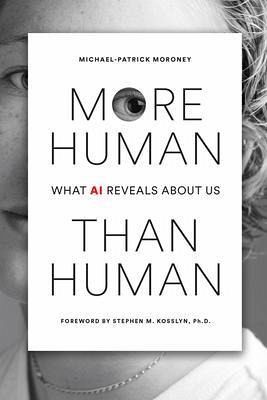
Foreword by Stephen M. Kosslyn, Ph.D. Cognitive Neuroscientist, Dean of Social Science, Harvard University
We are living in a time when the boundary between mind and machine is no longer theoretical-it is experiential. Every day, millions of people interact with systems that predict, persuade, and create. Yet, as artificial intelligence (AI) becomes more powerful, the most urgent question may not be what machines can do, but what they reveal about us in the process.
Foreword by Stephen M. Kosslyn, Ph.D. Cognitive Neuroscientist, Dean of Social Science, Harvard University
We are living in a time when the boundary between mind and machine is no longer theoretical-it is experiential. Every day, millions of people interact with systems that predict, persuade, and create. Yet, as artificial intelligence (AI) becomes more powerful, the most urgent question may not be what machines can do, but what they reveal about us in the process.
Dieser Download kann aus rechtlichen Gründen nur mit Rechnungsadresse in A, D ausgeliefert werden.