45,95 €
inkl. MwSt.
Sofort per Download lieferbar
23 °P sammeln

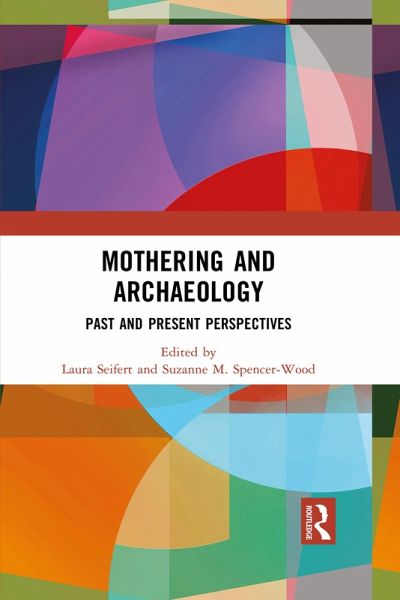
Mothering and Archaeology brings to light new insights connecting mothering in the past and present by exploring all aspects of this important but frequently under-valued and thus neglected subject and is underpinned by feminist theorizing of motherhood and mothering.
Taking a comprehensive approach, this book explores the archaeology of mothers in private and public places in the past and present, the patriarchal institution of motherhood versus actual mothering practices, the burdens and joys of "mothering" in archaeology, and the second shift often pressed upon women. With the inclusion of intersectional research on diverse historic ideologies and practices of motherhood and mothering that varied among classes, races, and ethnic groups, the book also spans a wide range of temporal, geographic, and cultural differences around the world, from Ancient Egypt and Iron-Age Europe to Aztec Mexico, colonial Yucatan, colonial and historic Europe, America and Australia, and modern archaeologists in America and Europe. Going beyond historical practices, the book also examines how female-identifying archaeologists usually perform a disproportionate amount of mothering labor, particularly emotional labor, both in their careers and in the home. Further, it also addresses how becoming a mother affects women's archaeological practices and careers and discusses why women are doing most of the deeply engaged community archaeology with all of its additional relationships and social navigation of emotional labor.
Bringing together research on motherhood and mothering in the past with women's contemporary experiences of the relationships of mothering to archaeology, this book provides new insights to researchers in archaeology, anthropology, public history, and women's studies.
Taking a comprehensive approach, this book explores the archaeology of mothers in private and public places in the past and present, the patriarchal institution of motherhood versus actual mothering practices, the burdens and joys of "mothering" in archaeology, and the second shift often pressed upon women. With the inclusion of intersectional research on diverse historic ideologies and practices of motherhood and mothering that varied among classes, races, and ethnic groups, the book also spans a wide range of temporal, geographic, and cultural differences around the world, from Ancient Egypt and Iron-Age Europe to Aztec Mexico, colonial Yucatan, colonial and historic Europe, America and Australia, and modern archaeologists in America and Europe. Going beyond historical practices, the book also examines how female-identifying archaeologists usually perform a disproportionate amount of mothering labor, particularly emotional labor, both in their careers and in the home. Further, it also addresses how becoming a mother affects women's archaeological practices and careers and discusses why women are doing most of the deeply engaged community archaeology with all of its additional relationships and social navigation of emotional labor.
Bringing together research on motherhood and mothering in the past with women's contemporary experiences of the relationships of mothering to archaeology, this book provides new insights to researchers in archaeology, anthropology, public history, and women's studies.
Dieser Download kann aus rechtlichen Gründen nur mit Rechnungsadresse in A, B, BG, CY, CZ, D, DK, EW, E, FIN, F, GR, HR, H, IRL, I, LT, L, LR, M, NL, PL, P, R, S, SLO, SK ausgeliefert werden.