49,95 €
inkl. MwSt.
Sofort per Download lieferbar
25 °P sammeln

Andere Kunden interessierten sich auch für
") Musical Models of Democracy (eBook, PDF)40,95 €
Musical Models of Democracy (eBook, PDF)40,95 €") The Music Room (eBook, PDF)17,95 €
The Music Room (eBook, PDF)17,95 €") The Marvelous Illusion (eBook, PDF)15,95 €
The Marvelous Illusion (eBook, PDF)15,95 €") Rethinking Bach (eBook, PDF)40,95 €
Rethinking Bach (eBook, PDF)40,95 €") Samuel Barber (eBook, PDF)21,95 €
Samuel Barber (eBook, PDF)21,95 €") The Pipe Organ (eBook, PDF)17,95 €
The Pipe Organ (eBook, PDF)17,95 €") J. S. Bach (eBook, PDF)28,95 €
J. S. Bach (eBook, PDF)28,95 €







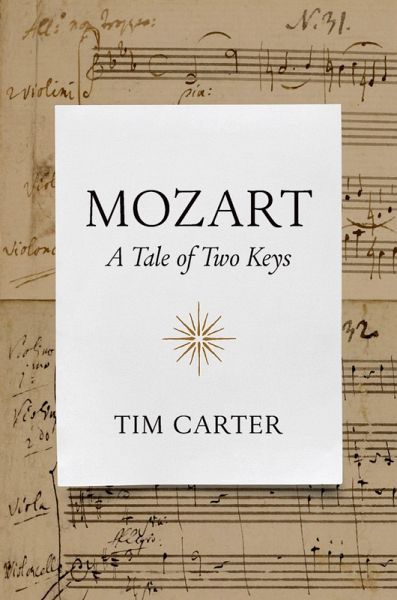
How can we best understand the rules of Mozart's musical games? His first symphony, written in E flat major when he was just nine years old, sits at the opposite end of the tonal spectrum of his final concerto in A major. Through his diligent attention to -- and the creative reconsideration of -- tuning and temperament, instrumentation, musical intertextualities, and key-specific idioms, Mozart demonstrated the breadth of his musical ingenuity. By incorporating distinctive musical techniques within and across keys, the composer pushed the boundaries of meaning in late eighteenth-century music in ways that still resonate today. In Mozart: A Tale of Two Keys, Tim Carter explores this unique approach to musical creativity, uncovering new insights that reveal the inventiveness and humor inherent in Mozart's works. With particular emphasis on the intention behind his technique, Carter argues that the composer used sound in unexpected, playful, and striking ways, revealing the intense joy and limitless possibility inherent in the art and craft of making music.
Dieser Download kann aus rechtlichen Gründen nur mit Rechnungsadresse in A, B, BG, CY, CZ, D, DK, EW, E, FIN, F, GR, HR, H, IRL, I, LT, L, LR, M, NL, PL, P, R, S, SLO, SK ausgeliefert werden.