38,95 €
38,95 €
inkl. MwSt.
Sofort per Download lieferbar

19 °P sammeln
38,95 €
Als Download kaufen
38,95 €
inkl. MwSt.
Sofort per Download lieferbar
19 °P sammeln
Jetzt verschenken
Alle Infos zum eBook verschenken
38,95 €
inkl. MwSt.
Sofort per Download lieferbar
Alle Infos zum eBook verschenken
19 °P sammeln

Andere Kunden interessierten sich auch für
") Municipal Corruption (eBook, PDF)38,95 €
Municipal Corruption (eBook, PDF)38,95 €") Term Limits and the Modern Era of Municipal Reform (eBook, ePUB)42,95 €
Term Limits and the Modern Era of Municipal Reform (eBook, ePUB)42,95 €") The Curious Public Administrator (eBook, ePUB)21,95 €
The Curious Public Administrator (eBook, ePUB)21,95 €") Municipal Territorial Reforms of the 21st Century in Europe (eBook, ePUB)41,95 €
Municipal Territorial Reforms of the 21st Century in Europe (eBook, ePUB)41,95 €") Deliberative Democracy, Public Policy, and Local Government (eBook, ePUB)49,95 €
Deliberative Democracy, Public Policy, and Local Government (eBook, ePUB)49,95 €") Empowering Public Administrators (eBook, ePUB)41,95 €
Empowering Public Administrators (eBook, ePUB)41,95 €") The Public Policy Process (eBook, ePUB)37,95 €
The Public Policy Process (eBook, ePUB)37,95 €

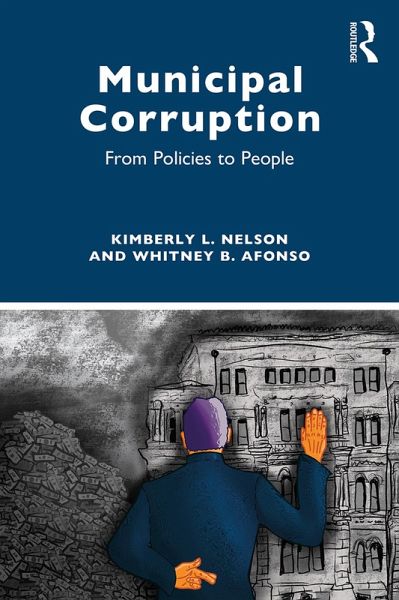
This book represents the most comprehensive exploration of corruption in U.S. municipal governments written to date.
Exploring the 30-year time period from 1990 to 2020 and including all U.S. municipalities with populations of 10,000 people or more, Municipal Corruption: From Policies to People uses both quantitative research and case study analysis to answer the question of why some municipalities fall victim to corrupt acts, while others do not. It tells the stories of a number of communities that suffered through public corruption, investigating factors that contribute to a greater risk of corruption in municipalities, and identifying steps to prevent corruption in communities-including strengthening resident interest and involvement in local affairs, offsetting the decline in local journalism, and reinforcing scrutiny by state governments.
Municipal Corruption is ideal supplemental reading for courses on ethics, public affairs, local government, and urban affairs, and it will be immeasurably useful to municipalities considering how to better insulate themselves and their constituents from corrupt acts.
Exploring the 30-year time period from 1990 to 2020 and including all U.S. municipalities with populations of 10,000 people or more, Municipal Corruption: From Policies to People uses both quantitative research and case study analysis to answer the question of why some municipalities fall victim to corrupt acts, while others do not. It tells the stories of a number of communities that suffered through public corruption, investigating factors that contribute to a greater risk of corruption in municipalities, and identifying steps to prevent corruption in communities-including strengthening resident interest and involvement in local affairs, offsetting the decline in local journalism, and reinforcing scrutiny by state governments.
Municipal Corruption is ideal supplemental reading for courses on ethics, public affairs, local government, and urban affairs, and it will be immeasurably useful to municipalities considering how to better insulate themselves and their constituents from corrupt acts.
Dieser Download kann aus rechtlichen Gründen nur mit Rechnungsadresse in A, B, BG, CY, CZ, D, DK, EW, E, FIN, F, GR, HR, H, IRL, I, LT, L, LR, M, NL, PL, P, R, S, SLO, SK ausgeliefert werden.
"Corruption in U.S. Municipalities provides a comprehensive assessment of corruption in cities over 10,000 in population from 1990 to 2020. It may seem that corruption by officials is a common occurrence in local as compared to the federal government and the states. It is important to recognize that this misperception comes from comparing corruption cases in over 3200 cities with one national and 50 state governments.
In this book, it is clear from the quantitative analysis of all municipalities over 10,000 that some cities are more likely-but not highly likely-to have corrupt behavior. These include cities with the mayor-council form of government, larger population, and higher levels of poverty. However, in-depth assessment of selected cities that have experienced serious and/or repeated instances of corrupt behavior show that corruption can occur in any setting if individual officials put their personal interests and benefits above the public interest and when monitoring of official behavior is inadequate. The failure to provide careful oversight of government operations may permit corruption to develop in cities with any structure, size, and population characteristics.
This careful and extensive analysis contributes to identifying steps to combat corruption in cities including strengthening resident interest and involvement in local affairs, offsetting the decline in local journalism, strengthening scrutiny by state governments, and using the best practices that some local governments have adopted to prevent corruption in their communities."
James H. Svara, Emeritus Professor University of Arizona, USA
"Having been hired to help implement improvements to the City of Dixon's financial structure after the Rita Crundwell embezzlement case was uncovered, it was obvious that the lack of an effective internal control system had a major impact on the length and severity of the City's losses. Giving an employee too much responsibility and authority without proper oversight can lead to unintended consequences.
This book does an excellent job of highlighting a multitude of factors that impact municipal corruption cases. No two cases are the same. The authors have put together a thorough and thoughtful analysis of corruption's impact on local government and provide suggestions on how these cases can be curtailed in the future."
David Richardson, former Finance Director (retired), Village of Streamwood, Illinois, USA
In this book, it is clear from the quantitative analysis of all municipalities over 10,000 that some cities are more likely-but not highly likely-to have corrupt behavior. These include cities with the mayor-council form of government, larger population, and higher levels of poverty. However, in-depth assessment of selected cities that have experienced serious and/or repeated instances of corrupt behavior show that corruption can occur in any setting if individual officials put their personal interests and benefits above the public interest and when monitoring of official behavior is inadequate. The failure to provide careful oversight of government operations may permit corruption to develop in cities with any structure, size, and population characteristics.
This careful and extensive analysis contributes to identifying steps to combat corruption in cities including strengthening resident interest and involvement in local affairs, offsetting the decline in local journalism, strengthening scrutiny by state governments, and using the best practices that some local governments have adopted to prevent corruption in their communities."
James H. Svara, Emeritus Professor University of Arizona, USA
"Having been hired to help implement improvements to the City of Dixon's financial structure after the Rita Crundwell embezzlement case was uncovered, it was obvious that the lack of an effective internal control system had a major impact on the length and severity of the City's losses. Giving an employee too much responsibility and authority without proper oversight can lead to unintended consequences.
This book does an excellent job of highlighting a multitude of factors that impact municipal corruption cases. No two cases are the same. The authors have put together a thorough and thoughtful analysis of corruption's impact on local government and provide suggestions on how these cases can be curtailed in the future."
David Richardson, former Finance Director (retired), Village of Streamwood, Illinois, USA