120,95 €
inkl. MwSt.
Sofort per Download lieferbar
60 °P sammeln

Andere Kunden interessierten sich auch für
") Novel Technologies in Biosystems, Biomedical & Drug Delivery (eBook, PDF)80,95 €
Novel Technologies in Biosystems, Biomedical & Drug Delivery (eBook, PDF)80,95 €") Python Essentials for Biomedical Data Analysis: An Introductory Textbook (eBook, PDF)68,95 €
Python Essentials for Biomedical Data Analysis: An Introductory Textbook (eBook, PDF)68,95 €") Artificial Intelligence in Medical Imaging Technology (eBook, PDF)112,95 €
Artificial Intelligence in Medical Imaging Technology (eBook, PDF)112,95 €") Advancement in the Pathophysiology of Cerebral Stroke (eBook, PDF)72,95 €
Advancement in the Pathophysiology of Cerebral Stroke (eBook, PDF)72,95 €") Mortalin Biology: Life, Stress and Death (eBook, PDF)112,95 €
Mortalin Biology: Life, Stress and Death (eBook, PDF)112,95 €") Nanoparticles in Biomedical Imaging (eBook, PDF)160,95 €
Nanoparticles in Biomedical Imaging (eBook, PDF)160,95 €") BioSensing, Theranostics, and Medical Devices (eBook, PDF)104,95 €
BioSensing, Theranostics, and Medical Devices (eBook, PDF)104,95 €



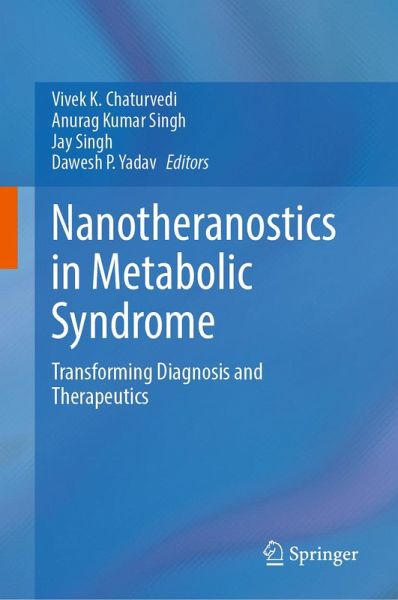
This book explores the potential of nanotechnology in treating metabolic disorders, highlighting its potential to improve drug delivery, early disease detection, and precision therapeutics. Metabolic syndrome is a significant global health challenge, with a five-fld increase in the risk of developing type-2 diabetes and a two-fold heightened risk of cardiovascular diseases. Despite advancements in understanding the pathogenesis of metabolic syndrome, current therapeutic interventions have not achieved optimal efficacy. The integration of nanotechnology into biomedicine is seen as a promising avenue to address this issue.
Nanoparticles can be engineered to carry anti-inflammatory agents, providing targeted relief at inflammation sites, reducing inflammation and minimizing systemic side effects. Nanotechnology also enhances drug delivery systems by navigating biological barriers and reaching specific sites with precision. This not only improves the bioavailability of therapeutic agents but also minimizes off-target effects, enhancing overall treatment effectiveness.
Nanotechnology also plays a pivotal role in early disease detection and diagnosis through innovative nano-imaging techniques. These techniques enable the visualization of molecular and cellular events at unprecedented resolutions, facilitating the identification of metabolic syndrome markers and associated disorders at their incipient stages. As research progresses, the integration of nanotechnology has the potential to redefine metabolic syndrome management, offering hope for improved patient outcomes and a healthier global population.
The chapters cover metabolic syndromes, including insulin resistance, hypertension, dyslipidemia, type 2 diabetes, obesity, inflammation, and non-alcoholic fatty liver disease. It provides up-to-date literature on mechanistic understanding and therapeutic strategies. It is a valuable resource for UG/PG students, clinicians, academicians, scientists, researchers, and industrial specialists in advanced materials science, flexible electronics, nanoelectronics, energy, environmental, and biomedical sciences.
Nanoparticles can be engineered to carry anti-inflammatory agents, providing targeted relief at inflammation sites, reducing inflammation and minimizing systemic side effects. Nanotechnology also enhances drug delivery systems by navigating biological barriers and reaching specific sites with precision. This not only improves the bioavailability of therapeutic agents but also minimizes off-target effects, enhancing overall treatment effectiveness.
Nanotechnology also plays a pivotal role in early disease detection and diagnosis through innovative nano-imaging techniques. These techniques enable the visualization of molecular and cellular events at unprecedented resolutions, facilitating the identification of metabolic syndrome markers and associated disorders at their incipient stages. As research progresses, the integration of nanotechnology has the potential to redefine metabolic syndrome management, offering hope for improved patient outcomes and a healthier global population.
The chapters cover metabolic syndromes, including insulin resistance, hypertension, dyslipidemia, type 2 diabetes, obesity, inflammation, and non-alcoholic fatty liver disease. It provides up-to-date literature on mechanistic understanding and therapeutic strategies. It is a valuable resource for UG/PG students, clinicians, academicians, scientists, researchers, and industrial specialists in advanced materials science, flexible electronics, nanoelectronics, energy, environmental, and biomedical sciences.
Dieser Download kann aus rechtlichen Gründen nur mit Rechnungsadresse in A, B, BG, CY, CZ, D, DK, EW, E, FIN, F, GR, HR, H, IRL, I, LT, L, LR, M, NL, PL, P, R, S, SLO, SK ausgeliefert werden.