72,95 €
72,95 €
inkl. MwSt.
Sofort per Download lieferbar

36 °P sammeln
72,95 €
Als Download kaufen
72,95 €
inkl. MwSt.
Sofort per Download lieferbar
36 °P sammeln
Jetzt verschenken
Alle Infos zum eBook verschenken
72,95 €
inkl. MwSt.
Sofort per Download lieferbar
Alle Infos zum eBook verschenken
36 °P sammeln

Andere Kunden interessierten sich auch für
") Turkey and the West (eBook, ePUB)79,95 €
Turkey and the West (eBook, ePUB)79,95 €") Neoliberalism and Global Insecurities (eBook, ePUB)58,95 €
Neoliberalism and Global Insecurities (eBook, ePUB)58,95 €") Decentralization in Turkey (eBook, ePUB)39,95 €
Decentralization in Turkey (eBook, ePUB)39,95 €") The Logic of Political Survival in Turkey (eBook, ePUB)69,95 €
The Logic of Political Survival in Turkey (eBook, ePUB)69,95 €") State and Intellectuals in Turkey (eBook, ePUB)70,95 €
State and Intellectuals in Turkey (eBook, ePUB)70,95 €") The Circassian Diaspora in Turkey (eBook, ePUB)41,95 €
The Circassian Diaspora in Turkey (eBook, ePUB)41,95 €") Turkey and the Politics of National Identity (eBook, ePUB)108,95 €
Turkey and the Politics of National Identity (eBook, ePUB)108,95 €




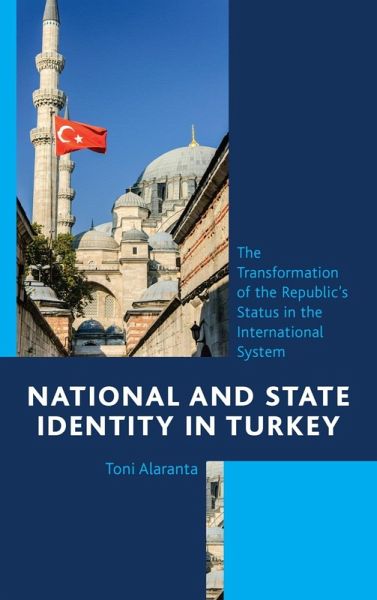
National and State Identity in Turkey uses the concepts of national and state identity to examine Turkey's domestic and international politics and explain how the country's position in the international system has changed over the last ten years. State identity is understood as the end result of a transformed national identity, linking both domestic and international levels. Toni Alaranta argues that there has been a radical reformulation of Turkey's national identity, interest, and positioning in the world since the Justice and Development Party (AKP) came to power in 2002. This transformed identity has helped the country renegotiate its status in the world. He first examines the changing nature of Turkey's national identity before looking at the struggle between two extreme positions-secularism and Islamism. He then explains how the "New Turkey" discourse is part of an Islamic-conservative ideology that targets the notion of the "domestic other," or minorities, versus the Turkish-Muslim "self." This discourse is transforming not only the notion of national identity but also Turkey's relations with the rest of the world, and particularly with the European Union.