127,95 €
inkl. MwSt.
Sofort per Download lieferbar
64 °P sammeln

Andere Kunden interessierten sich auch für
") Green Approaches in Medicinal Chemistry for Sustainable Drug Design (eBook, ePUB)178,95 €
Green Approaches in Medicinal Chemistry for Sustainable Drug Design (eBook, ePUB)178,95 €") Studies in Natural Products Chemistry (eBook, ePUB)189,95 €
Studies in Natural Products Chemistry (eBook, ePUB)189,95 €") Dihydropyrimidinones as Potent Anticancer Agents (eBook, ePUB)103,95 €
Dihydropyrimidinones as Potent Anticancer Agents (eBook, ePUB)103,95 €") Discovery and Development of Anti-Prostate Cancerous Agents from Natural Products (eBook, ePUB)142,95 €
Discovery and Development of Anti-Prostate Cancerous Agents from Natural Products (eBook, ePUB)142,95 €") Discovery and Development of Neuroprotective Agents from Natural Products (eBook, ePUB)135,95 €
Discovery and Development of Neuroprotective Agents from Natural Products (eBook, ePUB)135,95 €") Total Synthesis of Bioactive Natural Products (eBook, ePUB)127,95 €
Total Synthesis of Bioactive Natural Products (eBook, ePUB)127,95 €") Studies in Natural Products Chemistry (eBook, ePUB)156,95 €
Studies in Natural Products Chemistry (eBook, ePUB)156,95 €
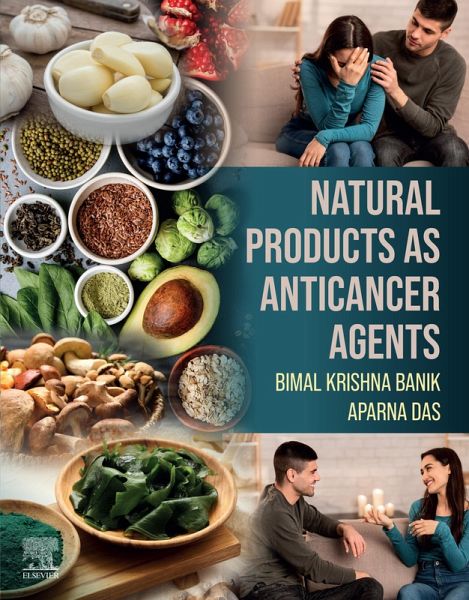
Natural Products as Anticancer Agents introduces the different types of natural products that have been used for cancer treatment. Divided into four parts, covering anticancer agents derived from terrestrial plants, anticancer agents derived from the marine environment, and anticancer agents derived from microorganisms, as well as evaluation of new anticancer agents, each part includes discussion of the properties, synthesis/extraction, storage, mechanism of action, and usage of the molecules. Discussion of the future prospects in anticancer natural products-including several new trends and an indication of where research in this area is likely to go in the future-is also included. - Assists in the identification of risk factors associated with the drug development process - Includes process diagrams detailing the procedure for the isolation and purification of molecules - Covers cost-effective green approaches in the development of anticancer drugs
Dieser Download kann aus rechtlichen Gründen nur mit Rechnungsadresse in A, B, BG, CY, CZ, D, DK, EW, E, FIN, F, GR, HR, H, IRL, I, LT, L, LR, M, NL, PL, P, R, S, SLO, SK ausgeliefert werden.