136,95 €
136,95 €
inkl. MwSt.
Sofort per Download lieferbar

68 °P sammeln
136,95 €
Als Download kaufen
136,95 €
inkl. MwSt.
Sofort per Download lieferbar
68 °P sammeln
Jetzt verschenken
Alle Infos zum eBook verschenken
136,95 €
inkl. MwSt.
Sofort per Download lieferbar
Alle Infos zum eBook verschenken
68 °P sammeln

Andere Kunden interessierten sich auch für
") Ecology and Conservation of Mountaintop grasslands in Brazil (eBook, PDF)160,95 €
Ecology and Conservation of Mountaintop grasslands in Brazil (eBook, PDF)160,95 €") Mimicry and Meaning: Structure and Semiotics of Biological Mimicry (eBook, PDF)96,95 €
Mimicry and Meaning: Structure and Semiotics of Biological Mimicry (eBook, PDF)96,95 €") Physiology of Marine Mammals (eBook, PDF)53,95 €
Physiology of Marine Mammals (eBook, PDF)53,95 €") The Biology of Biodiversity (eBook, PDF)104,95 €
The Biology of Biodiversity (eBook, PDF)104,95 €") Shrimps (eBook, PDF)120,95 €
Shrimps (eBook, PDF)120,95 €") Biodiversity of Armenia (eBook, PDF)136,95 €
Biodiversity of Armenia (eBook, PDF)136,95 €") Vegetation of the Canary Islands (eBook, PDF)152,95 €
Vegetation of the Canary Islands (eBook, PDF)152,95 €
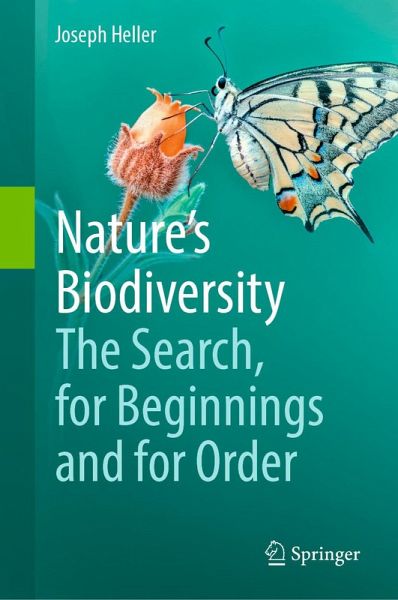
This book is about our quest over the centuries, from ancient Greece onwards, for pattern in the rich diversity of life. How did our ancestors think that living creatures first came to be, each fitting so well to its specific environment? Does biodiversity have a purpose? What biodiversity exists, beyond what our eyes can see? Do dragons and unicorns exist? How did the world begin, how did order emerge and were there several Creation events?
Reproduction resembles Creation in that order appears out of nothing, form out of matter. Can different reproduction modes increase biodiversity? Why sexual reproduction? Can living creatures, and hence biodiversity, arise from non-living dust? How do embryos develop, from a featureless mass into an orderly, organised living body? Does embryonic development dictate diversity and do species ever go extinct? What is a soul? Do animals have souls? Do souls migrate, between man and animal? Does inheritance of acquired characters create biodiversity? Does diversity form an orderly ladder from plants through animals to Man, or perhaps orderly circles-within-circles?
These questions and many others have been central to our culture's overall view of nature, from ancient times onwards. This book, presenting the urge to understand overall pattern in the diversity of life throughout history, takes a broad approach. It links theories of classification with those of reproduction, embryology, theology and (eventually) evolution, as they developed from ancient days onwards, over 2400 years. Over 250 illustrations accompany the text, many taken from the ancient, original treatises, many others painted especially for this book, to present specific animals or ideas.
This comprehensive view of the study of biodiversity will appeal to zoology lecturers and students, biology teachers and amateur naturalists, as well as to lecturers and learners of history, of theology; and of course, to anybody seeking to broaden horizons.
Reproduction resembles Creation in that order appears out of nothing, form out of matter. Can different reproduction modes increase biodiversity? Why sexual reproduction? Can living creatures, and hence biodiversity, arise from non-living dust? How do embryos develop, from a featureless mass into an orderly, organised living body? Does embryonic development dictate diversity and do species ever go extinct? What is a soul? Do animals have souls? Do souls migrate, between man and animal? Does inheritance of acquired characters create biodiversity? Does diversity form an orderly ladder from plants through animals to Man, or perhaps orderly circles-within-circles?
These questions and many others have been central to our culture's overall view of nature, from ancient times onwards. This book, presenting the urge to understand overall pattern in the diversity of life throughout history, takes a broad approach. It links theories of classification with those of reproduction, embryology, theology and (eventually) evolution, as they developed from ancient days onwards, over 2400 years. Over 250 illustrations accompany the text, many taken from the ancient, original treatises, many others painted especially for this book, to present specific animals or ideas.
This comprehensive view of the study of biodiversity will appeal to zoology lecturers and students, biology teachers and amateur naturalists, as well as to lecturers and learners of history, of theology; and of course, to anybody seeking to broaden horizons.
Dieser Download kann aus rechtlichen Gründen nur mit Rechnungsadresse in A, B, BG, CY, CZ, D, DK, EW, E, FIN, F, GR, HR, H, IRL, I, LT, L, LR, M, NL, PL, P, R, S, SLO, SK ausgeliefert werden.