42,95 €
inkl. MwSt.
Sofort per Download lieferbar
21 °P sammeln

Andere Kunden interessierten sich auch für
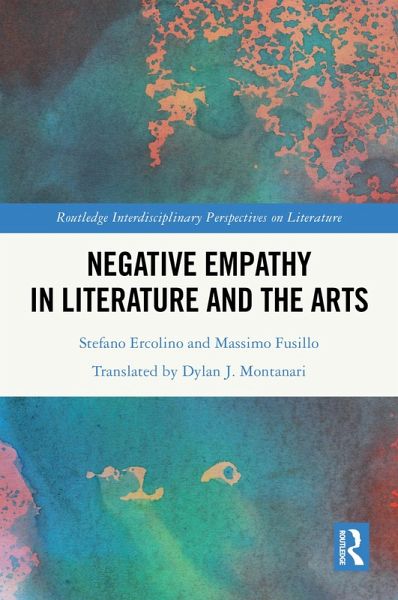
") Negative Empathy in Literature and the Arts (eBook, PDF)42,95 €
Negative Empathy in Literature and the Arts (eBook, PDF)42,95 €") A Psychoanalytic Engagement with the Arts (eBook, ePUB)27,95 €
A Psychoanalytic Engagement with the Arts (eBook, ePUB)27,95 €") Exploring Psychoanalytic Concepts through Culture, the Arts and Contemporary Life (eBook, ePUB)30,95 €
Exploring Psychoanalytic Concepts through Culture, the Arts and Contemporary Life (eBook, ePUB)30,95 €") Narratives of Hope and Despair (eBook, ePUB)0,00 €
Narratives of Hope and Despair (eBook, ePUB)0,00 €") Mentalization and Literary Form (eBook, ePUB)33,95 €
Mentalization and Literary Form (eBook, ePUB)33,95 €") The Story of Original Loss (eBook, ePUB)33,95 €
The Story of Original Loss (eBook, ePUB)33,95 €") Psychoanalysis and the Artistic Endeavor (eBook, ePUB)41,95 €
Psychoanalysis and the Artistic Endeavor (eBook, ePUB)41,95 €




Negative Empathy in Literature and the Arts explores how readers and viewers engage cognitively and affectively with ethically troubling artworks across literature, the visual and performing arts, and screen media. Drawing on aesthetics, cultural history and theory, psychology, and neuroscience, Stefano Ercolino and Massimo Fusillo introduce the concept of "negative empathy" to describe the ambivalent and destabilizing emotional responses elicited by representations of negativity in art. Rather than dismissing empathy as naïve, the authors argue for a more nuanced understanding of its darker forms and their cognitive and ethical value. Through a comparative and intermedial approach, the book analyzes case studies from Littell's The Kindly Ones to Wilson's Deafman Glance; from Verdi's Macbeth and Nitsch's Theatre of Orgies and Mysteries to Caravaggio's Martyrdom of Saint Matthew, Mapplethorpe's "X" Portfolio, Kiefer's The Seven Heavenly Palaces, Haneke's The White Ribbon, and Gilligan's Breaking Bad-offering a compelling new theory of aesthetic engagement.
Dieser Download kann aus rechtlichen Gründen nur mit Rechnungsadresse in A, B, BG, CY, CZ, D, DK, EW, E, FIN, F, GR, HR, H, IRL, I, LT, L, LR, M, NL, PL, P, R, S, SLO, SK ausgeliefert werden.