139,95 €
139,95 €
inkl. MwSt.
Sofort per Download lieferbar

70 °P sammeln
139,95 €
Als Download kaufen
139,95 €
inkl. MwSt.
Sofort per Download lieferbar
70 °P sammeln
Jetzt verschenken
Alle Infos zum eBook verschenken
139,95 €
inkl. MwSt.
Sofort per Download lieferbar
Alle Infos zum eBook verschenken
70 °P sammeln

Andere Kunden interessierten sich auch für
") Heritage and Democracy (eBook, PDF)132,95 €
Heritage and Democracy (eBook, PDF)132,95 €") Earth Politics and Intangible Heritage (eBook, PDF)69,95 €
Earth Politics and Intangible Heritage (eBook, PDF)69,95 €") Negotiating Cultural Identity (eBook, PDF)41,95 €
Negotiating Cultural Identity (eBook, PDF)41,95 €") Mobilizing Heritage (eBook, PDF)58,95 €
Mobilizing Heritage (eBook, PDF)58,95 €") Heritage at the Interface (eBook, PDF)66,95 €
Heritage at the Interface (eBook, PDF)66,95 €") Creating Participatory Dialogue in Archaeological and Cultural Heritage Interpretation: Multinational Perspectives (eBook, PDF)112,95 €
Creating Participatory Dialogue in Archaeological and Cultural Heritage Interpretation: Multinational Perspectives (eBook, PDF)112,95 €") Managing, Using, and Interpreting Hadrian's Wall as World Heritage (eBook, PDF)40,95 €
Managing, Using, and Interpreting Hadrian's Wall as World Heritage (eBook, PDF)40,95 €


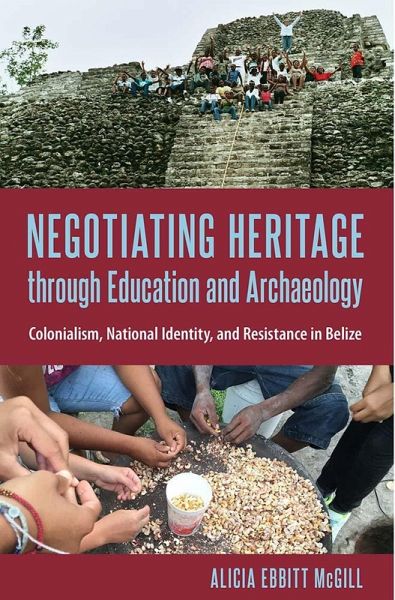
Through an innovative approach that combines years of ethnographic research with British imperial archival sources, this book reveals how cultural heritage has been negotiated by colonial, independent state, and community actors in Belize from the late nineteenth century to the present. Alicia McGill explores the heritage of two African-descendant Kriol communities as seen in the contexts of archaeology and formal education.
McGill demonstrates that in both spheres, Belizean institutions have constructed and used heritage places and ideologies to manage difference, govern subjects and citizens, and reinforce development agendas. In the communities studied here, ancient Maya cities and legacies have been prized while Kriol histories have been marginalized, and racial and ethnic inequalities have endured. Yet McGill shows that at the same time, Belizean teachers and children resist, maintaining their Kriol identity through storytelling, subsistence practices, and other engagements with ecological resources. They also creatively identify connections between themselves and the ancient cultures that once lived in their regions.
Exploring heritage as a social construct, McGill provides examples of the many ways people construct values, meanings, and customs related to it. Negotiating Heritage through Education and Archaeology is a richly informed study that emphasizes the importance of community-based engagement in public history and heritage studies.
A volume in the series Cultural Heritage Studies, edited by Paul A. Shackel
McGill demonstrates that in both spheres, Belizean institutions have constructed and used heritage places and ideologies to manage difference, govern subjects and citizens, and reinforce development agendas. In the communities studied here, ancient Maya cities and legacies have been prized while Kriol histories have been marginalized, and racial and ethnic inequalities have endured. Yet McGill shows that at the same time, Belizean teachers and children resist, maintaining their Kriol identity through storytelling, subsistence practices, and other engagements with ecological resources. They also creatively identify connections between themselves and the ancient cultures that once lived in their regions.
Exploring heritage as a social construct, McGill provides examples of the many ways people construct values, meanings, and customs related to it. Negotiating Heritage through Education and Archaeology is a richly informed study that emphasizes the importance of community-based engagement in public history and heritage studies.
A volume in the series Cultural Heritage Studies, edited by Paul A. Shackel
Dieser Download kann aus rechtlichen Gründen nur mit Rechnungsadresse in A, D ausgeliefert werden.