49,95 €
49,95 €
inkl. MwSt.
Sofort per Download lieferbar

25 °P sammeln
49,95 €
Als Download kaufen
49,95 €
inkl. MwSt.
Sofort per Download lieferbar
25 °P sammeln
Jetzt verschenken
Alle Infos zum eBook verschenken
49,95 €
inkl. MwSt.
Sofort per Download lieferbar
Alle Infos zum eBook verschenken
25 °P sammeln

Andere Kunden interessierten sich auch für
 (eBook, PDF)") Negotiating for Peace in the Middle East (Routledge Revivals) (eBook, PDF)39,95 €
Negotiating for Peace in the Middle East (Routledge Revivals) (eBook, PDF)39,95 €") Negotiating at the United Nations (eBook, PDF)35,95 €
Negotiating at the United Nations (eBook, PDF)35,95 €") Negotiating Peace (eBook, PDF)82,95 €
Negotiating Peace (eBook, PDF)82,95 €") Fighting and Negotiating with Armed Groups (eBook, PDF)18,95 €
Fighting and Negotiating with Armed Groups (eBook, PDF)18,95 €") China's Negotiating Mindset and Strategies (eBook, PDF)39,95 €
China's Negotiating Mindset and Strategies (eBook, PDF)39,95 €") Negotiating Intractable Conflicts (eBook, PDF)38,95 €
Negotiating Intractable Conflicts (eBook, PDF)38,95 €") Forging Peace in Southeast Asia (eBook, PDF)29,95 €
Forging Peace in Southeast Asia (eBook, PDF)29,95 €




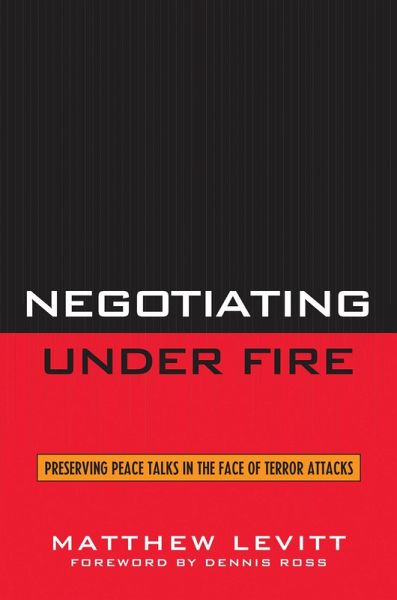
The impact of severe security crises on peace negotiations represents one of the most significant facets of modern conflict resolution theory to remain under-researched. It also stands out as the factor most likely to derail inherently sensitive negotiations. Negotiating Under Fire explores how such crises between two nations impact diplomatic initiatives between those countries. How do the negotiators' willingness and ability to continue influence the outcome? Do the levels of legitimacy, trust, and confidence within and between the parties change in such strained negotiations?
Through a detailed analysis of three critical moments in the Oslo peace process-the Baruch Goldstein Hebron massacre of 1994, the Nachshon Wachsman kidnapping and execution of 1994, and the nine-day string of suicide bus bombings carried out in Israel in March of 1996-the author concludes that insurgents or those hostile to peace talks can and do undermine negotiations.
Through a detailed analysis of three critical moments in the Oslo peace process-the Baruch Goldstein Hebron massacre of 1994, the Nachshon Wachsman kidnapping and execution of 1994, and the nine-day string of suicide bus bombings carried out in Israel in March of 1996-the author concludes that insurgents or those hostile to peace talks can and do undermine negotiations.