Sie sind bereits eingeloggt. Klicken Sie auf 2. tolino select Abo, um fortzufahren.
Bitte loggen Sie sich zunächst in Ihr Kundenkonto ein oder registrieren Sie sich bei bücher.de, um das eBook-Abo tolino select nutzen zu können.
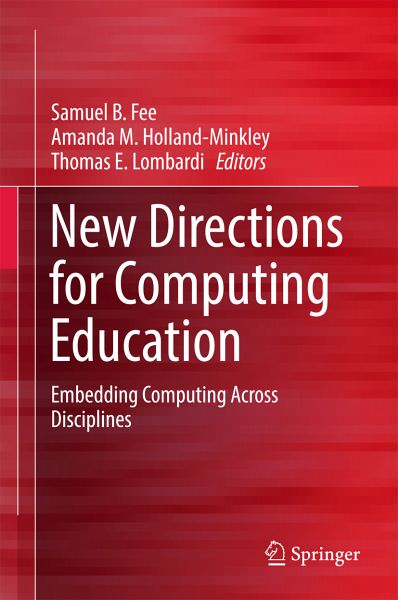
Offers new approaches to computing education that reflect the ubiquity of computing across science, technology and the arts Takes a broad look at how computing fits in many disciplines, including non-scientific ones Emphasizes the applicability of computer science topics to a diverse range of real-world problems Provides a modern and forward-thinking text for computer science and computing education instructors
Offers new approaches to computing education that reflect the ubiquity of computing across science, technology and the arts
Takes a broad look at how computing fits in many disciplines, including non-scientific ones
Emphasizes the applicability of computer science topics to a diverse range of real-world problems
Provides a modern and forward-thinking text for computer science and computing education instructors
Dieser Download kann aus rechtlichen Gründen nur mit Rechnungsadresse in A, B, BG, CY, CZ, D, DK, EW, E, FIN, F, GR, HR, H, IRL, I, LT, L, LR, M, NL, PL, P, R, S, SLO, SK ausgeliefert werden.
Die Herstellerinformationen sind derzeit nicht verfügbar.
Autorenporträt
Samuel B. Fee is a Professor and Chair of Computing & Information Studies at Washington & Jefferson College. His research interests extend into the realms of computing, education, and digital media production. His inquiries within these areas are aimed at better answering a few specific questions, including: How can we best learn and conduct research within the broader realm of computing? How does technology change the way we interact with one another? How do visuals and interfaces impact our abilities to communicate and learn? And, beyond the quantitative methodologies of current Social Science research, how do we reinvigorate the discourse concerning the Art of teaching? He previously co-edited the volume The Role of Criticism in Understanding Problem Solving. He publishes regularly on the topics of computing pedagogies and educational research as well as software development and digital media. Amanda M. Holland-Minkley is an Associate Professor of Computing & Information Studies at Washington & Jefferson College. Her research explores novel applications of problem-based and hands-on pedagogies to computer science education, both at the course and the curricular level. These applications strive to transform computer science content into forms useful and accessible to students from a diversity of disciplines. She is also highly engaged in undergraduate research, with recent projects falling at the intersection of information security, data management, and machine learning. Thomas E. Lombardi is an Assistant Professor of Computer Information Systems in the School of Business at the University of the Virgin Islands. His research focuses on the application of data science and interdisciplinary computing to a wide range of subjects such as digital humanities, networking and bioinformatics. He is particularly interested in developing pedagogies for teaching data-oriented concepts to a broad audience for the purpose of improving civic education. Most recently his theoretical research has addressed the potential role of computation in the analysis of iconography. Specifically, this project applies data mining and machine learning techniques to large repositories of artwork.
Inhaltsangabe
Introduction. Re-envisioning Computing Across Disciplines (Samuel B. Fee, Amanda M. Holland-Minkley and Thomas E. Lombardi).- Part I. The Case for Interdisciplinary Computing Education.-Chapter 1. Good (and Bad) Reasons to Teach All Students Computer Science (Colleen M. Lewis).- Chapter 2. Approaching Computer Science Education Through Making (Michael Eisenberg).- Chapter 3. Computer Science and the Liberal Arts: Hidden Synergies and Boundless Opportunities (Gary R. Skuse, Daniel A. Walzer, Kathryn Tomasek, Douglas Baldwin and Mark Bailey).- Chapter 4. Task-driven Programming Pedagogy in the Digital Humanities (David J. Birnbaum and Alison Langmead). Chapter 5. Macroanalysis in the Arts and Sciences (Thomas E. Lombardi).- Part II. Pedagogical & Curricular Approaches.- Chapter 6. An Unnamed Intersection: Where Computing Meets Liberal Arts (Enid Arbelo Bryant).- Chapter 7. Adapting the Studio Based Learning Methodology to Computer Science Education (Paula Alexandra Silva, Blanca J. Polo, and Martha E. Crosby).- Chapter 8. The Curricular Soundtrack: Designing Interdisciplinary Music Technology Degrees Through Cognitive Apprenticeship and Situated Learning (Daniel A. Walzer).- Chapter 9. An Interdisciplinary Model for Liberal Arts Computing Curricula (Amanda M. Holland-Minkley and Samuel B. Fee).- Part III. Case Studies and Examples.- Chapter 10. The Development of a B.A. in Computer Science and Computational Thinking (Kathie A. Yerion, Robert L. Bryant, and Shawn Bowers).- Chapter 11. Disciplinary Thinking, Computational Doing: Collaborating for Mutual Enrichment (Valerie Barr).- Chapter 12. A Capstone Experience in Information Technology (William H. Thomas, Loren K. Rhodes, and Gerald W. Kruse).- Chapter 13. Trial by a Many-Colored Flame: A Multi-Disciplinary, Community-Centric Approach to Digital Media and Computing Education (Adrienne Decker, Andrew Phelps, and Christopher A. Egert).- Chapter 14. A GitHub Garage for a Digital Humanities Course (Elisa E. Beshero-Bondar and Rebecca J. Parker).- Chapter 15. Educators as Clinicians: Small Data for Education Research (Thomas E. Lombardi and Amanda M. Holland-Minkley).- Chapter 16. Common Threads: Directions for Computing Education (Samuel B. Fee, Amanda M. Holland-Minkley and Thomas E. Lombardi).- About the Editors.- About the Authors.- Index.-
Introduction. Re-envisioning Computing Across Disciplines (Samuel B. Fee, Amanda M. Holland-Minkley and Thomas E. Lombardi).- Part I. The Case for Interdisciplinary Computing Education.-Chapter 1. Good (and Bad) Reasons to Teach All Students Computer Science (Colleen M. Lewis).- Chapter 2. Approaching Computer Science Education Through Making (Michael Eisenberg).- Chapter 3. Computer Science and the Liberal Arts: Hidden Synergies and Boundless Opportunities (Gary R. Skuse, Daniel A. Walzer, Kathryn Tomasek, Douglas Baldwin and Mark Bailey).- Chapter 4. Task-driven Programming Pedagogy in the Digital Humanities (David J. Birnbaum and Alison Langmead). Chapter 5. Macroanalysis in the Arts and Sciences (Thomas E. Lombardi).- Part II. Pedagogical & Curricular Approaches.- Chapter 6. An Unnamed Intersection: Where Computing Meets Liberal Arts (Enid Arbelo Bryant).- Chapter 7. Adapting the Studio Based Learning Methodology to Computer Science Education (Paula Alexandra Silva, Blanca J. Polo, and Martha E. Crosby).- Chapter 8. The Curricular Soundtrack: Designing Interdisciplinary Music Technology Degrees Through Cognitive Apprenticeship and Situated Learning (Daniel A. Walzer).- Chapter 9. An Interdisciplinary Model for Liberal Arts Computing Curricula (Amanda M. Holland-Minkley and Samuel B. Fee).- Part III. Case Studies and Examples.- Chapter 10. The Development of a B.A. in Computer Science and Computational Thinking (Kathie A. Yerion, Robert L. Bryant, and Shawn Bowers).- Chapter 11. Disciplinary Thinking, Computational Doing: Collaborating for Mutual Enrichment (Valerie Barr).- Chapter 12. A Capstone Experience in Information Technology (William H. Thomas, Loren K. Rhodes, and Gerald W. Kruse).- Chapter 13. Trial by a Many-Colored Flame: A Multi-Disciplinary, Community-Centric Approach to Digital Media and Computing Education (Adrienne Decker, Andrew Phelps, and Christopher A. Egert).- Chapter 14. A GitHub Garage for a Digital Humanities Course (Elisa E. Beshero-Bondar and Rebecca J. Parker).- Chapter 15. Educators as Clinicians: Small Data for Education Research (Thomas E. Lombardi and Amanda M. Holland-Minkley).- Chapter 16. Common Threads: Directions for Computing Education (Samuel B. Fee, Amanda M. Holland-Minkley and Thomas E. Lombardi).- About the Editors.- About the Authors.- Index.-
Es gelten unsere Allgemeinen Geschäftsbedingungen: www.buecher.de/agb
Impressum
www.buecher.de ist ein Internetauftritt der buecher.de internetstores GmbH
Geschäftsführung: Monica Sawhney | Roland Kölbl | Günter Hilger
Sitz der Gesellschaft: Batheyer Straße 115 - 117, 58099 Hagen
Postanschrift: Bürgermeister-Wegele-Str. 12, 86167 Augsburg
Amtsgericht Hagen HRB 13257
Steuernummer: 321/5800/1497
USt-IdNr: DE450055826