32,95 €
inkl. MwSt.
Sofort per Download lieferbar
16 °P sammeln

Andere Kunden interessierten sich auch für
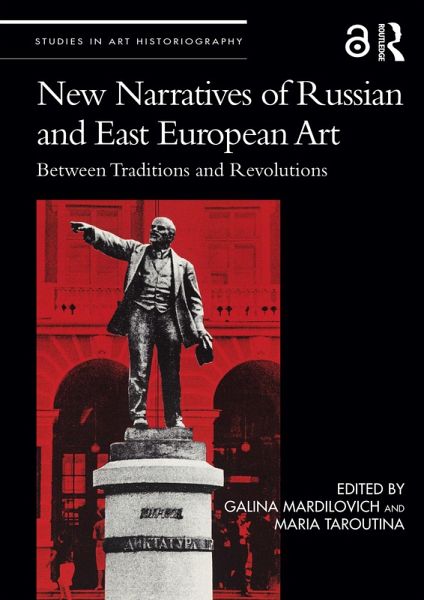
") New Narratives of Russian and East European Art (eBook, ePUB)32,95 €
New Narratives of Russian and East European Art (eBook, ePUB)32,95 €") The Architecture of Percier and Fontaine and the Struggle for Sovereignty in Revolutionary France (eBook, PDF)42,95 €
The Architecture of Percier and Fontaine and the Struggle for Sovereignty in Revolutionary France (eBook, PDF)42,95 €") Political Postmodernisms (eBook, PDF)35,95 €
Political Postmodernisms (eBook, PDF)35,95 €") Urban Phantasmagorias (eBook, PDF)38,95 €
Urban Phantasmagorias (eBook, PDF)38,95 €") The Life and Work of Jerzy Soltan (eBook, PDF)42,95 €
The Life and Work of Jerzy Soltan (eBook, PDF)42,95 €") Radical Marble (eBook, PDF)42,95 €
Radical Marble (eBook, PDF)42,95 €") Post-Western Histories of Architecture (eBook, PDF)39,95 €
Post-Western Histories of Architecture (eBook, PDF)39,95 €




This book brings together thirteen scholars to introduce the newest and most cutting-edge research in the field of Russian and East European art history. Reconsidering canonical figures, re-examining prevalent debates, and revisiting aesthetic developments, the book challenges accepted histories and entrenched dichotomies in art and architecture from the nineteenth century to the present. In doing so, it resituates the artistic production of this region within broader socio-cultural currents and analyzes its interconnections with international discourse, competing political and aesthetic ideologies, and continuous discussions over identity.
Dieser Download kann aus rechtlichen Gründen nur mit Rechnungsadresse in A, B, BG, CY, CZ, D, DK, EW, E, FIN, F, GR, HR, H, IRL, I, LT, L, LR, M, NL, PL, P, R, S, SLO, SK ausgeliefert werden.
"The chronological and geographical coverage of the present volume from the 1830s to the 2010s and from Russia to Italy and the Baltics to the Balkans is truly remarkable. And while the publication does not pretend to be a general history or epochal outline, it brings to light many previously un-discussed or heavily ideologized issues. Also, taking the key events of politics and art throughout two centuries as historiographical points of rethinking unites the whole
collection and contextualizes various new narratives in the historical and cultural perspective."
--H-Net Reviews
collection and contextualizes various new narratives in the historical and cultural perspective."
--H-Net Reviews