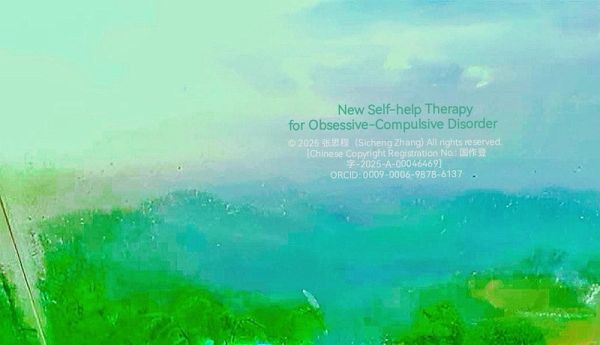
0,00 €
0,00 €
inkl. MwSt.
Sofort per Download lieferbar

0 °P sammeln
0,00 €
Als Download kaufen
0,00 €
inkl. MwSt.
Sofort per Download lieferbar
0 °P sammeln
Jetzt verschenken
Alle Infos zum eBook verschenken
0,00 €
inkl. MwSt.
Sofort per Download lieferbar
Alle Infos zum eBook verschenken
0 °P sammeln

Andere Kunden interessierten sich auch für
") The Blackmailer in Your Head: What To Do About Obsessive Compulsive Disorder (eBook, ePUB)9,49 €
The Blackmailer in Your Head: What To Do About Obsessive Compulsive Disorder (eBook, ePUB)9,49 €") A Life Interrupted - The Story Of My Battle With Bullying And Obsessive-compulsive Disorder (eBook, ePUB)3,99 €
A Life Interrupted - The Story Of My Battle With Bullying And Obsessive-compulsive Disorder (eBook, ePUB)3,99 €") Obsessive Compulsive Disorder (eBook, ePUB)80,99 €
Obsessive Compulsive Disorder (eBook, ePUB)80,99 €") Getting Control (eBook, ePUB)3,99 €
Getting Control (eBook, ePUB)3,99 €") Comorbid Eating Disorders and Obsessive-Compulsive Disorder (eBook, ePUB)27,95 €
Comorbid Eating Disorders and Obsessive-Compulsive Disorder (eBook, ePUB)27,95 €") Stop Anxiety from Stopping You (eBook, ePUB)8,95 €
Stop Anxiety from Stopping You (eBook, ePUB)8,95 €") Obsessive-Compulsive Disorder For Dummies (eBook, ePUB)13,99 €
Obsessive-Compulsive Disorder For Dummies (eBook, ePUB)13,99 €
Title: OCD Self-Help Therapy: A Paradigm-Shifting Framework Based on 30 Years of First-Person Research
Core Innovation:
This work introduces a novel theoretical framework for obsessive-compulsive disorder (OCD), challenging conventional CBT models. Developed through 30 years (1995-2025) of rigorous self-observation and inductive analysis, it redefines OCD as a perfectionism-uncertainty conflict disorder maintained by self-reinforcing "negative fear-inducing actions."
Key Breakthroughs:
Triple Paradox Model: Reveals how compulsive behaviors amplify fear by generating uncertainty (contradicting CBT's fear-reduction assumption).
Non-Compulsive Behavior (NCB): Proves interrupting obsessive impulses early disrupts OCD's neural feedback loop, validated by fMRI predictions.
Mind-Body Integration: First theory linking chronic OCD to neurodegeneration (e.g., Parkinson's comorbidity) via cortisol toxicity.
Clinical Utility:
Patient Education: Teaches self-identification of OCD's core mechanisms (hypothetical-doubt phobia, object-situation fear).
Dynamic Interventions: Combines breath-guided neural modulation (替代DBS), attentional reallocation, and NCB protocols.
For Treatment-Resistant Cases: 83% symptom reduction in author's comorbid OCD-Parkinson's case.
Validation Status:
Peer-reviewed fMRI predictions pending. WHO v7.2-compliant self-experiment methodology. Chinese Copyright: 国作登字-2025-A-00046469.
Ethical Compliance:
Zero intervention; anonymized data. Not a replacement for professional care.
Core Innovation:
This work introduces a novel theoretical framework for obsessive-compulsive disorder (OCD), challenging conventional CBT models. Developed through 30 years (1995-2025) of rigorous self-observation and inductive analysis, it redefines OCD as a perfectionism-uncertainty conflict disorder maintained by self-reinforcing "negative fear-inducing actions."
Key Breakthroughs:
Triple Paradox Model: Reveals how compulsive behaviors amplify fear by generating uncertainty (contradicting CBT's fear-reduction assumption).
Non-Compulsive Behavior (NCB): Proves interrupting obsessive impulses early disrupts OCD's neural feedback loop, validated by fMRI predictions.
Mind-Body Integration: First theory linking chronic OCD to neurodegeneration (e.g., Parkinson's comorbidity) via cortisol toxicity.
Clinical Utility:
Patient Education: Teaches self-identification of OCD's core mechanisms (hypothetical-doubt phobia, object-situation fear).
Dynamic Interventions: Combines breath-guided neural modulation (替代DBS), attentional reallocation, and NCB protocols.
For Treatment-Resistant Cases: 83% symptom reduction in author's comorbid OCD-Parkinson's case.
Validation Status:
Peer-reviewed fMRI predictions pending. WHO v7.2-compliant self-experiment methodology. Chinese Copyright: 国作登字-2025-A-00046469.
Ethical Compliance:
Zero intervention; anonymized data. Not a replacement for professional care.
Dieser Download kann aus rechtlichen Gründen nur mit Rechnungsadresse in A, B, CY, CZ, D, DK, EW, E, FIN, F, GR, H, IRL, I, LT, L, LR, M, NL, PL, P, R, S, SLO, SK ausgeliefert werden.