Sie sind bereits eingeloggt. Klicken Sie auf 2. tolino select Abo, um fortzufahren.
Bitte loggen Sie sich zunächst in Ihr Kundenkonto ein oder registrieren Sie sich bei bücher.de, um das eBook-Abo tolino select nutzen zu können.
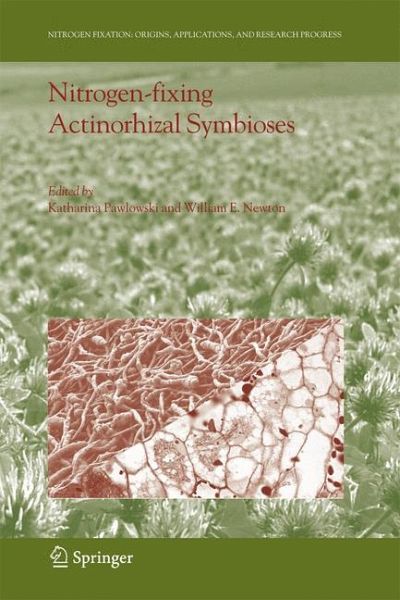
For researchers and graduates with any interest in plant or soil sciences, this fascinating study will be a godsend - it's the complete state of the art with regard to actinorhizal symbioses. The self-contained sixth volume of a comprehensive series on nitrogen fixation, it includes chapters that deal with all aspects of this symbiosis between actinorhizal plants and nitrogen-fixing bacteria. It also contains information both about symbionts and their ecological role and use. Other chapters tackle the global distribution of different actinorhizal plants and their microsymbionts and how this…mehr
For researchers and graduates with any interest in plant or soil sciences, this fascinating study will be a godsend - it's the complete state of the art with regard to actinorhizal symbioses. The self-contained sixth volume of a comprehensive series on nitrogen fixation, it includes chapters that deal with all aspects of this symbiosis between actinorhizal plants and nitrogen-fixing bacteria. It also contains information both about symbionts and their ecological role and use. Other chapters tackle the global distribution of different actinorhizal plants and their microsymbionts and how this impacts the question of co-evolution of the micro- and macrosymbionts as well as comparing the actinorhizal and leguminous symbioses. No other book provides the up-to-date and in-depth coverage of this volume, which is intended to serve as an indispensable reference work for academic, governmental, and industrial scientists working in this area.
Dieser Download kann aus rechtlichen Gründen nur mit Rechnungsadresse in A, B, BG, CY, CZ, D, DK, EW, E, FIN, F, GR, HR, H, IRL, I, LT, L, LR, M, NL, PL, P, R, S, SLO, SK ausgeliefert werden.
Die Herstellerinformationen sind derzeit nicht verfügbar.
Inhaltsangabe
Preface to the Series, Preface, List of Contributors, Dedication. 1. Frankia and Actinorhizal Plants: A Historical Perspective:C. T. Wheeler, A. D. L. Akkermans, and A. M. Berry 1. Introduction 2. The Early Years 3. Two Decades to the New Millennium 4. Perspectives References
2. Polyphasic Taxonomy of the Genus Frankia:D. Hahn 1. Introduction 2. Polyphasic Taxonomy Approach 3. 16S-rRNA Sequence Data 4. DNA-DNA Relatedness 5. 23S-rRNA Sequence Data 6. Genomic Fingerprinting 7. Conclusions References
3. Frankia Ecology:M. Valdés 1. Introduction 2. Frankia as a Soil Microorganism 3. Abiotic Soil Factors and Frankia Populations 4. Biotic Soil Factors: Mycorrhizal Fungi and Frankia 5. Conclusions References
4. Evolution of Actinorhizal Host Plants and Frankia Endosymbionts:S. M. Swensen and D. R. Benson 1. Introduction 2. Host-Plant Systematics and Phylogeny 3. Frankia Phylogeny and Evolution 4. Host-Frankia Interactions and Evolution 5. Future Directions References
5. Oxygen Responses, Hemoglobin, and the Structure and Function of Vesicles:W. B. Silvester, R. H. Berg, C.R. Schwintzer and J. D. Tjepkema 1. Introduction 2. Vesicle Structure and Oxygen Responses of Frankia in vitro 3. Responses in Symbiosis 4. Hemoglobins in Actinorhizal Nodules and Frankia 5. Concluding Discussion References
6. Early Interactions, Infection and Nodulation in Actinorhizal Symbiosis:L. G. Wall and A. M. Berry 1. Introduction 2. Early Interactions 3. Rhizosphere Colonization 4. Root Infection by Frankia 5. Nodule Development 6. Regulation of Nodulation References
7. Carbon and Nitrogen Metabolism in ActinorhizalNodules:C. Valverde and K. Huss-Danell 1. Introduction 2. The Actinorhizal Nodule 3. Studying C and N Metabolism of Nodules 4. Carbon Supply to Nodules 5. Carbon Uptake and Metabolism by Symbiotic Frankia 6. Nitrogen Metabolism 7. The Regulation of N Assimilation 8. ProspectsReferences
8. Ecology of Actinorhizal Plants:J. O. Dawson 1. Importance of Actinorhizal Plants 2. Occurrence and Distribution of Actinorhizal Plant Taxa and their microsymbionts 3. Ecological Factors Influencing Infective Frankia Populations 4. Ecological of Actinorhizal Plants References
9. Molecular Biology of Actinorhizal Symbioses:L. Laplaze, S. Svistoonoff, C. Santi, F, Auguy, C. Franche and D. Bogusz 1. Introduction 2. Infection Process 3. Nodule Development 4. Nodule Functioning 5. Evolutionary Origin of Symbiotic Genes 6. Future Trends 7. Conclusions References
10. Comparison between Actinorhizal and Legume Symbiosis:K. Pawlowski and J. I. Sprent 1. Introduction 2. Nodule Structure 3. Nodule-Induction Mechanisms 4. Host Specificity 5. Root Nodules and Other Root Symbioses 6. Evolution of Root-Nodule Symbioses References
11. Prospects for the Study of a Ubiquitous Actinomycete, Frankia, and Its Host Plants:P. Normand and B. C. Mullin 1. Introduction 2. Development and Use of Molecular Tools for Genetic Analysis of Symbiosis 3. Prospects for Future Utilization of Actinorhizal Plants 4. Questions Still to be Addressed 5. Prospects for Extending Symbioses beyond Current Host Range 6. Conclusions References
Preface to the Series, Preface, List of Contributors, Dedication. 1. Frankia and Actinorhizal Plants: A Historical Perspective:C. T. Wheeler, A. D. L. Akkermans, and A. M. Berry 1. Introduction 2. The Early Years 3. Two Decades to the New Millennium 4. Perspectives References
2. Polyphasic Taxonomy of the Genus Frankia:D. Hahn 1. Introduction 2. Polyphasic Taxonomy Approach 3. 16S-rRNA Sequence Data 4. DNA-DNA Relatedness 5. 23S-rRNA Sequence Data 6. Genomic Fingerprinting 7. Conclusions References
3. Frankia Ecology:M. Valdés 1. Introduction 2. Frankia as a Soil Microorganism 3. Abiotic Soil Factors and Frankia Populations 4. Biotic Soil Factors: Mycorrhizal Fungi and Frankia 5. Conclusions References
4. Evolution of Actinorhizal Host Plants and Frankia Endosymbionts:S. M. Swensen and D. R. Benson 1. Introduction 2. Host-Plant Systematics and Phylogeny 3. Frankia Phylogeny and Evolution 4. Host-Frankia Interactions and Evolution 5. Future Directions References
5. Oxygen Responses, Hemoglobin, and the Structure and Function of Vesicles:W. B. Silvester, R. H. Berg, C.R. Schwintzer and J. D. Tjepkema 1. Introduction 2. Vesicle Structure and Oxygen Responses of Frankia in vitro 3. Responses in Symbiosis 4. Hemoglobins in Actinorhizal Nodules and Frankia 5. Concluding Discussion References
6. Early Interactions, Infection and Nodulation in Actinorhizal Symbiosis:L. G. Wall and A. M. Berry 1. Introduction 2. Early Interactions 3. Rhizosphere Colonization 4. Root Infection by Frankia 5. Nodule Development 6. Regulation of Nodulation References
7. Carbon and Nitrogen Metabolism in ActinorhizalNodules:C. Valverde and K. Huss-Danell 1. Introduction 2. The Actinorhizal Nodule 3. Studying C and N Metabolism of Nodules 4. Carbon Supply to Nodules 5. Carbon Uptake and Metabolism by Symbiotic Frankia 6. Nitrogen Metabolism 7. The Regulation of N Assimilation 8. ProspectsReferences
8. Ecology of Actinorhizal Plants:J. O. Dawson 1. Importance of Actinorhizal Plants 2. Occurrence and Distribution of Actinorhizal Plant Taxa and their microsymbionts 3. Ecological Factors Influencing Infective Frankia Populations 4. Ecological of Actinorhizal Plants References
9. Molecular Biology of Actinorhizal Symbioses:L. Laplaze, S. Svistoonoff, C. Santi, F, Auguy, C. Franche and D. Bogusz 1. Introduction 2. Infection Process 3. Nodule Development 4. Nodule Functioning 5. Evolutionary Origin of Symbiotic Genes 6. Future Trends 7. Conclusions References
10. Comparison between Actinorhizal and Legume Symbiosis:K. Pawlowski and J. I. Sprent 1. Introduction 2. Nodule Structure 3. Nodule-Induction Mechanisms 4. Host Specificity 5. Root Nodules and Other Root Symbioses 6. Evolution of Root-Nodule Symbioses References
11. Prospects for the Study of a Ubiquitous Actinomycete, Frankia, and Its Host Plants:P. Normand and B. C. Mullin 1. Introduction 2. Development and Use of Molecular Tools for Genetic Analysis of Symbiosis 3. Prospects for Future Utilization of Actinorhizal Plants 4. Questions Still to be Addressed 5. Prospects for Extending Symbioses beyond Current Host Range 6. Conclusions References
Subject Index
Es gelten unsere Allgemeinen Geschäftsbedingungen: www.buecher.de/agb
Impressum
www.buecher.de ist ein Internetauftritt der buecher.de internetstores GmbH
Geschäftsführung: Monica Sawhney | Roland Kölbl | Günter Hilger
Sitz der Gesellschaft: Batheyer Straße 115 - 117, 58099 Hagen
Postanschrift: Bürgermeister-Wegele-Str. 12, 86167 Augsburg
Amtsgericht Hagen HRB 13257
Steuernummer: 321/5800/1497
USt-IdNr: DE450055826