48,95 €
48,95 €
inkl. MwSt.
Sofort per Download lieferbar

24 °P sammeln
48,95 €
Als Download kaufen
48,95 €
inkl. MwSt.
Sofort per Download lieferbar
24 °P sammeln
Jetzt verschenken
Alle Infos zum eBook verschenken
48,95 €
inkl. MwSt.
Sofort per Download lieferbar
Alle Infos zum eBook verschenken
24 °P sammeln

Andere Kunden interessierten sich auch für
") Dreams, A Portal to the Source (eBook, PDF)41,95 €
Dreams, A Portal to the Source (eBook, PDF)41,95 €") The Dream Discourse Today (eBook, PDF)41,95 €
The Dream Discourse Today (eBook, PDF)41,95 €") Understanding Countertransference (eBook, PDF)44,95 €
Understanding Countertransference (eBook, PDF)44,95 €") Against Understanding, Volume 1 (eBook, PDF)48,95 €
Against Understanding, Volume 1 (eBook, PDF)48,95 €") Sandplay: Silent Workshop of the Psyche (eBook, PDF)39,95 €
Sandplay: Silent Workshop of the Psyche (eBook, PDF)39,95 €") A Relational Psychoanalytic Approach to Couples Psychotherapy (eBook, PDF)46,95 €
A Relational Psychoanalytic Approach to Couples Psychotherapy (eBook, PDF)46,95 €") Who Is the Dreamer, Who Dreams the Dream? (eBook, PDF)44,95 €
Who Is the Dreamer, Who Dreams the Dream? (eBook, PDF)44,95 €

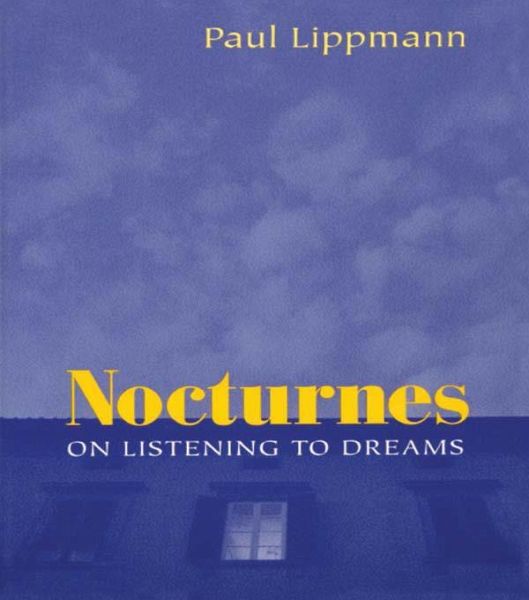
Nocturnes, literally music for the night, is a delightfully impressionistic investigation into everything that is not known, and perhaps can never be known, about dreams. Rather than espousing yet another strategy of dream interpretation, Lippmann proffers a naturalistic approach appreciative of the playful, complex, even zany creativity embodied in dreams. He urges us, that is, to apprehend dreams on their own terms, in a manner that enables patients actually to experience the unconscious in its radical difference from waking thought.
Lippmann delivers on his agenda lightly, with a sense of humor and practicality that will engage lay readers as well as analysts and therapists. He takes up questions of general interest that challenge us to reorient our thinking about dreams: How do children learn about dreams and their telling? Why are most dreams forgotten? How may we understand dreams about sleeping and waking, even dreams about dreaming? And he reengages issues of perennial interest to analytic therapists: dream disguise, dream forgetting, the "companionship" of dreams, the neurotic dream expert, and the therapist's management of his or her own anxiety when patients report their dreams.
"Oh, I had a dream last night," the patient remembers. Too often, observes Lippmann, this remark signals the beginning of an unfortunate struggle, as the patient is called on to relate something that changes when it is put into words, the analyst is put on the spot to come up with an interpretation, and both are asked to extract something immediately useful - and lately, cost effective - from something that partakes of magic and mystery. How silly this ritual is, Lippmann argues, and how alien to the nature of the dream itself. After reading Nocturnes, no clinician, from the novice to the most senior, will hear the words "Oh, I had a dream last night" in quite the same way.
Lippmann delivers on his agenda lightly, with a sense of humor and practicality that will engage lay readers as well as analysts and therapists. He takes up questions of general interest that challenge us to reorient our thinking about dreams: How do children learn about dreams and their telling? Why are most dreams forgotten? How may we understand dreams about sleeping and waking, even dreams about dreaming? And he reengages issues of perennial interest to analytic therapists: dream disguise, dream forgetting, the "companionship" of dreams, the neurotic dream expert, and the therapist's management of his or her own anxiety when patients report their dreams.
"Oh, I had a dream last night," the patient remembers. Too often, observes Lippmann, this remark signals the beginning of an unfortunate struggle, as the patient is called on to relate something that changes when it is put into words, the analyst is put on the spot to come up with an interpretation, and both are asked to extract something immediately useful - and lately, cost effective - from something that partakes of magic and mystery. How silly this ritual is, Lippmann argues, and how alien to the nature of the dream itself. After reading Nocturnes, no clinician, from the novice to the most senior, will hear the words "Oh, I had a dream last night" in quite the same way.
Dieser Download kann aus rechtlichen Gründen nur mit Rechnungsadresse in A, B, BG, CY, CZ, D, DK, EW, E, FIN, F, GR, HR, H, IRL, I, LT, L, LR, M, NL, PL, P, R, S, SLO, SK ausgeliefert werden.
"Pail Lippman is a man who loves dreams. Fortunately for his readers, he is also a wise and creative clinician who invites us to accompany him on an enchanting, informative, and challenging journey within and about our patients' dreams. Through his own reflections about the dreaming process, Lippmann reminds us of the importance of dreams to the human experience, and he returns them to a central position in the analytic process. To this end, he examines dreams from the perspectives on content and context, the character of the analyst/listener, the utility or intrusiveness of specific theories of dream interpretation, and the potential overuse of transference interpretations in our encounters with dreams. Nocturnes is not only a major contribution to contemporary psychoanalytic thought but a most intriguing and delightful read."
-Andrew Morrison, M.D., author, Shame: The Underside of Narcissism
"This imaginative and creative book is a long paean to dreams that highlights their 'unwilled freedom' and sponaneity. Lippmann tells us much about the history and nature of dreams but in a way that is personal and at times poetic. In a sense, his book embodies many of the qualities he imputes to dreams, especially their freedom and imaginative capacity. If, as E. Hartmann tells us, a critical aspect of dreams and psychoanalysis alike is 'making connections in a safe place,' then Nocturnes is a grand dream and a grand psychoanalytic excursion. For anyone interested in dreams, it will be a fascinating read."
- Morris Eagle, Ph.D., Derner Institute, Adelphi University
"Paul Lippman introduces us to our daily rich nighttime experience with originality, enthusiasm, and playfulness. Dreamers and dream interpreters alike will take his main message greatly to heart: that dreams are to be respected and appreciated rather than 'messed with.' Nocturnes is full of creative ideas not to be missed."
- Sophie Freud, LICSW, Ph.D., Professor Emerita, Simmons College School of Social Work, Boston
-Andrew Morrison, M.D., author, Shame: The Underside of Narcissism
"This imaginative and creative book is a long paean to dreams that highlights their 'unwilled freedom' and sponaneity. Lippmann tells us much about the history and nature of dreams but in a way that is personal and at times poetic. In a sense, his book embodies many of the qualities he imputes to dreams, especially their freedom and imaginative capacity. If, as E. Hartmann tells us, a critical aspect of dreams and psychoanalysis alike is 'making connections in a safe place,' then Nocturnes is a grand dream and a grand psychoanalytic excursion. For anyone interested in dreams, it will be a fascinating read."
- Morris Eagle, Ph.D., Derner Institute, Adelphi University
"Paul Lippman introduces us to our daily rich nighttime experience with originality, enthusiasm, and playfulness. Dreamers and dream interpreters alike will take his main message greatly to heart: that dreams are to be respected and appreciated rather than 'messed with.' Nocturnes is full of creative ideas not to be missed."
- Sophie Freud, LICSW, Ph.D., Professor Emerita, Simmons College School of Social Work, Boston