27,95 €
inkl. MwSt.
Sofort per Download lieferbar
14 °P sammeln

Andere Kunden interessierten sich auch für
") Performance, Resistance and Refugees (eBook, ePUB)36,95 €
Performance, Resistance and Refugees (eBook, ePUB)36,95 €") The Haumana Hula Handbook for Students of Hawaiian Dance (eBook, ePUB)11,95 €
The Haumana Hula Handbook for Students of Hawaiian Dance (eBook, ePUB)11,95 €") Performing Indigenous Identities on the Contemporary Australian Stage (eBook, ePUB)41,95 €
Performing Indigenous Identities on the Contemporary Australian Stage (eBook, ePUB)41,95 €") The White Indians of Mexican Cinema (eBook, ePUB)0,00 €
The White Indians of Mexican Cinema (eBook, ePUB)0,00 €") The Cinema of Extractions (eBook, ePUB)22,95 €
The Cinema of Extractions (eBook, ePUB)22,95 €") Lost and Othered Children in Contemporary Cinema (eBook, ePUB)37,95 €
Lost and Othered Children in Contemporary Cinema (eBook, ePUB)37,95 €") The Public Life of Cinema (eBook, ePUB)22,95 €
The Public Life of Cinema (eBook, ePUB)22,95 €





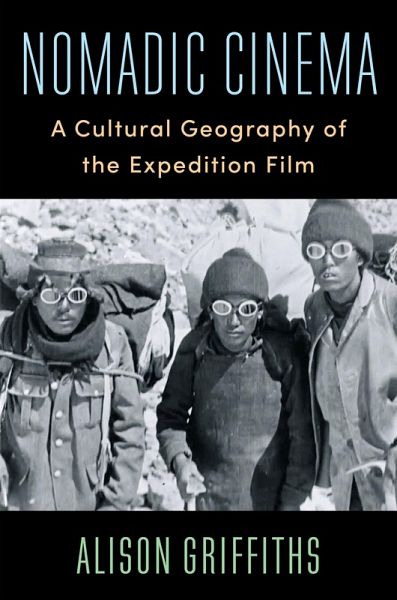
From In Borneo, the Land of the Head-Hunters to The Epic of Everest to Camping Among the Indians, the early twentieth century was the heyday of expedition filmmaking. As new technologies transformed global transportation and opened new avenues for documentation, and as imperialism and capitalism expanded their reach, Western filmmakers embarked on journeys to places they saw as exotic, seeking to capture both the monumental and the mundane. Their films portrayed far-flung locales, the hardships of travel, and the day-to-day lives of Indigenous people through a deeply colonial lens.
Nomadic Cinema is a groundbreaking history of these films, analyzing them as visual records of colonialism that also offer new possibilities for recognizing Indigenous histories. Alison Griffiths examines expedition films made in Borneo, Central Asia, Tibet, Polynesia, and the American Southwest, reinterpreting them from decolonial perspectives to provide alternative accounts of exploration. She considers the individuals and institutions-including the American Museum of Natural History-responsible for creating the films, the spectators who sought them out, and the Indigenous intermediaries whose roles white explorers minimized. Ambitious and interdisciplinary, Nomadic Cinema ranges widely, from the roots of expedition films in medieval cartography and travel writing to still-emerging technologies of virtual and augmented reality. Highlighting the material conditions of filmmaking and the environmental footprint left by exploration, this book recovers Indigenous memory and sovereignty from within long-buried sources.
Nomadic Cinema is a groundbreaking history of these films, analyzing them as visual records of colonialism that also offer new possibilities for recognizing Indigenous histories. Alison Griffiths examines expedition films made in Borneo, Central Asia, Tibet, Polynesia, and the American Southwest, reinterpreting them from decolonial perspectives to provide alternative accounts of exploration. She considers the individuals and institutions-including the American Museum of Natural History-responsible for creating the films, the spectators who sought them out, and the Indigenous intermediaries whose roles white explorers minimized. Ambitious and interdisciplinary, Nomadic Cinema ranges widely, from the roots of expedition films in medieval cartography and travel writing to still-emerging technologies of virtual and augmented reality. Highlighting the material conditions of filmmaking and the environmental footprint left by exploration, this book recovers Indigenous memory and sovereignty from within long-buried sources.
Dieser Download kann aus rechtlichen Gründen nur mit Rechnungsadresse in A, D ausgeliefert werden.