Sie sind bereits eingeloggt. Klicken Sie auf 2. tolino select Abo, um fortzufahren.
Bitte loggen Sie sich zunächst in Ihr Kundenkonto ein oder registrieren Sie sich bei bücher.de, um das eBook-Abo tolino select nutzen zu können.
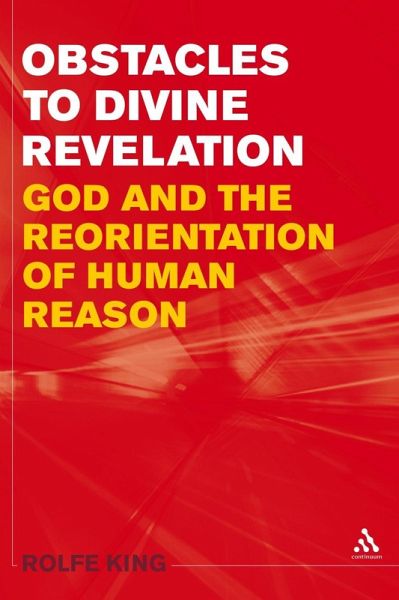
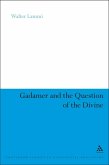
A fascinating, philosophical approach to the concept of divine revelation, exploring the implications this theory may have for generating a new concept of religious truth.
A fascinating, philosophical approach to the concept of divine revelation, exploring the implications this theory may have for generating a new concept of religious truth.
Die Herstellerinformationen sind derzeit nicht verfügbar.
Autorenporträt
He is an Honorary Lecturer in the School of Philosophy, Theology and Religion at the University of Birmingham, UK. He was formerly Senior Lecturer in the Department of Theology at Newman College (now Newman University College), Birmingham. He is currently engaged in research projects at both the University of Birmingham and the University of Aberdeen.
Rolfe King is currently based at the University of Birmingham as an Honorary Lecturer engaged in research in philosophy of religion, as well as being a Research Associate at the Queen's Foundation in Birmingham.
Inhaltsangabe
Chapter 1: Initial Reflections 1.1 Introduction 1.2 Identifying our topic 1.3 Comments on method 1.4 Some key assumptions 1.5 Adjusting the focus 1.6 Some illustrations Chapter 2: The God of History? 2.1 Recording history 2.2 Revelation as history 2.3 Hermeneutics 2.4 Some general features of obstacles to revelation Chapter 3: Starting the Process 3.1 The Eden parable 3.2 Revelation and necessity 3.3 Analysing God's options 3.4 God's limited options 3.5 Evidence and the best plan 3.6 Some possible criticisms Chapter 4: Evidence and Direct Cognition of God 4.1 Some background 4.2 Internalism v. externamlism 4.3 Models of direct knowledge of the truth of testimony 4.4 Evaluation of the models Chapter 5: Knowledge and the Perception of God 5.1 Can God be perceived? 5.2 Language games and the name of God 5.3 Seeing the essence of God 5.4 Seeing the glory of God Chapter 6: Knowledge and Obstacles to Direct Cognition 6.1 Direct cognition: a summary 6.2 Plantinga and the maximum pace of revelation 6.3 Obstacles to direct cognition 6.4 Coherence rationality and union with God 6.5 A Theory of Knowledge 6.6 The Eden parable revisited Chapter 7: Major and Discreet Revelation 7.1 Great evidence 7.2 The "Gal" thought-experiment 7.3 Results and application 7.4 Obstacles to major revelation 7.5 Discreet revelation: the best strategy? Chapter 8: Eschatological Revelation 8.1 The parable of the Throne and the Seed 8.2 Judgment and revelation 8.3 Judgement and the vision of God 8.4 The general problem of special revelation Chapter 9: Divine Hiddenness 9.1 A third factor 9.2 The choice to hide 9.3 Obstacles or hiding? 9.4 Apophatic theology Chapter 10: The Necessary Structure of Revelation 10.1 The story so far 10.2 God's limited opinions: types of divine self-testimony 10.3 Evidence, divine plans and the "Version B Model" 10.4 Features of the necessary structure 10.5 Approaching assurance 10.6 Miracles and necessity 10.7 Does Kant make any difference? Chapter 11: Divine Self-testimony and the Journey to God 11.1 God and the contemporary debate over testimony 11.2 Journey-epistemology 11.3 Two kinds of rationality 11.4 Traditions and the awakening of the human ideal 11.5 The knowledge of God: head and heart Chapter 12: The Journey of Faith 12.1 Confident faith? 12.2 Choosing to trust? 12.3 The moral ideal and the journey towards God 12.4 Faith and reason Chapter 13: Providence and Revelation 13.1 The problem of evil 13.2 Modest theodicy 13.3 Providence and free will 13.4 Modeling omnipotence Conclusion References Index
Chapter 1: Initial Reflections 1.1 Introduction 1.2 Identifying our topic 1.3 Comments on method 1.4 Some key assumptions 1.5 Adjusting the focus 1.6 Some illustrations Chapter 2: The God of History? 2.1 Recording history 2.2 Revelation as history 2.3 Hermeneutics 2.4 Some general features of obstacles to revelation Chapter 3: Starting the Process 3.1 The Eden parable 3.2 Revelation and necessity 3.3 Analysing God's options 3.4 God's limited options 3.5 Evidence and the best plan 3.6 Some possible criticisms Chapter 4: Evidence and Direct Cognition of God 4.1 Some background 4.2 Internalism v. externamlism 4.3 Models of direct knowledge of the truth of testimony 4.4 Evaluation of the models Chapter 5: Knowledge and the Perception of God 5.1 Can God be perceived? 5.2 Language games and the name of God 5.3 Seeing the essence of God 5.4 Seeing the glory of God Chapter 6: Knowledge and Obstacles to Direct Cognition 6.1 Direct cognition: a summary 6.2 Plantinga and the maximum pace of revelation 6.3 Obstacles to direct cognition 6.4 Coherence rationality and union with God 6.5 A Theory of Knowledge 6.6 The Eden parable revisited Chapter 7: Major and Discreet Revelation 7.1 Great evidence 7.2 The "Gal" thought-experiment 7.3 Results and application 7.4 Obstacles to major revelation 7.5 Discreet revelation: the best strategy? Chapter 8: Eschatological Revelation 8.1 The parable of the Throne and the Seed 8.2 Judgment and revelation 8.3 Judgement and the vision of God 8.4 The general problem of special revelation Chapter 9: Divine Hiddenness 9.1 A third factor 9.2 The choice to hide 9.3 Obstacles or hiding? 9.4 Apophatic theology Chapter 10: The Necessary Structure of Revelation 10.1 The story so far 10.2 God's limited opinions: types of divine self-testimony 10.3 Evidence, divine plans and the "Version B Model" 10.4 Features of the necessary structure 10.5 Approaching assurance 10.6 Miracles and necessity 10.7 Does Kant make any difference? Chapter 11: Divine Self-testimony and the Journey to God 11.1 God and the contemporary debate over testimony 11.2 Journey-epistemology 11.3 Two kinds of rationality 11.4 Traditions and the awakening of the human ideal 11.5 The knowledge of God: head and heart Chapter 12: The Journey of Faith 12.1 Confident faith? 12.2 Choosing to trust? 12.3 The moral ideal and the journey towards God 12.4 Faith and reason Chapter 13: Providence and Revelation 13.1 The problem of evil 13.2 Modest theodicy 13.3 Providence and free will 13.4 Modeling omnipotence Conclusion References Index
Es gelten unsere Allgemeinen Geschäftsbedingungen: www.buecher.de/agb
Impressum
www.buecher.de ist ein Internetauftritt der buecher.de internetstores GmbH
Geschäftsführung: Monica Sawhney | Roland Kölbl | Günter Hilger
Sitz der Gesellschaft: Batheyer Straße 115 - 117, 58099 Hagen
Postanschrift: Bürgermeister-Wegele-Str. 12, 86167 Augsburg
Amtsgericht Hagen HRB 13257
Steuernummer: 321/5800/1497
USt-IdNr: DE450055826