Sie sind bereits eingeloggt. Klicken Sie auf 2. tolino select Abo, um fortzufahren.
Bitte loggen Sie sich zunächst in Ihr Kundenkonto ein oder registrieren Sie sich bei bücher.de, um das eBook-Abo tolino select nutzen zu können.
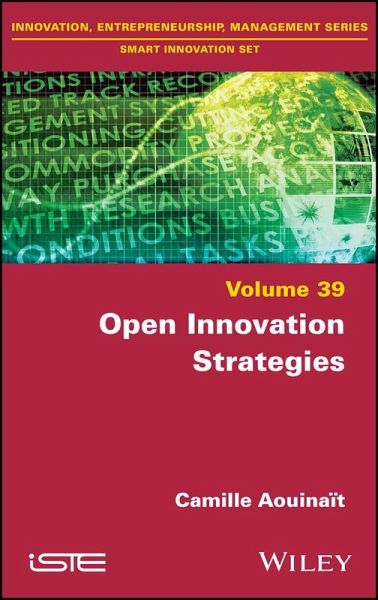
The main aim of opening up innovation is to optimize the process of creating innovations, while pooling human, financial and material resources. Various profiles of actors are thus brought together in order to collaborate to achieve common objectives and share their particular interests. This book describes the challenges of collaboration in the development of innovations in a context where the sustainability of value chains is central. The diversity of collaborative forms, shared spaces (FabLab, LivingLab, co-working spaces), the intrinsic characteristics of innovation, and the actors…mehr
The main aim of opening up innovation is to optimize the process of creating innovations, while pooling human, financial and material resources. Various profiles of actors are thus brought together in order to collaborate to achieve common objectives and share their particular interests. This book describes the challenges of collaboration in the development of innovations in a context where the sustainability of value chains is central. The diversity of collaborative forms, shared spaces (FabLab, LivingLab, co-working spaces), the intrinsic characteristics of innovation, and the actors actively involved in its emergence are all addressed in this book. The structuring of partners collaborating in innovative projects in specific environments is also discussed. Furthermore, it questions the social responsibility of companies and their innovative role in generating sustainable solutions for stakeholders.
Dieser Download kann aus rechtlichen Gründen nur mit Rechnungsadresse in D ausgeliefert werden.
Die Herstellerinformationen sind derzeit nicht verfügbar.
Autorenporträt
Camille Aouinait has a PhD in economics and innovation management. Her research focuses on open innovation, knowledge transfer and support in the implementation of innovation in agri-food firms and the agricultural ecosystem.
Inhaltsangabe
Preface ix Introduction xi Part 1 Static and Descriptive Innovation 1 Chapter 1 Definition of Open Innovation and Collaborative Innovation 3 1.1 Definition of open and collaborative innovation 3 1.2 Basic characteristics 9 1.2.1 From closed innovation to open innovation 9 1.2.2 Serendipity 13 1.2.3 Creativity 15 1.2.4 The absorption capacity of firms 16 1.2.5 The various degrees of innovation 18 1.2.6 Exploration versus exploitation in innovation processes 22 1.3 The creation of innovation and associated partnerships 24 1.3.1 Dynamics of collaborative innovation production 24 1.3.2 Forms of partnerships and degree of openness of innovation 25 1.3.3 Collaborative models: from the triple helix to mode 2, via the NSI 30 Chapter 2 History of the Evolution of Collaboration Between Actors, and Creation of Innovation Networks 33 2.1 Genesis of collaboration and its evolution through different innovation models 33 2.1.1 History of collaboration 33 2.1.2 Evolution of the innovation models used 35 2.1.3 Top-down and bottom-up approaches 37 2.1.4 Location of actors for collaboration and impact on the type of innovation 42 2.2 Business ecosystems 42 2.3 Partnership experience 45 2.3.1 Creation of innovation networks 45 2.3.2 Profiles of the partners involved in the collaboration 48 2.3.3 Importance of the territorial level for the governance of innovation 52 2.3.4 Emergence and use of collaborative platforms 54 2.3.5 Intellectual property rights: license exchange and other notable examples of collaboration 57 Part 2 Dynamic and Causal Innovation 63 Chapter 3 The Reasons Behind Open Innovation and its Evolution 65 3.1 Evolution of the use of collaborative innovation: from classical to new models 65 3.1.1 FabLabs 66 3.1.2 The Artlab 68 3.1.3 Coworking spaces 69 3.1.4 Hacker spaces and maker spaces 71 3.1.5 Living Labs 72 3.1.6 Creative Labs 73 3.2 Diversity of collaborative forms: an organized space of actors based on geographical, social and organizational proximity 74 3.2.1 The spatial organization of actors in the form of clusters 74 3.2.2 Industrial districts 81 3.2.3 National Innovation Systems and Local Innovation Systems 82 3.3 The intermediaries of innovation 83 3.4 Innovation jointly created with users 89 Chapter 4 Advantages, Disadvantages and Issues Related to Collaborative Innovation 99 4.1 Benefits of collaborative innovation for the actors involved 99 4.1.1 The modes of knowledge transfer and their implications on collaborative innovation 106 4.1.2 The role of collaborative innovation at the economic, social, societal and environmental levels 108 4.1.3 Sectors conducive to open innovation 122 4.2 Limitations of the open innovation paradigm 124 4.2.1 Actors' levels of organization, between small and large firms 124 4.2.2 Intellectual property: a sensitive point in the collaboration 125 4.2.3 Clarification of monetary benefits 126 4.2.4 Restricting access to protected results and impacts on science 127 4.2.5 Actors' cognitive skills 127 4.2.6 What value does the innovation bring? 128 4.3 Questions related to collaborative innovation 133 4.3.1 The various paradoxes inherent in collaborative innovation 133 4.3.2 Role of governance and actors 138 Conclusion 143 References 151 Index 181
Preface ix Introduction xi Part 1 Static and Descriptive Innovation 1 Chapter 1 Definition of Open Innovation and Collaborative Innovation 3 1.1 Definition of open and collaborative innovation 3 1.2 Basic characteristics 9 1.2.1 From closed innovation to open innovation 9 1.2.2 Serendipity 13 1.2.3 Creativity 15 1.2.4 The absorption capacity of firms 16 1.2.5 The various degrees of innovation 18 1.2.6 Exploration versus exploitation in innovation processes 22 1.3 The creation of innovation and associated partnerships 24 1.3.1 Dynamics of collaborative innovation production 24 1.3.2 Forms of partnerships and degree of openness of innovation 25 1.3.3 Collaborative models: from the triple helix to mode 2, via the NSI 30 Chapter 2 History of the Evolution of Collaboration Between Actors, and Creation of Innovation Networks 33 2.1 Genesis of collaboration and its evolution through different innovation models 33 2.1.1 History of collaboration 33 2.1.2 Evolution of the innovation models used 35 2.1.3 Top-down and bottom-up approaches 37 2.1.4 Location of actors for collaboration and impact on the type of innovation 42 2.2 Business ecosystems 42 2.3 Partnership experience 45 2.3.1 Creation of innovation networks 45 2.3.2 Profiles of the partners involved in the collaboration 48 2.3.3 Importance of the territorial level for the governance of innovation 52 2.3.4 Emergence and use of collaborative platforms 54 2.3.5 Intellectual property rights: license exchange and other notable examples of collaboration 57 Part 2 Dynamic and Causal Innovation 63 Chapter 3 The Reasons Behind Open Innovation and its Evolution 65 3.1 Evolution of the use of collaborative innovation: from classical to new models 65 3.1.1 FabLabs 66 3.1.2 The Artlab 68 3.1.3 Coworking spaces 69 3.1.4 Hacker spaces and maker spaces 71 3.1.5 Living Labs 72 3.1.6 Creative Labs 73 3.2 Diversity of collaborative forms: an organized space of actors based on geographical, social and organizational proximity 74 3.2.1 The spatial organization of actors in the form of clusters 74 3.2.2 Industrial districts 81 3.2.3 National Innovation Systems and Local Innovation Systems 82 3.3 The intermediaries of innovation 83 3.4 Innovation jointly created with users 89 Chapter 4 Advantages, Disadvantages and Issues Related to Collaborative Innovation 99 4.1 Benefits of collaborative innovation for the actors involved 99 4.1.1 The modes of knowledge transfer and their implications on collaborative innovation 106 4.1.2 The role of collaborative innovation at the economic, social, societal and environmental levels 108 4.1.3 Sectors conducive to open innovation 122 4.2 Limitations of the open innovation paradigm 124 4.2.1 Actors' levels of organization, between small and large firms 124 4.2.2 Intellectual property: a sensitive point in the collaboration 125 4.2.3 Clarification of monetary benefits 126 4.2.4 Restricting access to protected results and impacts on science 127 4.2.5 Actors' cognitive skills 127 4.2.6 What value does the innovation bring? 128 4.3 Questions related to collaborative innovation 133 4.3.1 The various paradoxes inherent in collaborative innovation 133 4.3.2 Role of governance and actors 138 Conclusion 143 References 151 Index 181
Es gelten unsere Allgemeinen Geschäftsbedingungen: www.buecher.de/agb
Impressum
www.buecher.de ist ein Internetauftritt der buecher.de internetstores GmbH
Geschäftsführung: Monica Sawhney | Roland Kölbl | Günter Hilger
Sitz der Gesellschaft: Batheyer Straße 115 - 117, 58099 Hagen
Postanschrift: Bürgermeister-Wegele-Str. 12, 86167 Augsburg
Amtsgericht Hagen HRB 13257
Steuernummer: 321/5800/1497
USt-IdNr: DE450055826