
160,95 €
160,95 €
inkl. MwSt.
Sofort per Download lieferbar

80 °P sammeln
160,95 €
Als Download kaufen
160,95 €
inkl. MwSt.
Sofort per Download lieferbar
80 °P sammeln
Jetzt verschenken
Alle Infos zum eBook verschenken
160,95 €
inkl. MwSt.
Sofort per Download lieferbar
Alle Infos zum eBook verschenken
80 °P sammeln

Andere Kunden interessierten sich auch für
") Waveguide Optoelectronics (eBook, PDF)40,95 €
Waveguide Optoelectronics (eBook, PDF)40,95 €") Integrated Optics (eBook, PDF)64,95 €
Integrated Optics (eBook, PDF)64,95 €") Advances in Integrated Optics (eBook, PDF)40,95 €
Advances in Integrated Optics (eBook, PDF)40,95 €") Integrated Photonics (eBook, PDF)232,95 €
Integrated Photonics (eBook, PDF)232,95 €") Optoelectronic Devices (eBook, PDF)232,95 €
Optoelectronic Devices (eBook, PDF)232,95 €") Photonic Switching (eBook, PDF)72,95 €
Photonic Switching (eBook, PDF)72,95 €") Advanced Optoelectronic Devices (eBook, PDF)160,95 €
Advanced Optoelectronic Devices (eBook, PDF)160,95 €

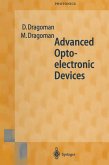
Optoelectronic devices are currently being developed at an extraordinary rate. Organic light-emitting diodes, photovoltaic devices and electro-optical modulators are pivotal to the future of displays, photosensors and solar cells, and communication technologies. This book details the theories underlying the mechanisms involved in the relevant organic materials and covers, at a basic level, how the organic components are made.
The first part of the book introduces the fundamental theories used to describe ordered solids and goes onto detail on concepts applicable to localised energy levels. Then the methods used to determine energy levels particular to perfectly ordered molecular and macromolecular systems are discussed along with a detailed consideration of the effects of quasi-particles. The function of excitons and their transfer between two molecules is studied and, in addition, the problems associated with interfaces and charge injection into resistive media are presented.
More technological aspects are covered in the second part, which details the actual methods used to fabricate devices based on organic materials, such as dry etching. The principal characterisation techniques are also highlighted. Specific attention is paid to visual displays using organic light-emitting diodes; the conversion of photons into electrical energy (the photovoltaic effect); and for communications and information technologies, the electro-optical modulation of signals.
The first part of the book introduces the fundamental theories used to describe ordered solids and goes onto detail on concepts applicable to localised energy levels. Then the methods used to determine energy levels particular to perfectly ordered molecular and macromolecular systems are discussed along with a detailed consideration of the effects of quasi-particles. The function of excitons and their transfer between two molecules is studied and, in addition, the problems associated with interfaces and charge injection into resistive media are presented.
More technological aspects are covered in the second part, which details the actual methods used to fabricate devices based on organic materials, such as dry etching. The principal characterisation techniques are also highlighted. Specific attention is paid to visual displays using organic light-emitting diodes; the conversion of photons into electrical energy (the photovoltaic effect); and for communications and information technologies, the electro-optical modulation of signals.
Dieser Download kann aus rechtlichen Gründen nur mit Rechnungsadresse in A, B, BG, CY, CZ, D, DK, EW, E, FIN, F, GR, HR, H, IRL, I, LT, L, LR, M, NL, PL, P, R, S, SLO, SK ausgeliefert werden.