
8,99 €
8,99 €
inkl. MwSt.
Sofort per Download lieferbar

0 °P sammeln
8,99 €
Als Download kaufen
8,99 €
inkl. MwSt.
Sofort per Download lieferbar
0 °P sammeln
Jetzt verschenken
Alle Infos zum eBook verschenken
8,99 €
inkl. MwSt.
Sofort per Download lieferbar
Alle Infos zum eBook verschenken
0 °P sammeln

Andere Kunden interessierten sich auch für
") Ottoman Turkey: Civilizations of the Middle East (eBook, ePUB)8,99 €
Ottoman Turkey: Civilizations of the Middle East (eBook, ePUB)8,99 €") Persia: Civilizations of the Middle East (eBook, ePUB)6,99 €
Persia: Civilizations of the Middle East (eBook, ePUB)6,99 €") Persia: Civilizations of the Middle East (eBook, ePUB)6,99 €
Persia: Civilizations of the Middle East (eBook, ePUB)6,99 €") Crusades: Civilizations of the Middle East (eBook, ePUB)6,99 €
Crusades: Civilizations of the Middle East (eBook, ePUB)6,99 €") Mossad: Civilizations of the Middle East (eBook, ePUB)8,99 €
Mossad: Civilizations of the Middle East (eBook, ePUB)8,99 €") Poland and European East-West Cooperation in the 1970s (eBook, ePUB)39,95 €
Poland and European East-West Cooperation in the 1970s (eBook, ePUB)39,95 €") The Man Who Created the Middle East (eBook, ePUB)10,59 €
The Man Who Created the Middle East (eBook, ePUB)10,59 €
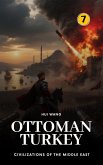




Ottoman Turkey: Civilizations of the Middle East, PART TWO, plunges you into the long, dramatic final centuries of the Ottoman Empire. As the author, I follow the story not from palaces or dusty treaties alone, but through the people who madeand remadeit. You will meet the formidable Köprülü grand viziers, feel the slow march toward catastrophe at the siege of Vienna in 1683, and watch the balance of Europe tilt as the Ottomans confront new enemies and unfamiliar ideas. This is the story of an empire struggling to survive in a world that had stopped playing by its old rules.
Then the narrative turns north and east, where new giants were rising. You will see how Peter the Great dragged Russia onto the European stagehow his victory at Poltava (1709) helped set off a chain of events that drew Moscow and Istanbul into confrontation, culminating in the Prut campaign of 1711and how, later, Catherine the Great's wars and diplomacy pushed Russia toward control of the Black Sea. These chapters explain why Russia became the Ottoman Empire's most dangerous rival, and why the rivalry between Istanbul and St. Petersburg shaped the fate of Eastern Europe and the Middle East for generations.
Reform and culture also take center stage. Readers step into the Tulip Era under Sultan Ahmed III a brief season of elegance and optimistic spectacle before the empire slides into harsher times. Figures such as Mahmud II emerge not as distant, ceremonial monarchs but as leaders forced into brutal choices: he crushed the Janissary corps in the bloody 1826 "Auspicious Incident," using ruthless means to push the Ottoman state toward centralization and modernization. Abdülmecid I follows, and the Tanzimat reforms unfold a sweeping effort to rebuild law, administration, and society under enormous pressure from both internal unrest and foreign demands.
Foreign powers never stop circling. Napoleon's invasion of Egypt in 1798 jolts the Ottoman world; out of that turmoil Muhammad Ali Pasha rises in Cairo and carves out an effectively autonomous Egypt. The Crimean War (185356) drags the empire into a wider international struggle, with Britain and France fighting alongside the Ottomans against Russia. From Istanbul to Egypt, the great powers Britain, France, and, increasingly in the late nineteenth century, Germany tug at Ottoman politics. This book traces how Ottoman foreign alignment shifted over the century, moving from heavy British and French influence toward closer ties with Germany, and explains why those diplomatic choices carried such profound risks.
The final chapters track the empire into its last great storm: the twilight of Abdul Hamid II's rule, the rise of the Young Turks and figures like Enver Pasha, and the twin crises in Libya and the Balkans that shattered Ottoman dominance in North Africa and Europe. Those defeats and the broader regional tensions helped set the stage for the catastrophe that followed with Sarajevo providing the immediate spark that ignited the First World War. From the assassination in Sarajevo through the smoke of the trenches to the collapse of imperial order, the narrative reaches its decisive turning point. This book is written for readers who want to understand how an empire fell, how a republic was born, and why leaders such as Mustafa Kemal Atatürk emerged from the wreckage to remake history forever.
Then the narrative turns north and east, where new giants were rising. You will see how Peter the Great dragged Russia onto the European stagehow his victory at Poltava (1709) helped set off a chain of events that drew Moscow and Istanbul into confrontation, culminating in the Prut campaign of 1711and how, later, Catherine the Great's wars and diplomacy pushed Russia toward control of the Black Sea. These chapters explain why Russia became the Ottoman Empire's most dangerous rival, and why the rivalry between Istanbul and St. Petersburg shaped the fate of Eastern Europe and the Middle East for generations.
Reform and culture also take center stage. Readers step into the Tulip Era under Sultan Ahmed III a brief season of elegance and optimistic spectacle before the empire slides into harsher times. Figures such as Mahmud II emerge not as distant, ceremonial monarchs but as leaders forced into brutal choices: he crushed the Janissary corps in the bloody 1826 "Auspicious Incident," using ruthless means to push the Ottoman state toward centralization and modernization. Abdülmecid I follows, and the Tanzimat reforms unfold a sweeping effort to rebuild law, administration, and society under enormous pressure from both internal unrest and foreign demands.
Foreign powers never stop circling. Napoleon's invasion of Egypt in 1798 jolts the Ottoman world; out of that turmoil Muhammad Ali Pasha rises in Cairo and carves out an effectively autonomous Egypt. The Crimean War (185356) drags the empire into a wider international struggle, with Britain and France fighting alongside the Ottomans against Russia. From Istanbul to Egypt, the great powers Britain, France, and, increasingly in the late nineteenth century, Germany tug at Ottoman politics. This book traces how Ottoman foreign alignment shifted over the century, moving from heavy British and French influence toward closer ties with Germany, and explains why those diplomatic choices carried such profound risks.
The final chapters track the empire into its last great storm: the twilight of Abdul Hamid II's rule, the rise of the Young Turks and figures like Enver Pasha, and the twin crises in Libya and the Balkans that shattered Ottoman dominance in North Africa and Europe. Those defeats and the broader regional tensions helped set the stage for the catastrophe that followed with Sarajevo providing the immediate spark that ignited the First World War. From the assassination in Sarajevo through the smoke of the trenches to the collapse of imperial order, the narrative reaches its decisive turning point. This book is written for readers who want to understand how an empire fell, how a republic was born, and why leaders such as Mustafa Kemal Atatürk emerged from the wreckage to remake history forever.
Dieser Download kann aus rechtlichen Gründen nur mit Rechnungsadresse in A, B, CY, CZ, D, DK, EW, E, FIN, F, GR, H, IRL, I, LT, L, LR, M, NL, PL, P, R, S, SLO, SK ausgeliefert werden.