Sie sind bereits eingeloggt. Klicken Sie auf 2. tolino select Abo, um fortzufahren.
Bitte loggen Sie sich zunächst in Ihr Kundenkonto ein oder registrieren Sie sich bei bücher.de, um das eBook-Abo tolino select nutzen zu können.
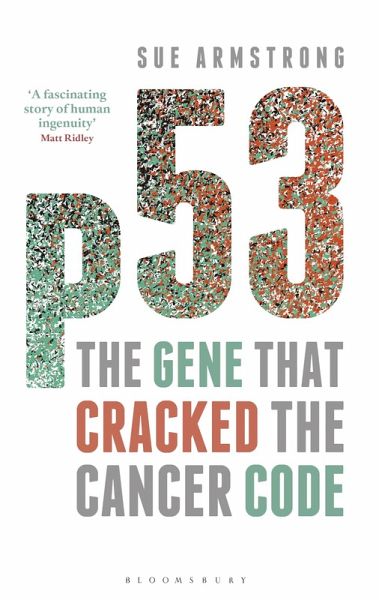
All of us have lurking in our DNA a most remarkable gene, which has a crucial job ? it protects us from cancer. Known simply as p53, this gene constantly scans our cells to ensure that they grow and divide without mishap, as part of the routine maintenance of our bodies. If a cell makes a mistake in copying its DNA during the process of division, p53 stops it in its tracks, summoning a repair team before allowing the cell to carry on dividing. If the mistake is irreparable and the rogue cell threatens to grow out of control, p53 commands the cell to commit suicide. Cancer cannot develop unless…mehr
All of us have lurking in our DNA a most remarkable gene, which has a crucial job ? it protects us from cancer. Known simply as p53, this gene constantly scans our cells to ensure that they grow and divide without mishap, as part of the routine maintenance of our bodies. If a cell makes a mistake in copying its DNA during the process of division, p53 stops it in its tracks, summoning a repair team before allowing the cell to carry on dividing. If the mistake is irreparable and the rogue cell threatens to grow out of control, p53 commands the cell to commit suicide. Cancer cannot develop unless p53 itself is damaged or prevented from functioning normally. Perhaps unsurprisingly, p53 is the most studied single gene in history. This book tells the story of medical sciences mission to unravel the mysteries of this crucial gene, and to get to the heart of what happens in our cells when they turn cancerous. Through the personal accounts of key researchers, p53: The Gene that Cracked the Cancer Code reveals the fascination of the quest for scientific understanding, as well as the huge excitement of the chase for new cures ? the hype, the enthusiasm, the lost opportunities, the blind alleys, and the thrilling breakthroughs. And as the long-anticipated revolution in cancer treatment tailored to each individual patients symptoms begins to take off at last, p53 remains at the cutting edge. This timely tale of scientific discovery highlights the tremendous recent advances made in our understanding of cancer, a disease that affects more than one in three of us at some point in our lives.
Die Herstellerinformationen sind derzeit nicht verfügbar.
Autorenporträt
Sue Armstrong is a science writer and broadcaster based in Edinburgh. She has worked for a variety of media organisations, including New Scientist, and since the 1980s has undertaken regular assignments for the World Health Organization (WHO) and UNAIDS, writing about women's health issues and the AIDS pandemic, among many other topics, and reporting from the frontline in countries as diverse as Haiti, Papua New Guinea, Uganda, Thailand, Namibia and Serbia. Sue has been involved, as presenter, writer and researcher, in several major documentaries for BBC Radio 4; programmes have focused on the biology of ageing, and of drug addiction, alcoholism, obesity, AIDS, CJD, cancer and stress. Her books p53: The Gene that Cracked the Cancer Code and Borrowed Time: The Science of How and Why We Age are published by Bloomsbury Sigma.
Inhaltsangabe
Preface Chapter 1: Flesh of our Own Flesh Chapter 2: The Enemy Within Chapter 3: Discovery Chapter 4: Unseeable Biology Chapter 5: Cloning the Gene Chapter 6: A Case of Mistaken Identity Chapter 7: A New Angle on Cancer Chapter 8: p53 Reveals its True Colours Chapter 9: Master Switch Chapter 10: 'Guardian of the Genome' Chapter 11: Of Autumn Leaves and Cell Death Chapter 12: Of Mice and Men Chapter 13: The Guardian's Gatekeeper Chapter 14: The Smoking Gun Chapter 15: Following the Fingerprints Chapter 16: Cancer in the Family Chapter 17: The Tropeiro Connection? Chapter 18: Jekyll and Hyde Chapter 19: Cancer and Ageing: A Balancing Act Chapter 20: The Treatment Revolution Dramatis Personae Glossary Notes on Sources Acknowledgements Index
Preface Chapter 1: Flesh of our Own Flesh Chapter 2: The Enemy Within Chapter 3: Discovery Chapter 4: Unseeable Biology Chapter 5: Cloning the Gene Chapter 6: A Case of Mistaken Identity Chapter 7: A New Angle on Cancer Chapter 8: p53 Reveals its True Colours Chapter 9: Master Switch Chapter 10: 'Guardian of the Genome' Chapter 11: Of Autumn Leaves and Cell Death Chapter 12: Of Mice and Men Chapter 13: The Guardian's Gatekeeper Chapter 14: The Smoking Gun Chapter 15: Following the Fingerprints Chapter 16: Cancer in the Family Chapter 17: The Tropeiro Connection? Chapter 18: Jekyll and Hyde Chapter 19: Cancer and Ageing: A Balancing Act Chapter 20: The Treatment Revolution Dramatis Personae Glossary Notes on Sources Acknowledgements Index
Rezensionen
More than any textbook, article, or lecture could, this book offers a sip of contagious enthusiasm and a conviction that scientists will eventually "crack the cancer code" Science 20150526
Es gelten unsere Allgemeinen Geschäftsbedingungen: www.buecher.de/agb
Impressum
www.buecher.de ist ein Internetauftritt der buecher.de internetstores GmbH
Geschäftsführung: Monica Sawhney | Roland Kölbl | Günter Hilger
Sitz der Gesellschaft: Batheyer Straße 115 - 117, 58099 Hagen
Postanschrift: Bürgermeister-Wegele-Str. 12, 86167 Augsburg
Amtsgericht Hagen HRB 13257
Steuernummer: 321/5800/1497
USt-IdNr: DE450055826