33,95 €
33,95 €
inkl. MwSt.
Sofort per Download lieferbar

17 °P sammeln
33,95 €
Als Download kaufen
33,95 €
inkl. MwSt.
Sofort per Download lieferbar
17 °P sammeln
Jetzt verschenken
Alle Infos zum eBook verschenken
33,95 €
inkl. MwSt.
Sofort per Download lieferbar
Alle Infos zum eBook verschenken
17 °P sammeln

Andere Kunden interessierten sich auch für
") The Militant Song Movement in Latin America (eBook, PDF)39,95 €
The Militant Song Movement in Latin America (eBook, PDF)39,95 €") Brazilian Foreign Policy in Changing Times (eBook, PDF)35,95 €
Brazilian Foreign Policy in Changing Times (eBook, PDF)35,95 €") Colombia and World War I (eBook, PDF)69,95 €
Colombia and World War I (eBook, PDF)69,95 €") Sexual Violence in the Argentinean Crimes against Humanity Trials (eBook, PDF)60,95 €
Sexual Violence in the Argentinean Crimes against Humanity Trials (eBook, PDF)60,95 €") Capital, Power, and Inequality in Latin America and the Caribbean (eBook, PDF)41,95 €
Capital, Power, and Inequality in Latin America and the Caribbean (eBook, PDF)41,95 €") Latin American Politics and Development (eBook, PDF)67,95 €
Latin American Politics and Development (eBook, PDF)67,95 €") Contemporary Mexican Politics (eBook, PDF)36,95 €
Contemporary Mexican Politics (eBook, PDF)36,95 €







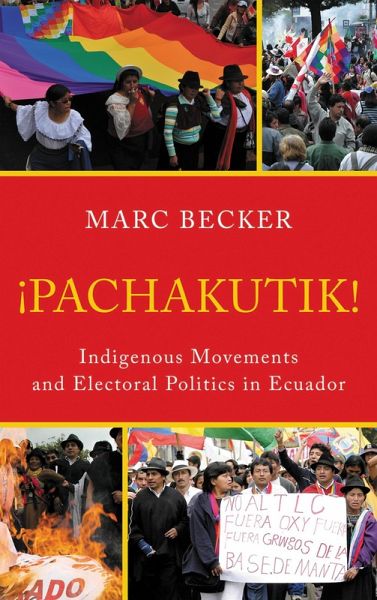
This authoritative book provides a deeply informed overview of one of the most dynamic social movements in Latin America. Focusing on contemporary Indigenous movements in Ecuador, leading scholar Marc Becker traces the growing influence of the Confederation of Indigenous Nationalities of Ecuador (CONAIE), which in 1990 led a powerful uprising that dramatically placed a struggle for Indigenous rights at the center of public consciousness. Activists began to refer to this uprising as a "pachakutik," a Kichwa word that means change, rebirth, and transformation, both in the sense of a return in time and the coming of a new era. Five years later, proponents launched a new political movement called Pachakutik to compete for elected office. In 2006, Ecuadorians elected Rafael Correa, who many saw as emblematic of the new Latin American left, to the presidency of the country. Even though CONAIE, Pachakutik, and Correa shared similar concerns for social justice, they soon came into conflict with each other. Becker examines the competing strategies and philosophies that emerge when social movements and political parties embrace comparable visions but follow different paths to realize their objectives. In exploring the multiple and conflictive strategies that Indigenous movements have followed over the past twenty years, he definitively documents the recent history and charts the trajectory of one of the Americas' most powerful and best organized social movements.