78,95 €
78,95 €
inkl. MwSt.
Sofort per Download lieferbar

39 °P sammeln
78,95 €
Als Download kaufen
78,95 €
inkl. MwSt.
Sofort per Download lieferbar
39 °P sammeln
Jetzt verschenken
Alle Infos zum eBook verschenken
78,95 €
inkl. MwSt.
Sofort per Download lieferbar
Alle Infos zum eBook verschenken
39 °P sammeln

Andere Kunden interessierten sich auch für
") Fluid Mechanics (eBook, ePUB)113,95 €
Fluid Mechanics (eBook, ePUB)113,95 €") Laser Velocimetry in Fluid Mechanics (eBook, ePUB)164,99 €
Laser Velocimetry in Fluid Mechanics (eBook, ePUB)164,99 €") Introduction to Fluid Mechanics (eBook, ePUB)80,95 €
Introduction to Fluid Mechanics (eBook, ePUB)80,95 €") Particle Mechanics (eBook, ePUB)21,95 €
Particle Mechanics (eBook, ePUB)21,95 €") Nonequilibrium Statistical Mechanics of Heterogeneous Fluid Systems (eBook, ePUB)319,95 €
Nonequilibrium Statistical Mechanics of Heterogeneous Fluid Systems (eBook, ePUB)319,95 €") Adhesive Particle Flow (eBook, ePUB)80,95 €
Adhesive Particle Flow (eBook, ePUB)80,95 €") Multifunctional Bio-Based Lubricants (eBook, ePUB)78,95 €
Multifunctional Bio-Based Lubricants (eBook, ePUB)78,95 €


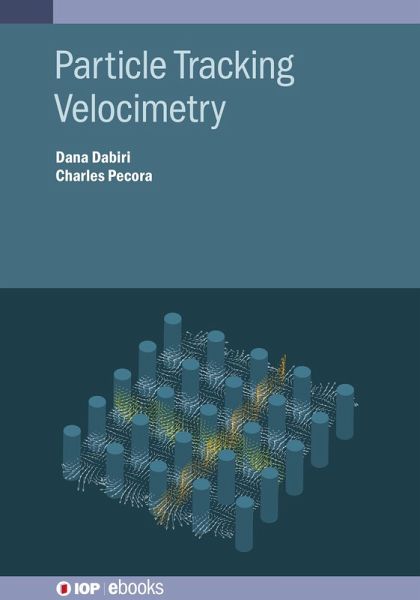
Particle velocimetry is a non-intrusive optical measurement method whereby global velocity fields can be obtained in either two- or three-dimensions through time by inferring fluid motion through the displacement of particle tracers which seed the flow. Particle image velocimetry, which obtains each velocity vector by tracking groups of particles within an interrogation window through a cross-correlation algorithm, has thrived generously since its development, however, particle tracking velocimetry (PTV), which obtains each of the velocity vector by tracking individual particle, has received less attention. The goal of this book is to therefore provide a review of PTV, with a focus on methods and techniques that have been implemented towards its development and improvement, rather than on its applications.
Dieser Download kann aus rechtlichen Gründen nur mit Rechnungsadresse in A, D ausgeliefert werden.