42,95 €
inkl. MwSt.
Sofort per Download lieferbar
21 °P sammeln

Andere Kunden interessierten sich auch für
 (eBook, ePUB)") Peasants and Poverty (Routledge Revivals) (eBook, ePUB)51,95 €
Peasants and Poverty (Routledge Revivals) (eBook, ePUB)51,95 € (eBook, ePUB)") Unequal Treatment (Routledge Revivals) (eBook, ePUB)39,95 €
Unequal Treatment (Routledge Revivals) (eBook, ePUB)39,95 € (eBook, ePUB)") The Haitian Economy (Routledge Revivals) (eBook, ePUB)39,95 €
The Haitian Economy (Routledge Revivals) (eBook, ePUB)39,95 € (eBook, ePUB)") Incentives and Agriculture in East Africa (Routledge Revivals) (eBook, ePUB)21,95 €
Incentives and Agriculture in East Africa (Routledge Revivals) (eBook, ePUB)21,95 €") Chinese Economic Development (eBook, ePUB)63,95 €
Chinese Economic Development (eBook, ePUB)63,95 €") Pandemic Economics (eBook, ePUB)52,95 €
Pandemic Economics (eBook, ePUB)52,95 €") How Asia Got Rich (eBook, ePUB)51,95 €
How Asia Got Rich (eBook, ePUB)51,95 €


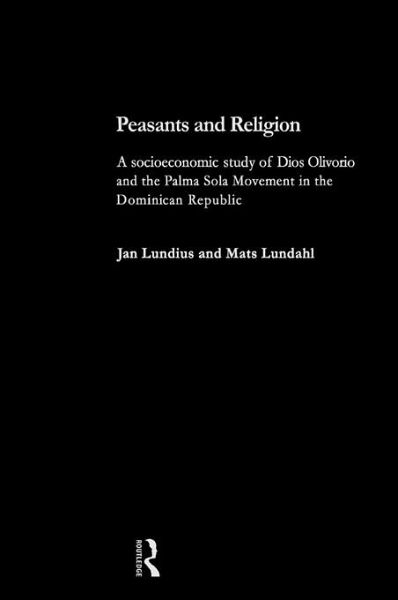
This book examines the relationship between economics, politics and religion through the case of Olivorio Mateo and the religious movement he inspired from 1908 in the Dominican Republic. The authors explore how and why the new religion was formed, and why it was so successful. Comparing this case with other peasant movements, they show ways in which folk religion serves as a response to particular problems which arise in peasant societies during times of stress.
Dieser Download kann aus rechtlichen Gründen nur mit Rechnungsadresse in A, B, BG, CY, CZ, D, DK, EW, E, FIN, F, GR, HR, H, IRL, I, LT, L, LR, M, NL, PL, P, R, S, SLO, SK ausgeliefert werden.