17,95 €
inkl. MwSt.
Sofort per Download lieferbar
9 °P sammeln

Andere Kunden interessierten sich auch für
") Born in Seattle (eBook, PDF)15,95 €
Born in Seattle (eBook, PDF)15,95 €") The Cultural Clash (eBook, PDF)63,95 €
The Cultural Clash (eBook, PDF)63,95 €") The New American West in Literature and the Arts (eBook, PDF)41,95 €
The New American West in Literature and the Arts (eBook, PDF)41,95 €") Transpacific Reform and Revolution (eBook, PDF)51,95 €
Transpacific Reform and Revolution (eBook, PDF)51,95 €") Fairy Tale and Film (eBook, PDF)40,95 €
Fairy Tale and Film (eBook, PDF)40,95 €") Community Newspapers and the Japanese-American Incarceration Camps (eBook, PDF)40,95 €
Community Newspapers and the Japanese-American Incarceration Camps (eBook, PDF)40,95 €") The Soul of Film Theory (eBook, PDF)40,95 €
The Soul of Film Theory (eBook, PDF)40,95 €


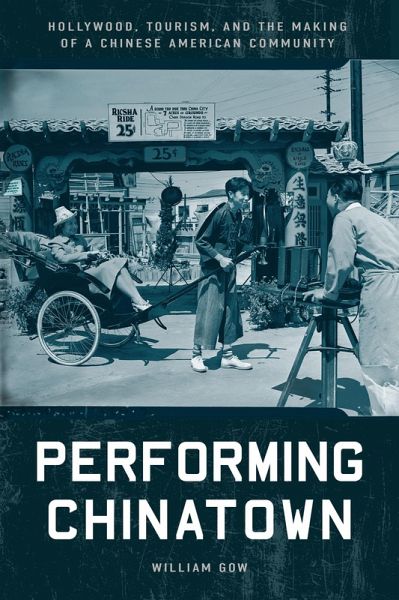
In 1938, China City opened near downtown Los Angeles. Featuring a recreation of the House of Wang set from MGM's The Good Earth, this new Chinatown employed many of the same Chinese Americans who performed as background extras in the 1937 film. Chinatown and Hollywood represented the two primary sites where Chinese Americans performed racial difference for popular audiences during the Chinese exclusion era. In Performing Chinatown, historian William Gow argues that Chinese Americans in Los Angeles used these performances in Hollywood films and in Chinatown for tourists to shape widely held understandings of race and national belonging during this pivotal chapter in U.S. history.
Performing Chinatown conceives of these racial representations as intimately connected to the restrictive immigration laws that limited Chinese entry into the U.S. beginning with the 1875 Page Act and continuing until the passage of the Immigration and Nationality Act of 1965. At the heart of this argument are the voices of everyday people including Chinese American movie extras, street performers, and merchants. Drawing on more than 40 oral history interviews as well as research in more than a dozen archival and family collections, this book retells the long-overlooked history of the ways that Los Angeles Chinatown shaped Hollywood and how Hollywood, in turn, shaped perceptions of Asian American identity.
Performing Chinatown conceives of these racial representations as intimately connected to the restrictive immigration laws that limited Chinese entry into the U.S. beginning with the 1875 Page Act and continuing until the passage of the Immigration and Nationality Act of 1965. At the heart of this argument are the voices of everyday people including Chinese American movie extras, street performers, and merchants. Drawing on more than 40 oral history interviews as well as research in more than a dozen archival and family collections, this book retells the long-overlooked history of the ways that Los Angeles Chinatown shaped Hollywood and how Hollywood, in turn, shaped perceptions of Asian American identity.
Dieser Download kann aus rechtlichen Gründen nur mit Rechnungsadresse in A, D ausgeliefert werden.