322,95 €
inkl. MwSt.
Sofort per Download lieferbar
161 °P sammeln

Andere Kunden interessierten sich auch für
") Cross-Border Taxation of Permanent Establishments (eBook, PDF)136,95 €
Cross-Border Taxation of Permanent Establishments (eBook, PDF)136,95 €") Direct Taxation in Relation to the Freedom of Establishment and the Free Movement of Capital (eBook, PDF)161,95 €
Direct Taxation in Relation to the Freedom of Establishment and the Free Movement of Capital (eBook, PDF)161,95 €") Fundamentals of Permanent Establishments (eBook, PDF)143,95 €
Fundamentals of Permanent Establishments (eBook, PDF)143,95 €") Dependent Agents as Permanent Establishments (eBook, PDF)62,99 €
Dependent Agents as Permanent Establishments (eBook, PDF)62,99 €") Attribution of Profits to Permanent Establishments (eBook, PDF)52,99 €
Attribution of Profits to Permanent Establishments (eBook, PDF)52,99 €") Digital Permanent Establishments (eBook, PDF)36,99 €
Digital Permanent Establishments (eBook, PDF)36,99 €") Der Beirat in mittelständischen Unternehmen (eBook, PDF)89,00 €
Der Beirat in mittelständischen Unternehmen (eBook, PDF)89,00 €


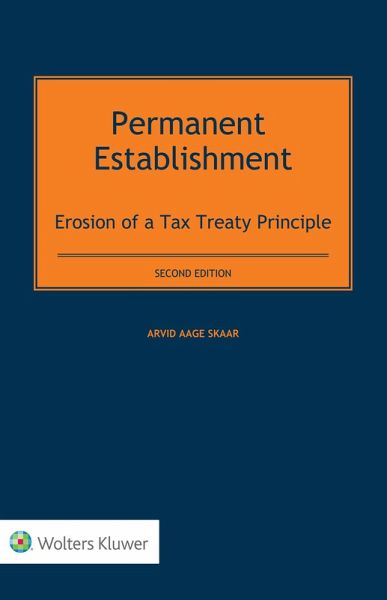
A new edition of the preeminent work on the permanent establishment (PE) is a major event in tax law scholarship. Taking into account changes in judicial and administrative practice as well as the Organisation for Economic Co-operation and Development's (OECD's) and the United Nation's (UN's) work in the three decades since the first edition, the present study brings the analysis up to date with the current internationally accepted interpretation of PE. The analysis is based on more than 720 cases from more than 20 countries, in addition to the OECD and UN model treaties and more than 630 books, articles, and official documents.
The increased significance of the digital economy has rendered the traditional concept of PE inadequate for the allocation of taxing jurisdiction over the modern, mobile or digital international business. The author's in-depth analysis explains the legal elements of the PE principle with attention to their continuing benefit and their shortcomings:
The book provides many synopses of court decisions and administrative rulings upon which the analysis is based. In addition to cases previously published in law reports and other publications, a number of unpublished decisions are included. A key word index makes it easy to find what is needed in any particular matter.
The PE principle, in one version or another, is used in several thousand tax treaties in force today. This updated comprehensive study reveals the obligations imposed through the use of PE in tax treaties and will continue to be of immeasurable value to tax practitioners and scholars worldwide. In addition, the discussion of whether the notion of PE is an appropriate criterion for taxing jurisdiction in international fiscal law today provides authoritative and insightful food for thought.
The increased significance of the digital economy has rendered the traditional concept of PE inadequate for the allocation of taxing jurisdiction over the modern, mobile or digital international business. The author's in-depth analysis explains the legal elements of the PE principle with attention to their continuing benefit and their shortcomings:
- criteria defining a PE- place of business, location, right of use, duration, business connection, business activity, ordinary course of business;
- evidence of a right of use to a place of business;
- business activities included in the PE concept of the tax treaties;
- identification of projects offshore and onshore;
- UN model treaty deviations from the OECD agency clause;
- distinction between jurisdictions with significant natural resources and countries possessing the capital, technology and know-how necessary to explore and exploit these resources; and
- how policies in each country may erode the PE concept.
The book provides many synopses of court decisions and administrative rulings upon which the analysis is based. In addition to cases previously published in law reports and other publications, a number of unpublished decisions are included. A key word index makes it easy to find what is needed in any particular matter.
The PE principle, in one version or another, is used in several thousand tax treaties in force today. This updated comprehensive study reveals the obligations imposed through the use of PE in tax treaties and will continue to be of immeasurable value to tax practitioners and scholars worldwide. In addition, the discussion of whether the notion of PE is an appropriate criterion for taxing jurisdiction in international fiscal law today provides authoritative and insightful food for thought.
Dieser Download kann aus rechtlichen Gründen nur mit Rechnungsadresse in A, B, BG, CY, CZ, D, DK, EW, E, FIN, F, GR, HR, H, IRL, I, LT, L, LR, M, NL, PL, P, R, S, SLO, SK ausgeliefert werden.