22,95 €
22,95 €
inkl. MwSt.
Erscheint vor. 25.08.26

11 °P sammeln
22,95 €
Als Download kaufen
22,95 €
inkl. MwSt.
Erscheint vor. 25.08.26
11 °P sammeln
Jetzt verschenken
Alle Infos zum eBook verschenken
22,95 €
inkl. MwSt.
Erscheint vor. 25.08.26
Alle Infos zum eBook verschenken
11 °P sammeln

Andere Kunden interessierten sich auch für
") Translating Rumi into the West (eBook, ePUB)39,95 €
Translating Rumi into the West (eBook, ePUB)39,95 €") Language and Translation in Postcolonial Literatures (eBook, ePUB)49,95 €
Language and Translation in Postcolonial Literatures (eBook, ePUB)49,95 €") Sadeq Hedayat (eBook, ePUB)45,95 €
Sadeq Hedayat (eBook, ePUB)45,95 €") Routledge Handbook of Ancient, Classical and Late Classical Persian Literature (eBook, ePUB)43,95 €
Routledge Handbook of Ancient, Classical and Late Classical Persian Literature (eBook, ePUB)43,95 €") Deutsch diachron übersetzen (eBook, ePUB)0,00 €
Deutsch diachron übersetzen (eBook, ePUB)0,00 €") Against World Literature (eBook, ePUB)16,95 €
Against World Literature (eBook, ePUB)16,95 €") Poetry and Revolution (eBook, ePUB)41,95 €
Poetry and Revolution (eBook, ePUB)41,95 €


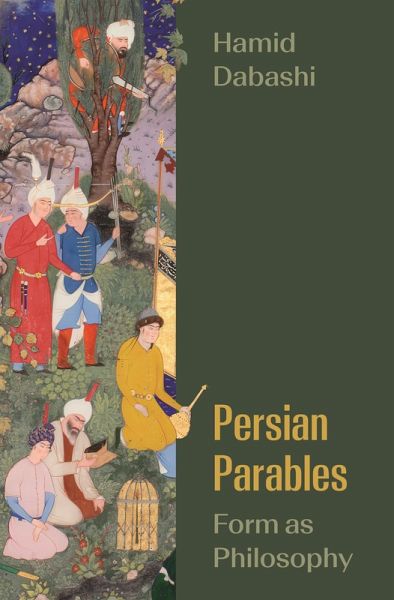
A major reassessment of the parable in Persian literature and its contribution to philosophical and creative thinking In this book, Hamid Dabashi offers a radical reconsideration of the parable in Persian literature, arguing that parabolic thinking is a mode of philosophical reflection. Dabashi eschews the conventional focus on the supposed moral or political allusions in these parables-the "moral of the story"-to allow the radical surfaces of their poetic disposition to reveal themselves. He turns his attention instead to what Kafka called "the fabulous yonder" as the defining moment of the parable. Focusing on a sustained course of Persian parables through the ages, Dabashi shows that the genre is not limited to masterpieces by such iconic poets as Sa'di, Rumi, Attar, and Sana'i. In fact, he argues, parabolic thinking has a much wider domain in Persian literature and philosophy and plays a distinct role within Persian and Islamic traditions. The cumulative result of these parables spread across Persian prose and poetry is an Alam al-Mithal, a parabolic world-a world of parables, similitudes, and verisimilitudes. Dabashi points to the moment in these works when life is absorbed into the formal fabric of the stories, erasing the borderline between fact and fantasy, history and story, the living and the dead, the real and the unreal-and life itself, as we live it, becomes a strange and captivating parable. With this circular self-referentiality, parables enable a way of thinking as a philosophical form.
Dieser Download kann aus rechtlichen Gründen nur mit Rechnungsadresse in A, D ausgeliefert werden.